






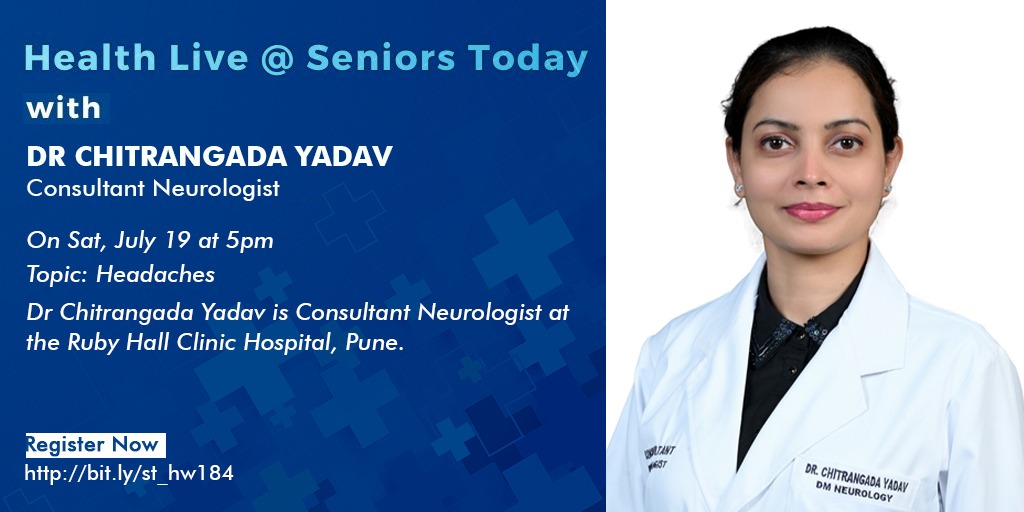
On 19 Jul, 2025, Seniors Today hosted their weekly Health Live Webinar with a Neurologist, Dr Chitrangada Yadav, who spoke on and answered questions about Headaches.
About Dr Chitrangada Yadav
Dr Chitrangada Yadav is a consultant Neurologist at Ruby Hall Clinic Hospital, Pune. She did her MBBS from Sholapur followed by her DNB in Internal Medicine from Dinanath Hospital, Pune and her DM in Neurology from AIIMS, New Delhi. She has been working as a neurologist since then.
Even school going children have headaches, but there is a difference between those headaches and the headaches one experiences in the later stages of their life. With ageing, our physiology changes. In addition to that, we also develop comorbidities such as Chronic Kidney Diseases, Diabetes, liver dysfunction, etc.
As the physiology of the body changes, so does the nature of the headaches.
Myths associated with Headaches:
- Headaches are a part of the normal ageing process.
Fact: No, that is not the case. As long as you are well rested, hydrated and do a certain amount of exercise (40 minutes of walking, yoga, etc.- consistency is more important than intensity) you should not have a headache; if you still continue to have one, that is not normal and needs to be evaluated.
- Headaches only get worse with age.
Fact: headache of any sort is not considered normal. If the character of the headache changes, it means that the cause might have changed and you do need to get it evaluated. For females, due to the hormonal changes, the character of their headache might also change.
The causes for headache can be divided into:
- A) Short duration (less than 4 hours)
- Characteristic triggers: these triggers are specific to the patient only. These can include- cough, exercise, sexual activity, travel induced headaches. Such patients are asked to make a headache diary.
- Headaches due to exposure to extreme cold, external pressure changes
- Primary stabbing headache
- Thunderclap headache: maximum in severity in the beginning with a very sudden and severe peak. It is the “worst headache” of their life
- Hyping headache: this is majorly seen in the elderly population wherein the headache is maximum in the morning, which is why it is also called “alarm clock headache”.
- B) Long duration (lasts longer than 4 hours):
- New daily persistent headache
- Nummular headache: sharply contoured headache
Warning signs which should raise caution and suspicion include:
- Having other symptoms such as fever, weight loss, chills in addition to headache
- The patient has any secondary disease, for example, you were treated for cancer previously, have had a chronic infection (HIV, Tuberculosis)
- Associated neurological symptoms such as confusion, doubling of vision, visual disturbances, tinnitus (ringing in the ear)
- Sudden onset, severe intensity headache ache- see in case of a thunderclap headache
- Age older than 50 years: new onset, persistent and/ or progressive headache
- Positional headache
- Has a past history of headaches but has now changed character or has daily headache or sudden, new onset headache
- Pregnancy/ post party
- Headache precipitated by coughing, sneezing, bending or straining
Safe practices when you are experiencing a headache include:
- Rest in a dark, quiet place
- Hydration
- Use an ice pack/ ice hat/ ice helmet
- Application of creams containing menthol, camphor or essential oils
- Deep breathing
- Guided meditation
Dietary trigger and tips:
- Avoid alcohol
- Caffeine should be consumed at a modest level and a regular time each morning
In addition to the diet, there are also other mind/ body and behavioural interventions that can help. These include:
- Behavioural therapies: Cognitive Behavioural Therapy, Relaxation training
- Mindfulness: Based on stress reduction
Migraine now has become an epidemic. And the treatment primarily includes lifestyle modifications, of which stress reduction is the most important.
Physical treatments include:
- Acupuncture
- Neuromodulation devices- these are non invasive devices and non pharmacological
You should consult a doctor when you experience any of the following (also bear in mind the warning signs, previously discussed)
- New or worsening headache
- Any neurological symptoms
- Headache that severely impacts your daily activities and/ or sleep
- Unexplained weight loss, double vision, imbalance
Migraine is an episodic headache associated with certain features such as sensitivity to sound, movement, nausea and vomiting, often accompanying the headache.
It can be initiated or amplified by various triggers.
Instructions for patients with a migraine:
- Identify reliable triggers and avoid them
- Regulate your lifestyle. Include a healthy diet, regular exercise, regular sleep habits, avoidance of excess caffeine and alcohol, and avoidance of acute changes in stress levels.
- Yoga, transcendental mediation, hypnosis, and conditioning techniques can be headful
- Non pharmacological measures are unlikely to prevent all migraine attacks and pharmacological approaches are often needed.