






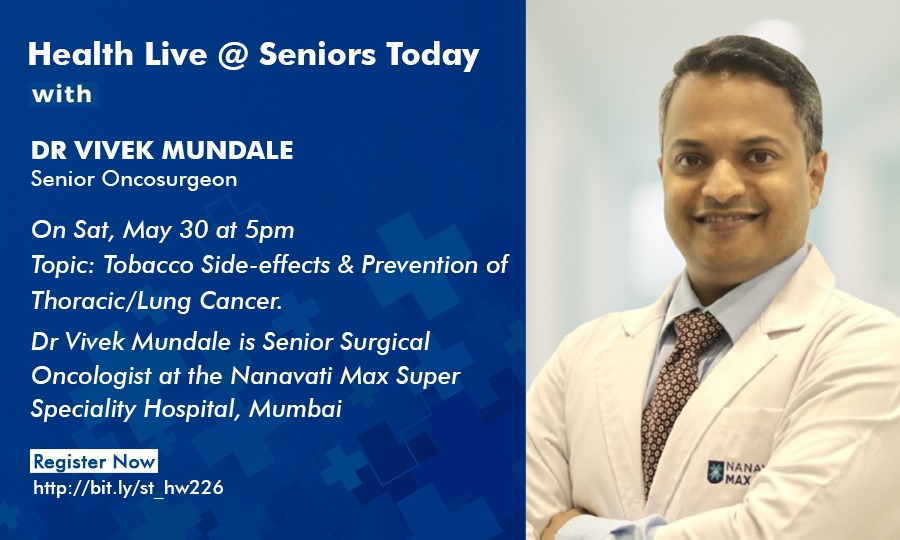
On 30 May, 2026, Seniors Today hosted their weekly Health Live Webinar with a Senior Surgical Oncologist, Dr Vivek Mundale who spoke and and answered questions about Tobacco Side-effects & Prevention of Thoracic/Lung Cancer
About Dr Dr Vivek Mundale
Dr Vivek Mundale is Consultant – Thoracic Surgery at the Nanavati Max Institute of Cancer Care at the Nanavati Max Superspeciality Hospital, Mumbai.
On the occasion of a health awareness session, Dr Mundale discussed the growing burden of tobacco use, the emerging concerns related to vaping, and practical strategies for preventing lung cancer.
Smoking continues to remain one of the leading preventable causes of disease and death worldwide, while newer forms of nicotine consumption such as e-cigarettes are creating additional public health challenges.
Tobacco use remains a major public health concern worldwide.
Global statistics:
* Approximately 1.3 billion people worldwide use tobacco.
* More than 8 million deaths occur annually due to tobacco use.
* Around 7 million deaths result from direct tobacco consumption.
- Nearly 1.2 million non-smokers die due to exposure to second-hand smoke.
Smoking remains the leading single preventable cause of death globally. According to the World Health Organization (WHO), tobacco kills up to half of its users. It is responsible for approximately 25% of all cancer-related deaths worldwide and causes more deaths than HIV/AIDS, tuberculosis, and malaria combined.
Tobacco use also has a great Geographic and Economic Impact. Nearly 80% of smokers live in low- and middle-income countries. The global economic burden of tobacco exceeds USD 1.4 trillion annually which includes healthcare expenditure, loss of productivity, and reduced workforce participation.
Smoking-related illnesses result in significant loss of productive working years and financial hardship for families.
Bidi Smoking is a Unique Challenge in India and continues to pose a major public health concern.
* Approximately 72% of all smokers in India smoke bidis.
* India has nearly 72 million bidi smokers, compared with around 16 million cigarette smokers.
* Bidi smoking is more prevalent in rural areas and among lower socioeconomic groups.
* The majority of users are men, though increasing use among adolescent males is being observed.
Bidis Are More Harmful because of the following reasons:
* Higher levels of tar, nicotine, and carbon monoxide compared to cigarettes.
* Lack of filters leads to direct inhalation of harmful smoke.
* More puffs are required to keep a bidi lit, resulting in greater smoke exposure.
* Strong association with oral cancer, lung cancer, and chronic respiratory diseases.
* Low cost and easy availability encourage widespread use.
- Lower taxation compared with cigarettes
Smoking affects nearly every organ system in the body.
Respiratory System
* Chronic Obstructive Pulmonary Disease (COPD), including emphysema and chronic bronchitis.
* Lung cancer with up to a 15-fold increase in risk.
* Recurrent respiratory infections such as bronchitis and pneumonia.
* Reduced lung capacity and lung function.
* Worsening of asthma symptoms.
Cardiovascular System
* 2–4 times higher risk of heart disease.
* Atherosclerosis and arterial stiffening.
* Increased risk of stroke.
* Peripheral vascular disease.
* Higher risk of aortic aneurysm.
Cancer
Smoking is associated with cancers of:
* Lung
* Oral cavity
* Throat
* Esophagus
* Stomach
* Pancreas
* Kidney
* Bladder
* Cervix
* Colon and rectum
* Blood (leukaemia)
Smoking is responsible for nearly 30% of all cancers.
Other Health Effects
* Erectile dysfunction in men.
* Reduced fertility in women.
* Osteoporosis and increased fracture risk.
* Premature skin ageing and wrinkles.
* 30–40% higher risk of diabetes.
Oral and ENT Problems
* Oral cancer and leukoplakia.
* Gum disease.
* Tooth loss.
* Chronic bad breath.
* Reduced sense of taste and smell.
* Increased risk of laryngeal cancer.
Pregnancy and Child Health
Smoking during pregnancy can result in:
* Low birth weight.
* Premature birth.
* Sudden Infant Death Syndrome (SIDS).
* Cleft palate.
* Placental complications.
* Childhood respiratory illnesses.
Although often marketed as a safer alternative, vaping carries significant health risks.
E-cigarette or Vaping Product Use Associated Lung Injury (EVALI) has been reported globally and can be fatal. Vitamin E acetate used in certain vaping products has been identified as a major contributing factor.
Respiratory Effects
* Acute lung injury.
* Bronchiolitis obliterans (“Popcorn Lung”).
* Increased airway inflammation.
* Poor asthma control.
* Higher risk of pneumonia.
Cardiovascular Effects
* Increased heart rate and blood pressure.
* Greater tendency for blood clot formation.
* Damage to blood vessel lining.
* Increased stroke risk.
* Cardiac rhythm disturbances.
Harmful Chemicals Found in Vapes
* Formaldehyde.
* Acrolein.
* Lead.
* Nickel.
* Tin.
* Diacetyl.
* Ultrafine particles that penetrate deep into the lungs.
* Vaping has become one of the most commonly used nicotine products among adolescents.
* High-nicotine pod devices can rapidly induce addiction.
* The adolescent brain is particularly vulnerable to nicotine dependence.
* Young vapers are significantly more likely to transition to cigarette smoking.
* Flavoured products often attract younger users.
India banned e-cigarettes in 2019 under the Prohibition of Electronic Cigarettes Act (PECA).
Common Myths and Facts:
- Vaping is safe- vapes contain toxic chemicals and nicotine
- Vaping helps quit smoking: evidence remains inconsistent
- It is only water vapour: Vapor contains harmful particles and chemicals
- Flavoured products contain no nicotine: most contain nicotine
- Only young people vape: use is increasing across all ages
Long-term safety data on vaping remains limited.
Nicotine is considered one of the most addictive substances known and has dependence potential comparable to heroin and cocaine. It’s addictive property is due to the following reasons:
* Reaches the brain within 7–10 seconds.
* Triggers rapid dopamine release in the brain’s reward centre.
* Produces repeated reinforcement with every cigarette.
* Withdrawal symptoms can begin within 30–60 minutes.
* Tolerance develops rapidly, increasing dependence.
As compared to Alcohol Addiction where:
* Alcohol acts more slowly on the brain.
* Dependence generally develops over months or years.
* Reinforcement occurs less frequently than smoking.
* Moderate alcohol use does not always lead to addiction.
Studies suggest that approximately 32% of nicotine users become dependent, compared to about 15% of alcohol users.
Smoking and Tobacco Use can be prevented using:
-
Individual and Behavioural Measures
* Health education and awareness.
* Life-skills training.
* Stress management techniques.
* Resisting peer pressure.
* Mindfulness and healthy coping strategies.
-
Family and Community Measures
* Maintaining smoke-free homes and vehicles.
* Positive parental role modelling.
* Community awareness campaigns.
* Involvement of religious and community leaders.
* Avoiding smoking in the presence of children.
-
School-Based Programs
* Tobacco education integrated into school curricula.
* Anti-tobacco clubs.
* Peer educator initiatives.
* Sports and creative activities as alternatives.
* Enforcement of tobacco-free zones around schools.
-
Policy Measures
* Enforcement of COTPA 2003.
* Higher taxation on tobacco products.
* Graphic health warnings on packaging.
* Restrictions on advertising and sponsorship.
* Plain packaging initiatives.
-
Healthcare Interventions which can be achieved using the 5 A’s Model includes:
* Ask
* Advise
* Assess
* Assist
* Arrange follow-up
Healthcare professionals should screen all adults for tobacco use and provide brief cessation counselling whenever possible.
-
Mass Media and Digital Initiatives
* Public awareness campaigns.
* Social media education.
* Anti-tobacco messaging in entertainment.
* National Quitline: 1800-112-356
* mCessation mobile support services.
The best outcomes are achieved through a combination of medication and behavioural counselling.
Behavioural Therapies include:
* Cognitive Behavioural Therapy (CBT).
* Motivational Interviewing (MI).
* Structured quit plans.
* Telephone and digital counselling.
* Self-help materials.
Nicotine Replacement Therapy (NRT): the Available forms include:
* Nicotine patches.
* Nicotine gum.
* Nicotine lozenges.
* Nicotine inhalers.
* Nicotine nasal sprays.
Combination therapy is often more effective than using a single product.
Medications: Commonly used medications include:
* Varenicline.
* Bupropion.
* Nortriptyline.
* Cytisine.
When combined with counselling, these treatments can significantly improve quit rates.
Some helpful strategies for Managing Withdrawal Symptoms include:
* Delay the urge.
* Distract yourself.
* Deep breathing exercises.
* Drink water.
Other supportive measures include exercise, healthy eating, sleep hygiene, and addressing emotional triggers.
Risk Factors for lung cancer include
Major Causes
* Cigarette and bidi smoking.
* Exposure to second-hand smoke.
* Radon gas exposure.
* Occupational exposure to carcinogens such as asbestos and arsenic.
* Air pollution.
Non-Modifiable Risk Factors
* Increasing age.
* Family history of lung cancer.
* Previous lung diseases such as COPD, pulmonary fibrosis, and tuberculosis.
* Genetic susceptibility.
Heavy smokers have a 15–30 times greater risk of lung cancer than non-smokers.
Importantly, there is no safe level of smoking.
The International Agency for Research on Cancer (IARC) classifies outdoor air pollution as a Group 1 carcinogen.
Harmful Pollutants
* PM2.5
* PM10
* Benzo[a]pyrene
* Nitrogen dioxide
* Ozone
* Diesel exhaust particles
Pollution Causes Cancer by:
* DNA damage and mutations.
* Oxidative stress.
* Chronic inflammation.
* Gene alterations affecting cell growth.
* Changes that promote cancer development.
Sources of Indoor Air Pollution include:
* Wood and coal-burning stoves.
* Cow dung fuel.
* Poorly ventilated homes.
* Second-hand smoke.
* Radon accumulation.
* Asbestos exposure.
⸻
Levels of Prevention of lung cancer:
-
Primordial Prevention: Preventing risk factors from developing. This can be achieved by
* Smoke-free social norms.
* Cleaner cooking fuels.
* Improved urban planning.
* Cleaner air initiatives.
-
Primary Prevention: Preventing disease before it occurs. This can be done by:
* Tobacco control policies.
* Health education.
* Graphic warning labels.
* Restricting youth access to tobacco.
-
Secondary Prevention: Early detection and intervention. This can be achieved by:
* Lung cancer screening.
* Smoking cessation programs.
* Early diagnosis of chronic lung diseases.
-
Tertiary Prevention: Reducing complications after diagnosis. With the help of:
* Surgery.
* Chemotherapy.
* Radiotherapy.
* Immunotherapy.
* Pulmonary rehabilitation.
* Palliative care.
Strategies for Preventing Lung Cancer include:
Tobacco Control
Improving Air Quality
Occupational Safety
Healthy Lifestyle Measures: such as eat a diet rich in fruits and vegetables. Maintaining a healthy body weight. Exercising regularly. Limited alcohol consumption.
Avoid second-hand smoke and biomass smoke exposure.
Who Should Be Screened for lung cancer:
Individuals who:
* Are between 50 and 80 years of age.
* Have a smoking history of 20 or more pack-years.
* Currently smoke or quit within the previous 15 years.
* Are otherwise healthy enough to undergo treatment if cancer is detected.
What Can Individuals Do to Reduce Their Risk of Lung Cancer?
Stop Smoking: There is no safe level of tobacco use.
Avoid Second-Hand Smoke
Reduce Exposure to Air Pollution. Wear N95 masks during high-pollution periods.
Improve Indoor Air Quality.
Adopt a Healthy Lifestyle
Seek medical attention if you experience:
* Persistent cough lasting more than three weeks.
* Blood in sputum.
* Unexplained weight loss.
* Chest pain.
* Shortness of breath.
Lung cancer remains one of the most preventable cancers. The most effective strategy for reducing risk is to avoid tobacco in all forms, quit smoking as early as possible, minimize exposure to air pollution, and seek medical advice when symptoms arise.
“Every cigarette you don’t smoke is a victory for your lungs.”