






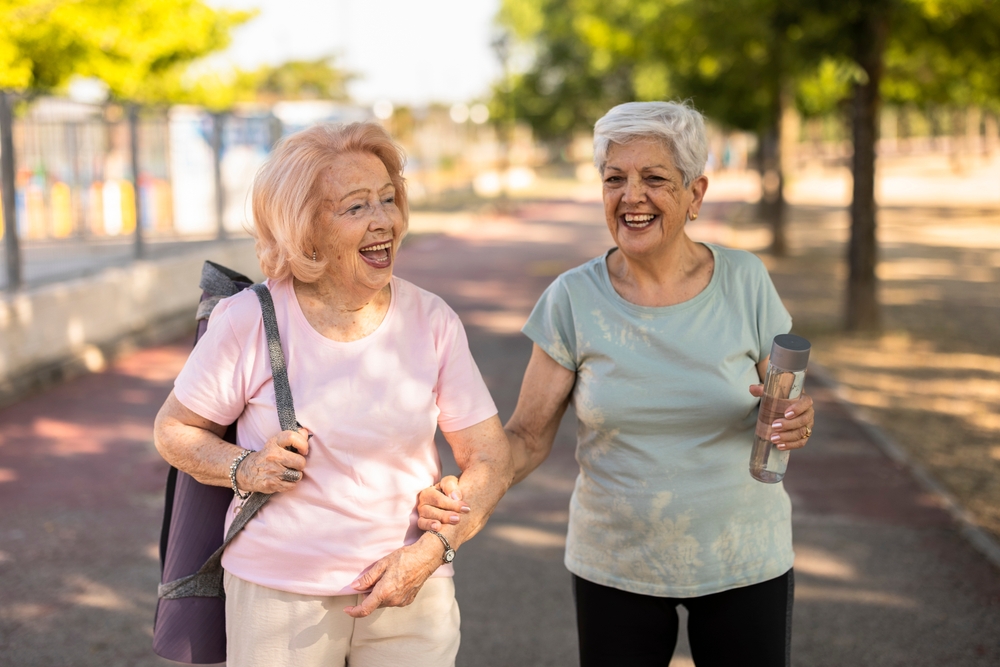
Should our ageing bodies be doing yoga, joining a gym, or just walking more?
As we age, movement stops being about six-packs and personal bests. It becomes about staying upright, independent, mobile and mentally sharp. The question many people ask in their 40s, 50s and beyond is simple: should you be doing yoga, joining a gym, or just walking more?
The evidence suggests the answer is less about choosing one and more about understanding what each form of exercise does best.
Why movement matters more with age
After the age of 30, adults naturally begin to lose muscle mass, bone density and aerobic fitness. Balance also declines, increasing the risk of falls and fractures later in life. According to the American Medical Association, regular physical activity helps older adults preserve mobility, improve mood and reduce the risk of chronic disease.
Nathan LeBrasseur, director of the Mayo Clinic’s Robert and Arlene Kogod Center on Aging, says exercise is “absolutely fundamental” to slowing the biology of ageing.
But not all exercise delivers the same benefits.
Walking: the easiest habit to keep
Walking remains the most accessible form of exercise for ageing bodies. It is low-impact, inexpensive and sustainable for most fitness levels.
Research shows regular walking can improve cardiovascular health, joint function, mood, memory and sleep quality in older adults. It is also associated with a lower risk of dementia, stroke and respiratory disease.
Dr Linda Pescatello, a kinesiology professor at the University of Connecticut, recently said: “Can’t say enough about walking” when discussing exercise and healthy ageing.
Walking also appears to support longevity. Studies suggest brisk walkers tend to have lower mortality rates than slower walkers, particularly among older adults with heart disease.
Yet walking has limitations.
Cardiologist Dr Jeremy London warns that “walking is great but it won’t save your bones”. While it supports heart health and endurance, walking alone does not provide enough resistance to significantly maintain muscle mass or bone density, both of which decline with age.
That matters because sarcopenia — age-related muscle loss — is one of the biggest drivers of frailty in later life.
Best for:
- Heart health
- Weight management
- Mental wellbeing
- Beginners or people returning to exercise
- Daily movement and consistency
Less effective for:
- Building muscle
- Preserving bone density
- Improving strength rapidly
Yoga: mobility, balance and stress relief
Yoga has become increasingly popular among older adults, and for good reason.
A review led by researchers at the University of Edinburgh found yoga improved flexibility, balance, muscle strength and mental wellbeing in adults over 60.
Balance training becomes crucial with age because falls are one of the leading causes of injury in older adults. Yoga’s emphasis on posture, stability and controlled movement can help reduce that risk.
Recent medical experts have also highlighted yoga’s neurological benefits. Dr Steven Allder noted that even slow, controlled movements support “neural signalling between muscles and the brain”.
Yoga may also help people stay active when high-impact exercise becomes difficult due to arthritis, stiffness or injury.
However, yoga is not usually enough on its own to preserve muscle mass at the same level as resistance training. Some styles are physically demanding, but many are primarily mobility-focused.
Best for:
- Flexibility
- Balance
- Joint mobility
- Stress reduction
- Recovery and injury prevention
Less effective for:
- Significant muscle building
- Bone-strengthening compared with resistance exercise
- Cardiovascular fitness unless practised vigorously
The gym: the strongest defence against physical decline
For many ageing adults, gyms can feel intimidating or associated with youth culture. But experts increasingly argue that resistance training may be the most important exercise people do after midlife.
Strength training helps counteract sarcopenia, supports bone density and improves balance and metabolic health.
The latest exercise guidance for older adults increasingly emphasises resistance work two to four times a week.
Dr Jeremy London recommends weight training, resistance bands or bodyweight exercises specifically to stimulate bone growth and reduce fracture risk.
Meanwhile, researchers and trainers focusing on healthy ageing often point to functional movements — squats, pushing, pulling and standing exercises — as essential for maintaining independence later in life.
Even relatively light resistance work can improve posture, grip strength and the ability to perform daily tasks such as climbing stairs or carrying shopping.
The downside is that gyms can carry a higher injury risk if technique is poor or loads increase too quickly. Recovery times also tend to lengthen with age.
Best for:
- Maintaining muscle
- Bone health
- Strength and power
- Preventing frailty
- Functional independence
Less effective for:
- Accessibility for some beginners
- Consistency if people dislike gym environments
- Mobility unless combined with stretching or yoga
So which is best?
The evidence points towards a combination approach.
Walking supports cardiovascular health and daily movement. Yoga improves flexibility, balance and recovery. Strength training preserves muscle and bone.
Experts increasingly agree that ageing bodies benefit most from blending all three.
The American Medical Association advises older adults to include aerobic exercise, muscle-strengthening activities and balance training as part of a weekly routine.
In practice, that might look like:
- walking most days,
- strength training two or three times weekly,
- and yoga or mobility work once or twice a week.
Crucially, the “best” exercise is often the one people will actually continue doing.
As one group of medical experts recently put it, “The key is regularity rather than intensity.”
For ageing bodies, consistency beats perfection every time