






In a few days from today, India will celebrate its 79th Independence Day unshackling the British raj and its Bollywood besotted silver generation will rejoice its 50th anniversary of engaging entrapment with the Gabbar Singh raj. Most of that generation, and so will the alpha, beta, next-gen what have you will not miss the allusion to the cult classic, Sholay, released on 15th August 1975, that had a spluttering start but had a glorious finish of 5 years, establishing a never before box office record, with all its 70 mm magnificence and stereophonic sound, a novelty in those days.
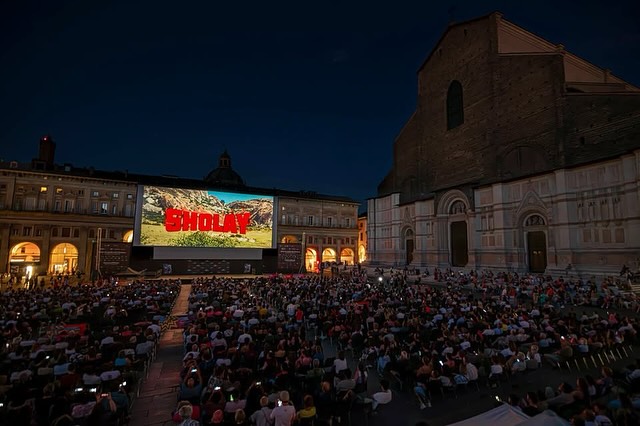
The fact that a fully restored and uncut original version of the film was recently premiered in the open-air setting of Piazza Maggiore in Bologna, Italy, to commemorate its golden anniversary, and received a thumping ovation from its enchanted local audience speaks volumes about the enduring panache and pizzazz of Sholay. A truly momentous occasion for Indian cinema, not that it was something totally new, our films having gained popularity abroad over the years of its independence with its cinematic flair and storytelling. I, for one, am eagerly waiting to see this restored uncut version in our theatres here and soak in the death of Gabbar on screen, while cherishing the legacy of his persona who escaped death in the original version.
A contemporary of mine recently recounted to me about his singing the well-remembered Sholay number ‘ yeh dosti hum nahin todenge, todenge dum, magar tera saath na chodenge’ at a social soiree. This brought back a flush of memories from my hoary past with the film releasing when I was barely 17. Truth be told, in spite of belonging to a family of movie buffs with weekly visits to cinemas, getting tickets were not easy, unless you were willing to shell out multiples of the price in the black market, which we were fundamentally averse to and was considered a sin by our family in an era of conservatism and righteousness. Finally, my family and I had managed to catch the film in its 8th month of the release, only to be late and miss the opening scene of the train ride where two of the protagonists in the film, Jai and Veeru, respectively portrayed by Amitabh Bacchan and Dharmendra, common criminals being transported, fighting off the dacoits and defending the train. It was a necessary part of the film’s script and continuum and I had to pay a revisit to the cinemas some months later for getting the connect and importance of the opening train fights scenes and enjoy the film as much the second time.
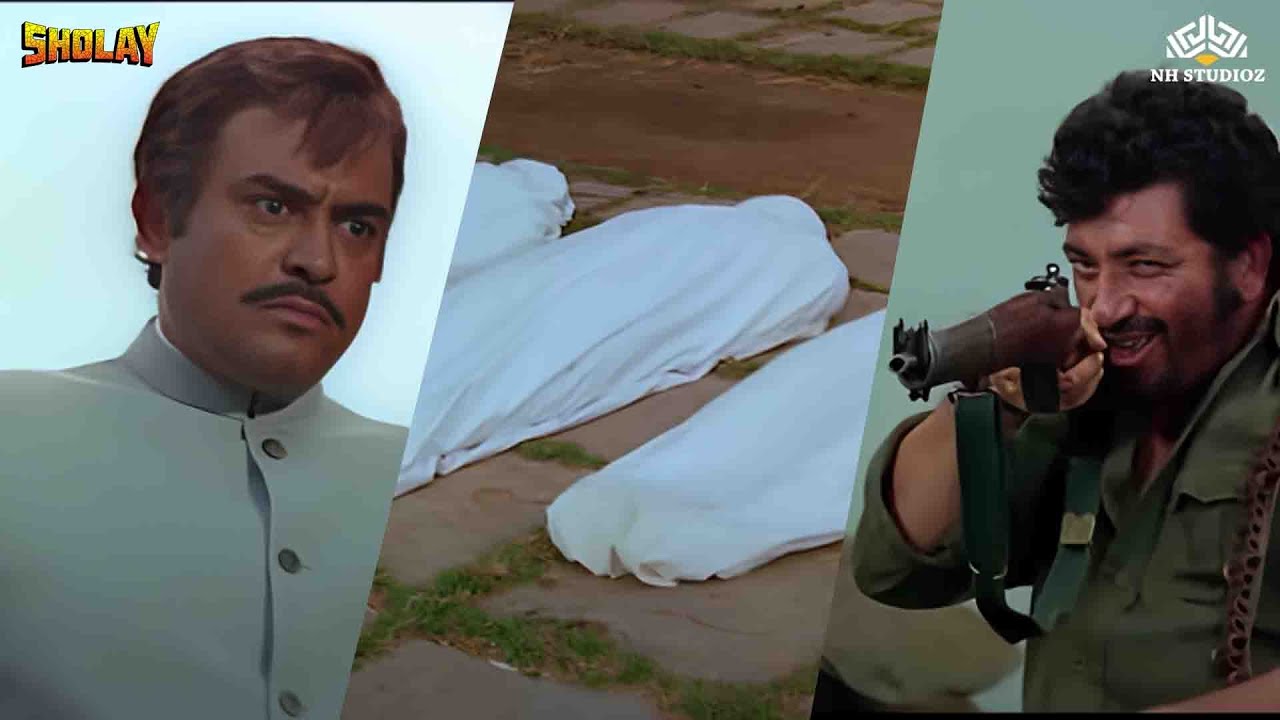
One of the gripping scenes in the film is the brutal slaying of the entire family of jailor Thakur (played by Sanjeev Kumar by Gabbar Singh ( played by Amjad Khan, his debut film ). The scene was stark, the sun was up, the setting isolate and one could have an immersive feel of the visceral cruelty and menace of the main antagonist in Gabbar in the gunning down of an entire family in an act of unapologetic revenge, as he had threatened when he was captured by Thakur. He was terror personified, so to say, and made for a gripping menace and presence in the much-adulated film. No wonder, one of the enduring dialogues in the film is ‘pachas pachas kos doore jab bacha rota hain toh maa kehati hai so jaa, nahin toh Gabbar aa jayega’.
There used to be a theatre called Shree Cinema, near the famed Hinduja Hospital, in Matunga/Mahim area in Mumbai. It used to show English films and even youngsters could steal in to see A rated films. The family killing scene was redolent of the frame-to-frame scene in the classic 1968 Hollywood film, ‘Once Upon a Time in the West’ starring Henry Fonda and Charles Bronson, which I had seen a few years before the release of Sholay and could connect the dots. No what matter Ramesh Sippy, director and Salim Javed, writers, may exhort to the contrary, it was unvarnished plagiarism. The story line too had drawn significant inspiration from the Yul Bryner starring ‘The Magnificent Seven’ which itself was inspired by the Akira Kurosawa 1954 classic ‘Seven Samurai’, the common thread being warriors/convicts coming to the rescue of villagers from the pillaging dacoits and villains. There have been allusions to being inspired by Charlie Chaplin film as well in the portrayal of Asrani with his ‘Hitler’moustache and a martinet of a jailor, brilliantly performed by him. He was hilarious to say the least, one of the high points of the film. But then, originality is a vague and suspect concept most times and comparisons could be odious and unfair.
The defining differentiator of any film is the exciting storytelling and weaving it around the Indian ethos and Sholay did an excellent job of it. You have to give it to the makers, the script writers, dialogue writers, the actors, singers and everyone involved to piece together an engaging three hours film, quite a long one to hold the audience attention end to end and to have half a century of accolades and adulation. The film was a melange of violence, menace, bonhomie, tragedy, comedy, emotions, dances, songs, sacrifices, purpose, colours, melodrama all pieced together to present a master piece of a movie.
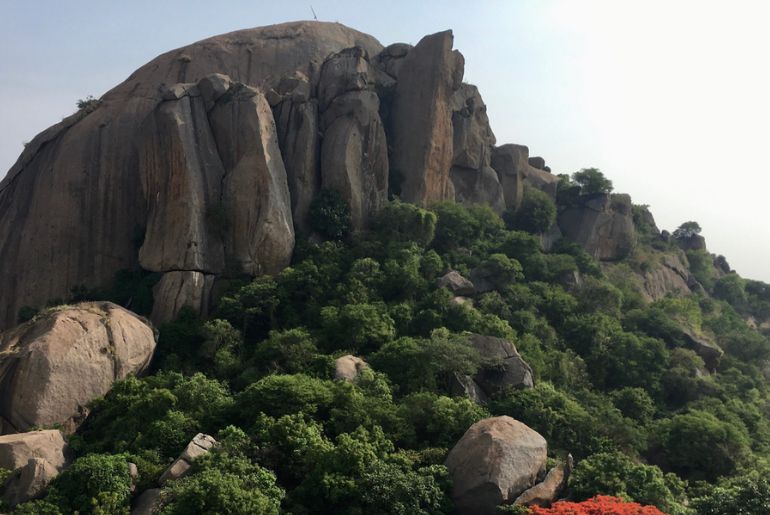
Few may know that Ramgarh was a life-like set created in an area called Ramanagara in Karnataka to bring alive the setting of a village of scared villagers, the large haveli of Thakur, the ravines and the rocks as a hideout for Gabbar Singh and his henchmen to operate out of, the sceneries and roads for the bak-bak Basanti (well-acted by Hema Malini), a tangewali who enamours Veeru, to ride her tanga and to dacoits riding horses for attacking the villagers and extorting grains. Who can forget the 15 minutes antics and laments of the tipsy Veeru proclaiming his love for Basanti from the high-water tank tower famously saying ‘gavwalo, tumko meri aakhri salaam’ whilst threatening to commit suicide and cursing the Maasi ( played by Leela Mishra ) for not agreeing to his marriage proposal to Basanti. And the hilarious repartee of Jai to a desperate Basanti saying ‘kuch nahin hoga, jab daaru utregi, yeh bhi utar aayega’. Not to mention Jai meeting the Maasi with a proposal for his friend, Veeru and infectiously and indirectly talking about all the bad habits of his friend. Or the menacing Gabbar’s ‘kitne aadmi the’, ‘ab tera kya hoga, Kaaliya’, ‘jo darr gaya, samjo mar gaya’ culminating in the cold bolded shooting of Kaaliya and two other henchmen for not being able to stand up to Jai and Veeru. Clear messaging that, of a dreaded dacoit. Who will not remember the violent scene where Gabbar mouths ‘ yeh haath mujhe de de, Thakur’ before mercilessly cutting off both the arms of Thakur. Or the poignancy of the moment when Veeru discovers that Jai’s coin that he had tossed to see who will make the first foray into Gabbar’s hideout, amid all the shooting, had identical images on both sides and that he had sacrificed his life willingly for the cause of bringing down the dacoit and saving his friend and villagers. The laconic Samba’s ‘poore pacchas hazar’ response to Gabbar’s ‘arre ho Samba, kitna inam rakhe hain sarkar hum par’, is indelibly etched and given an indelible prominence to Mac Mohan. You could not help laughing when the talkative Basanti says in another scene, ‘tumne yeh nahin poocha humara naam kaya hain’ in the tanga and Jai says ‘ tumhara naam kya hain, Basanti’. There are similar snippets from the film which make for a high recall and a collage of fond memories about the film. Every actor, major and minor, brought about a sense of involvement and passion to their roles to bring alive a pastiche of performance par excellence. Jaya Bhaduri, Satyen Kappu, Keshto Mukherjee, Jagdeep, Asrani, A K Hangal, Sachin, Helen, Jalal Aga, Iftikhar and various others, however small their roles, excelled and brought about a gravitas to their characters. Amjad Khan as Gabbar Singh was central to the story, the reason for the primary association with Sholay while all others like Dharmendra, Amitabh Bacchan, Sanjeev Kumar and Hema Malini were dramatis personae to bring him to books. All other interludes were comic diversions to alleviate the seriousness of the movie. The dialogues were scintillating and made for life lessons in its own inimitable way.
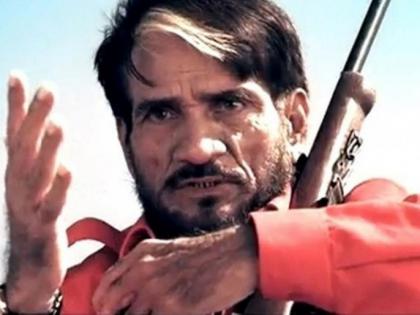
The effervescing embers of the shimmering Sholay continue to play out the Ramgarh drama in our collective consciousness 50 years after its creation. There can be no better encomiums for a classic!