







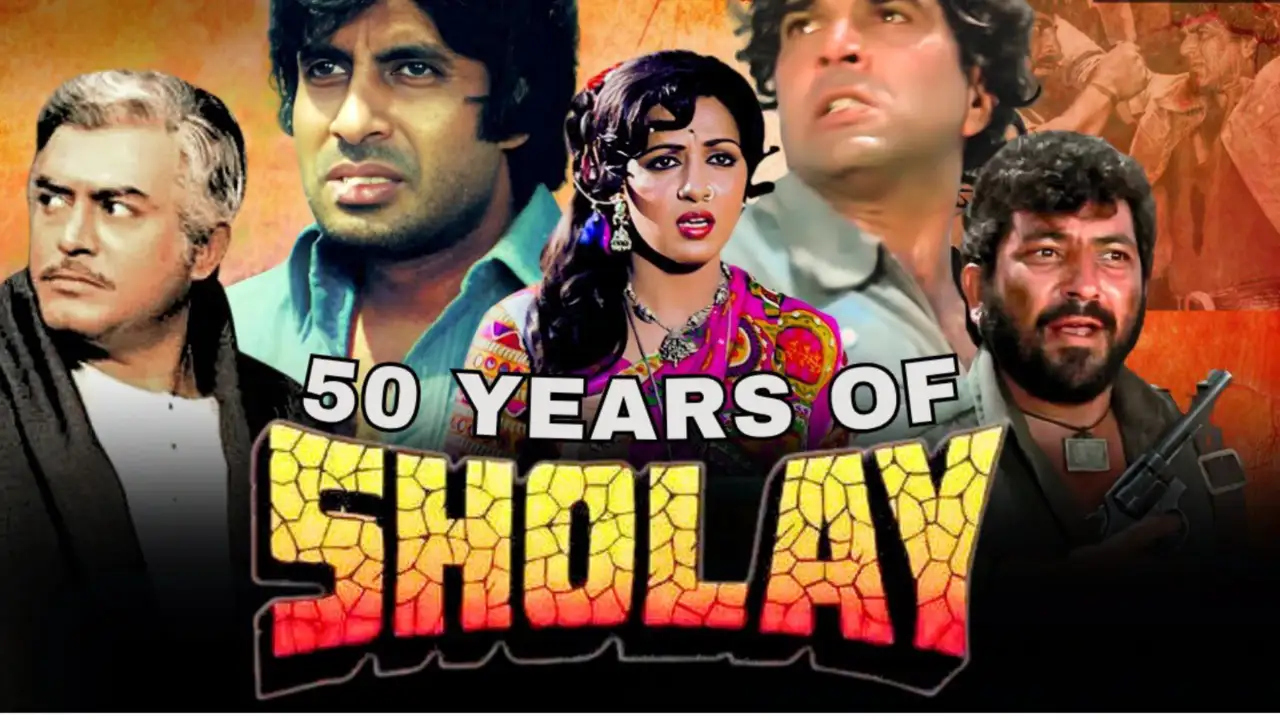
It’s a film that exists beyond time and trends, an epic tale of two lovable rogues, a vengeful lawman, and the most terrifying villain Indian cinema had ever seen. On August 15, 1975, at Minerva Cinema in Mumbai, a young filmmaker’s vision burst onto the screen, and the nation was never the same. This year, as Ramesh Sippy’s magnum opus, Sholay, marks its 50th anniversary, the legendary director, who was just 28 when he made the film, looks back at the fire, the fear, and the friendship that forged a masterpiece.
It’s a movie so ingrained in the Indian consciousness that its dialogues are part of our everyday language and its characters feel like family. Yet, to hear Sippy tell it, the journey of bringing this Western-meets-Indian-ethos epic to life was a monumental gamble.
“The first thing I told my crew was, ‘There will be no compromises. Let’s give it our best,’” Sippy recalls, his voice carrying the same conviction that must have guided him all those years ago. The problem of banditry was a very real issue in Chambal and Northern India, and while films like Ganga Jumna, Mother India, and Mujhe Jeene Do had explored the subject, Sippy and his team had a different vision.
“Our treatment was different,” he explains. “The heroes were different—two lovable rogues. The screenplay, dialogues, casting, characterisation—everything jelled well.” This alchemy, he believes, was born from a perfect storm of talent. “I might have been the captain of the ship, but the ship doesn’t sail without the sails and the sailors!” he says, crediting the brilliant team that stood behind him: writers Salim-Javed, a stellar cast including Sanjeev Kumar, Dharmendra, Amitabh Bachchan, and a then-unknown Amjad Khan, and some of the finest technicians in the industry.
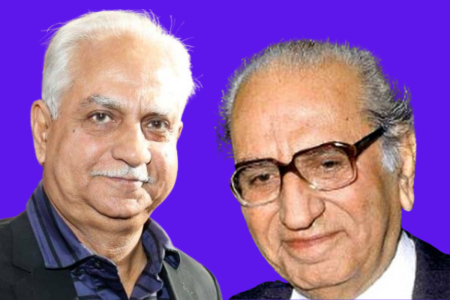
Behind the youthful exuberance and creative passion of a young Sippy was the unwavering support of his father, producer G.P. Sippy. The filmmaker reveals a crucial moment that could have changed the course of cinematic history. Sippy had a script for another film, Majboor, ready to go, and was tempted to make it while Salim-Javed developed Sholay from a four-line idea. But his father intervened.
“He said, ‘Aap issi pe (kaam) kijiye’ (You work on this only),” Sippy shares. “This was the one time he interfered, and maybe it was the right interference because if we would have started making that film, we would not have been able to develop Sholay as we did.” G.P. Sippy’s intuition was a vital anchor. Despite the astronomical budget that swelled from ₹1 crore to ₹3 crores—an unheard-of amount at the time—Sippy says he never felt the pressure. “I was so involved in the film… I insisted on what I wanted and I kept waiting for the perfect light and shot.”
This pursuit of perfection extended to his actors. He remembers a powerful moment with Hema Malini during the famous “jab tak hai jaan” dance sequence. “She had to dance barefoot, and the ground was burning. What she did was brilliant. She put the toe down on the heat and still managed to perform so beautifully.”
The cast of Sholay is the stuff of legend, but Sippy reveals the casting process was a series of fortuitous events and brilliant negotiations. Hema Malini, who had just starred in his hit film Seeta Aur Geeta, was initially skeptical about playing the bubbly Basanti. “She told me, ‘After Seeta Aur Geeta, you are offering me this role?’ I told her that though the role is short, it would be a good one and she agreed. When the role was narrated to her in detail, with final dialogues, she put in a lot of effort to do justice to the role.”
For the role of Veeru, Sippy had to use a bit of clever persuasion with Dharmendra, who was more interested in playing Thakur or Gabbar. Dharmendra was not happy, stating, “This is the story of Thakur and he is fighting against Gabbar. What will we do?” Sippy quipped, “Fine. Either do Thakur or Gabbar’s role but then you won’t get Hema Malini.” The choice was obvious.
Amitabh Bachchan, still in a lean phase, was an easy choice for Sippy, who had noticed his grace in Bombay to Goa and his quiet intensity in Anand. Sippy says Bachchan was a “thinking actor,” someone who could combine instinct with intellect. “He’s unbelievably professional, probably the most disciplined actor we have,” Sippy says, recalling how Bachchan would arrive on set on time, prepared, and ready for “one more take” until he gave his best.
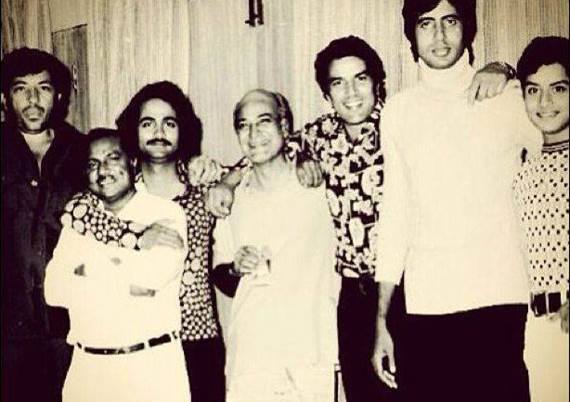
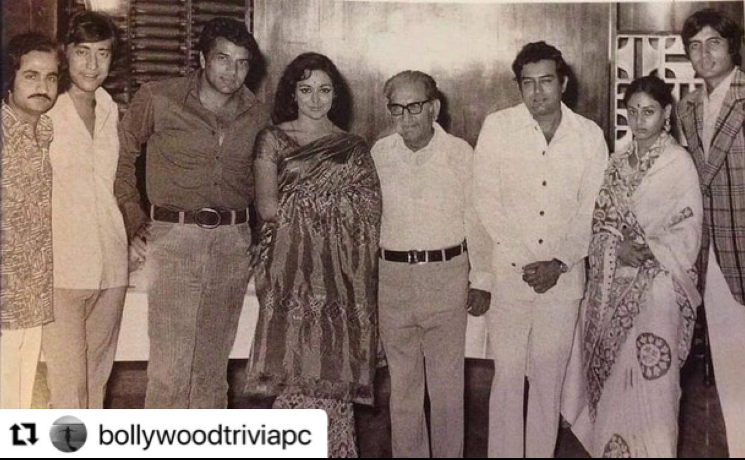
But the most pivotal casting decision of all was finding the right villain. Danny Dengzopa was the original choice for Gabbar, but his dates were locked for another film. It was Salim Khan who suggested the name Amjad Khan. Sippy remembered him from a play and was intrigued. “He seemed to be a different face, ek bhaari bharkam chehra aur ajeeb sa ek look hai (a heavy face with a strange look), so we thought he would fit into what we want to create,” Sippy shares. A cinematic icon was born.
One of the most powerful sequences in the film is the flashback showing Thakur’s family massacre. It’s a brutal and visceral scene that explains his quest for revenge. When asked how he planned that pivotal moment, Sippy says simply, “I cannot really put it in words what goes into such a scene. It just happens!”
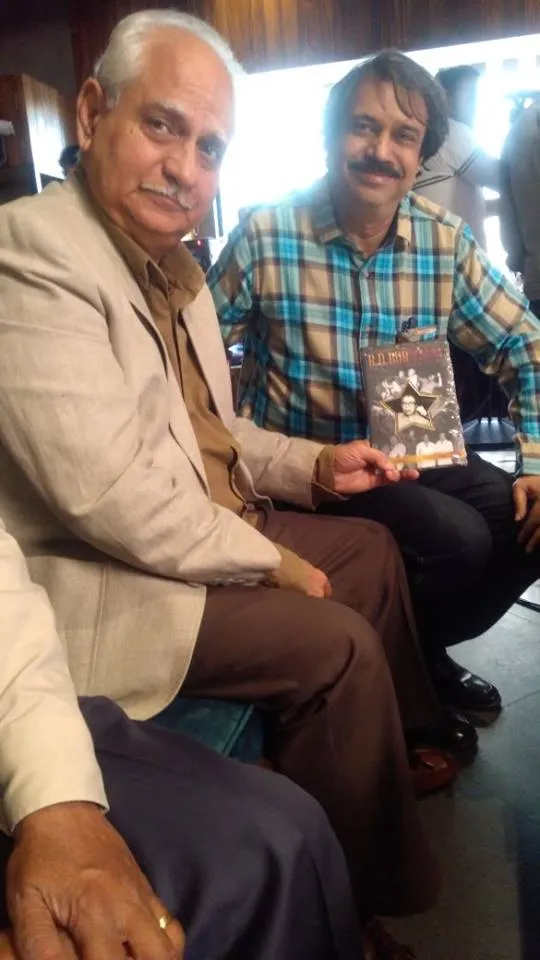
The same can be said for the film’s music, a score by the legendary R.D. Burman that remains as fresh today as it was 50 years ago. Sippy and Pancham had a magical partnership, from Seeta Aur Geeta to Saagar. “He always looked to do something new and that’s why we jelled well,” Sippy says. “Our relationship wasn’t just professional. We were friends who had some wonderful times together.”
The film was a massive technical undertaking, introducing audiences to the 70mm screen and featuring high-octane action sequences. Sippy acknowledges the immense challenge of the project, from managing a large cast to coordinating intricate stunts. “I am glad that our efforts did not go in vain,” he says. “People liked our film, appreciated it, and even 50 years later, they still talk about it. It feels great to be associated with such a remarkable project.”
Sippy recently witnessed the enduring power of his film firsthand at a screening during the IIFA awards. The audience, a mix of old fans and a new generation, cheered for every scene as if they were watching it for the first time. “Its proof enough that people loved the film, and loved it for everything that was in it,” he says. “From the story, dialogues, emotions, action, adventure, performances, everything.”
Today, as new filmmakers attempt remakes of classics, Sippy is pragmatic. “Everybody has a right to make a film according to his vision,” he says. When asked about Ram Gopal Verma’s remake of Sholay, he offers a simple, “No comments!” But he believes that if the artistic and aesthetic senses are maintained, remakes can work.
Ramesh Sippy’s journey began with a passion for storytelling shaped by cinematic greats like K. Asif, Mehboob Khan, and Guru Dutt, and inspired by the grand scale of David Lean’s Hollywood epics. His first film, Andaz, was considered ahead of its time, followed by the comedy Seeta Aur Geeta and then the epic that would change everything. From a family drama to a dacoit film, Sippy was a master of genre, always looking for new challenges.
Now a producer himself, he hopes to inspire a new generation of storytellers. The lesson he learned from his own masterpiece remains the same: “If we forget we are telling a story, we’re going to fail miserably… The heart of a film is the story.”
And what a story it was. Fifty years ago, a young filmmaker dared to dream big, and in doing so, he gave India its greatest cinematic legacy—a film that continues to live, breathe, and resound in the hearts of millions