






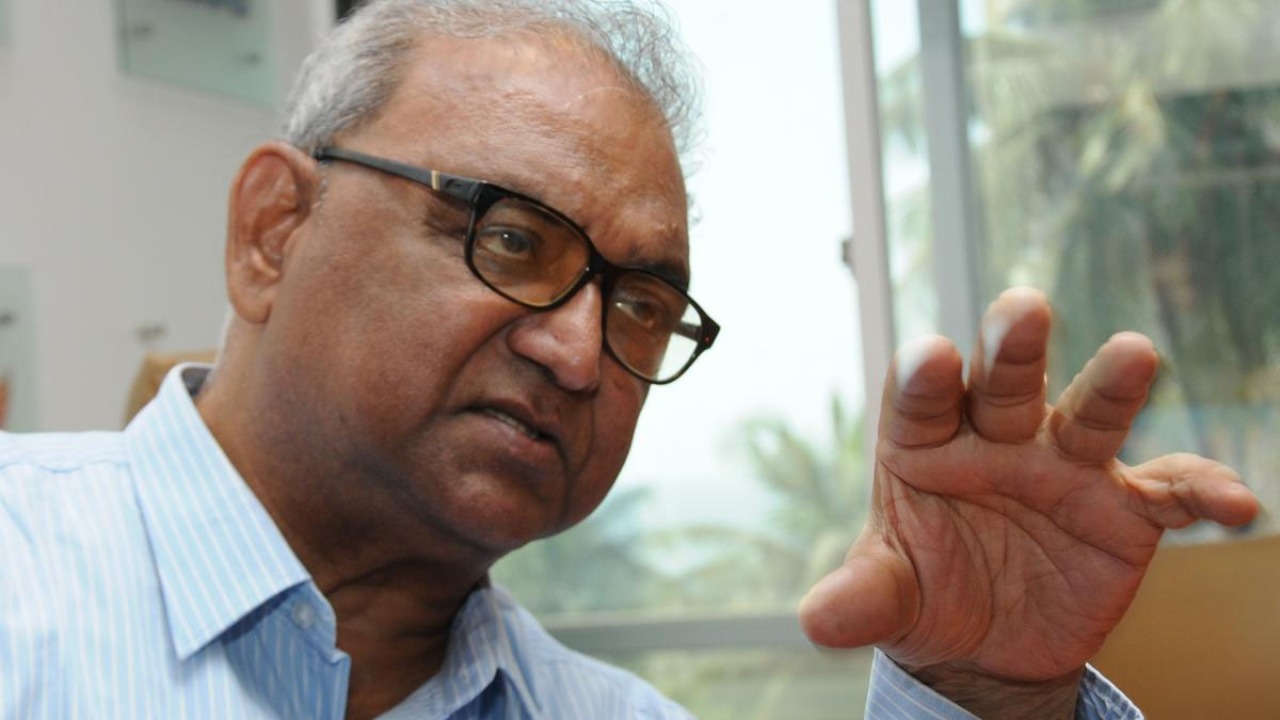
Dr Vece Paes occupies a singular and luminous place in the annals of Indian sport, a figure whose talents spanned a remarkable breadth and whose influence resonated far beyond his playing days. Born in Goa in April 1945, he matured into not only an Olympian and athlete but also a pioneering sports medicine expert and inspiring mentor to generations of Indian sportspeople.
As a midfielder in India’s field hockey team, Dr Paes was part of the squad that returned from the 1972 Munich Olympics with a bronze medal. That alone secures him a place among our nation’s greatest sportspeople. Yet his contributions go far beyond that single achievement. He brought the same spirit of excellence to many fields: he represented in cricket, football and rugby at competitive levels, served as President of the Indian Rugby Football Union from 1996 to 2002 and was for many years a respected sports medicine professional, consulting for the BCCI, the Asian Cricket Council and other top sporting bodies.
Dr Paes’ mastery of both body and mind was exemplified in the care he extended to athletes. His contributions to anti-doping education and athlete health set national standards, infusing Indian sport with professionalism and integrity. He also served for some time as President of the venerable Calcutta Cricket and Football Club, a role that underlined his deep commitment to sports administration.
At the Sportstar East Sports Conclave in early 2023, Dr Paes was honoured with an “Unsung Hero” award, a recognition that encapsulates his gentle, unassuming dedication to the sporting world. He encouraged young athletes to hone their craft with persistence. “Talent is an overrated thing,” he reminded listeners, “it is not enough to be born with talent, it should be nurtured. If you do your 10,000 hours from the age of 12, you will hit your peak in your 20s.” His words reflect not only his sports credentials but also his wisdom as a mentor.
In the Paes family, sport was both legacy and inspiration. His wife Jennifer, a former basketball captain and Olympian, represented India in the 1972 Olympics and led her team in 1982. Their son, Leander Paes, rose to become one of India’s greatest-ever tennis players, himself winning an Olympic bronze medal in singles at the 1996 Atlanta Games and accumulating a record haul of Grand Slam titles across doubles and mixed doubles. Yet Leander has always acknowledged that his father’s example shaped him. He once shared how polishing his father’s Olympic bronze medal every evening instilled in him the ideals of discipline and effort.
Dr Paes’ legacy was not only familial but communal. On India’s Republic Day this year, a celebratory cricket match was held in his honour at the historic Calcutta Cricket and Football Club. The “Dr Vece Paes Cricket Cup” will now be an annual fixture, symbolising the esteem in which he was held by the sporting fraternity. His former teammates and sporting peers gathered to pay tribute, acknowledging that his influence had reached far beyond personal accomplishments.
With his passing on August 14, 2025, following a courageous battle with Parkinson’s disease, the sporting world lost not only an Olympian but a healer, leader and guide. Even those who did not know him personally felt the loss; Hockey India described him as an unshakable pillar of Indian sports and a charismatic midfielder from the golden era of Indian hockey.
But beyond these titles and accolades, what endures is the human story of Dr Vece Paes. Here was a man who excelled in a team sport that captivated a nation; who pursued academic excellence alongside sporting ambition; who cared as deeply for athletes’ welfare as he did for their triumphs; who guided the next generation without yearning for spotlight; and who raised a son who would surpass him on the world stage, with equal grace.
In the tapestry of Indian sport, Dr Vece Paes is among those rare figures who wove threads from multiple realms — athleticism, medicine, administration, mentorship — into a seamless whole. His life speaks of harmony: of purpose and humility, of passion and service. He stands, quite simply, among the greatest in Indian sport, not merely for the medals he won, but for the lives he touched, the standards he raised, and the humanity he exemplified.