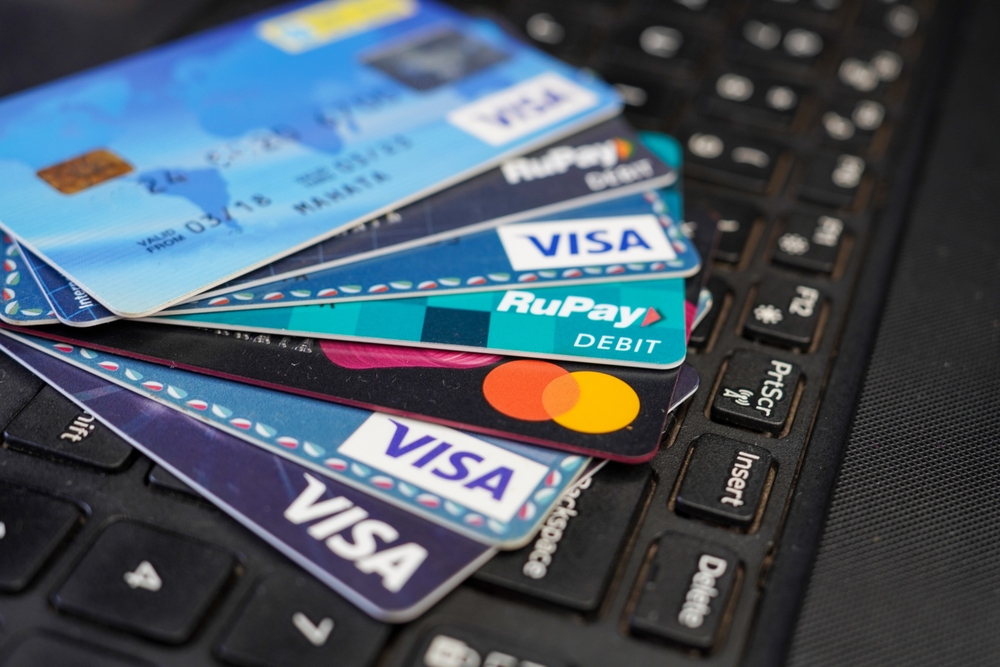






Our credit is not in our credit cards, but it lies in our financial behaviour and prudence, advises Nagesh Alai
Nadim Ali, a middle class retired person, aged 68, got an SMS alert a few weeks ago from an Asia headquartered reputed multinational bank that Rs. 4.87 lakhs are due on his premier credit card and payable before 20th July 2026. Nadim, a careful and conservative person in behaviour and spending, was shocked at the huge outstanding. While he remembered spending on a flight and hotel booking amounting to about Rs 48,000 and a few other purchases, he did not recall spending any other large sum. As an immediate measure, he called up the bank’s helpline and queried the huge credit card dues and asked for the details. The helpline executive checked out the details and said the card was used in mid-June for Rs. 3.89 lakhs. When asked about the vendor details, he was told that it was used at an outlet named City Car Centre. Since he did not recall the name or the spend of Rs 3.89 lakhs nor does a typical credit card user readily remember or notices the name of the establishment (in most cases, the name shown in the charge slip will be different from the brand/nature of spent or the displayed shop name), he lodged a fraud complaint, which was taken on record after a gruelling session involving a series of investigative questions including if the pin or OTP was shared with anyone. Why would any rational person do that, more so when the banking system bombards us with advisories in the wake of increasing frauds. The credit card was also blocked as a preventive measure.
As an additional follow up, he called up his relationship manager and explained the facts and requested her to ensure that his bank account is not automatically debited for the huge dues. At her request, he mailed her service manager, marking her in, explaining the facts and regurgitating in words what was already explained to her and the helpline. Bureaucracy is alive and kicking everywhere, for sure. He was left disappointed the next day when he received a standard reply saying that nothing can be done at the branch level and that he has to approach the bank’s helpline. Nadim was back to square one; imagine getting that irresponsible reply when the relationship manager was aware that the complaint was already lodged. The relationship manager did not even bother to call back or discuss the matter further with Nadim, a five-decade long customer of the bank, indicative of a complete lack of empathy or understanding. Clearly, fancy titles mattered more to her than solving real on-ground issues faced by clients assigned to her.
The helpline desk also got back to Nadim to say that they have investigated the matter and found that the pin has been used by him and that he is responsible for the debt. No amount of exhortation or explaining how anyone could spend Rs 3.89 lakhs at a petrol pump helped. They just stuck to their rote responses. By the way, the bank informed Nadim that there is an insurance cover of Rs. 3 lakhs, but he will have to process it himself with the insurer. Hardly helpful!

Overwhelmed and distraught, Nadim wrote to the nodal officer of the bank, with the hope that they will do a deep dive and resolve the fraud on priority. Alas, the nodal officer never replied nor has anyone called up Nadim till date. Nadim contemplated writing to RBI about the matter, but the urgency of the matter was weighing on him and time was of essence.
Since the due date was just about a fortnight away and faced with an unhelpful bank, Nadim decided to don a sleuth’s hat and visit the petrol pump at Goregaon to investigate the matter himself. He asked the manager of the petrol pump to provide details of his expenditure of Rs. 3.89 lakhs and proof of consumption. He also told him that a fraud seems to have been committed on his card and that he was planning to lodge a FIR. But he thought it fit to reach out to them, before going to the police. On hearing Nadim, the manager immediately told him that they had noticed the unusually large expenditure on the day of the spend itself and were wanting to get in touch with him, but were unable to contact him since they didn’t have any information about him. When Nadim said that they could have approached the bank and asked for his contact details or told the bank not to pay them the apparently incorrect usage amount, he was told that the processes are automated and the bank never gives out the customer details. When asked how the error happened, they said that the attendant filling up the petrol had missed out on the decimal and instead of the amount actually spent, he had erroneously punched in Rs. 3,89,000. Nadim told him it seems incredulous that he would have signed off on such a large amount. To cut a long story short, the manager apologised profusely for their inadvertent error and refunded the differential amount to Nadim. Nadim had no way to know if there was a fraudulent intent or act involved or if the manager was being honest. Given to positivity of approach in life, Nadim was happy to see it as goodness and honesty continuing to prevail in the society and that there is hope if you have faith.
A relieved Nadim then wrote to the nodal officer of the bank to say that he had got the issue resolved, but made it a point to express his anguish at the lackadaisical and superficial investigation by the bank, with no real intent to do any deep dive or help the customer in times of acute need and situations like a fraud.
The real-life incident is serious enough to merit narrating at length, to spread awareness amongst the readers who may go through or may have gone through similar situations. Credit cards are great enablers for the consumers for sure. More importantly it is a collaborative business between the bank and sellers to increase spends and spread consumerism while promoting it as a facility and financing credit, albeit at usurious rates of 3% per month. But it comes with its own trials and tribulations.
Here are some guard rails that one can look at to prevent adverse situations.
- Reduce the overall spend limit on the card. Higher the amount, higher the risk of misuse. You could well do with a maximum limit of Rs 50 K rather than Rs 100 K or 500 K or Rs 1,000 K that banks induce customers with based on their profile.
- Reduce the limit on every transaction You could put a limit of say Rs 10 K or Rs. 20 K depending on the need.
- For emergency needs, you could reset the limits online, if you have the banking app. Most banks have this facility.
- Never go in for part payment option that banks constantly push. It comes at very high costs. Credit card financing interest costs are high at 30% to 36% per annum.
- Do not ignore the due date, pay in time. Otherwise, auto interest debits will happen and it will be a nightmare to have it reversed.
- Check the SMS and mail alerts that the banks send out soon after the credit card use. Cross check with the invoice/credit slip and in case of any discrepancy, bring it to the bank’s notice. Many, if not all, ignore this on the presumption that the bank can do no wrong. On the contrary, banks are as susceptible to mistakes and poor systems as anyone else.
- Avoid keeping multiple credit cards. This will tempt us to use revolving credit facilities for conspicuous and unbridled consumption. Best avoided. Millions have fallen prey to this malaise and mounting debts. There have been suicides too, driven by the inability to pay and the pressures of collecting agents of banks.
- In the case of frauds, notify the banks immediately. Know the escalation matrices. Every bank has its own procedures, know them well and follow them to protect your interests.
- Do not give auto-debit instructions. It may hit you adversely in the event of frauds. It will be well-nigh impossible for you to reclaim it. Banks will throw up their hands, as Nadim experienced.
- Never share your pin or OTP.
- Memorise your password, do not write it down anywhere.
- Do not register your credit card details for repeat online transactions. It could be a field day for hackers at your expense.
- Be selective in allowing auto debit charge to your card for continuing expenses.
- Retain the invoices and charge slips at least till the due date of payment. Cross check the credit card statements with the invoices and charge slips.
- Curb overall usage, best not to carry the credit care with you all the time. This will help curtail impulse purchases.
- Don’t allow ‘tap’ use of credit cards, instead have them swiped. This will help avoid any digital foot being left behind and potential misuse.
- Read the amount carefully in the credit card swipe machine, before authorising the charge.
- Don’t reveal the card number or CVV, particularly for online transactions.
- It may be better to use a debit card rather than a credit card. At least, it will restrict credit card use to the amount available in the bank.
- Cash is king in more ways than one. Use it, rather than a credit card, to contain yourself to your budgeted expenditure limits.
- Don’t expect any deep help from the banks, as Nadim’s case showed, you will need to go beyond lodging complaints or mails and be proactive.
I have faced bad situations, similar to Nadim’s, which have made me wiser over the years. The guard rails mentioned above are a result of my own experiential curve. Finally, our credit is not in our credit cards, but it lies in our financial behaviour and prudence. Don’t let the card control your credit.