






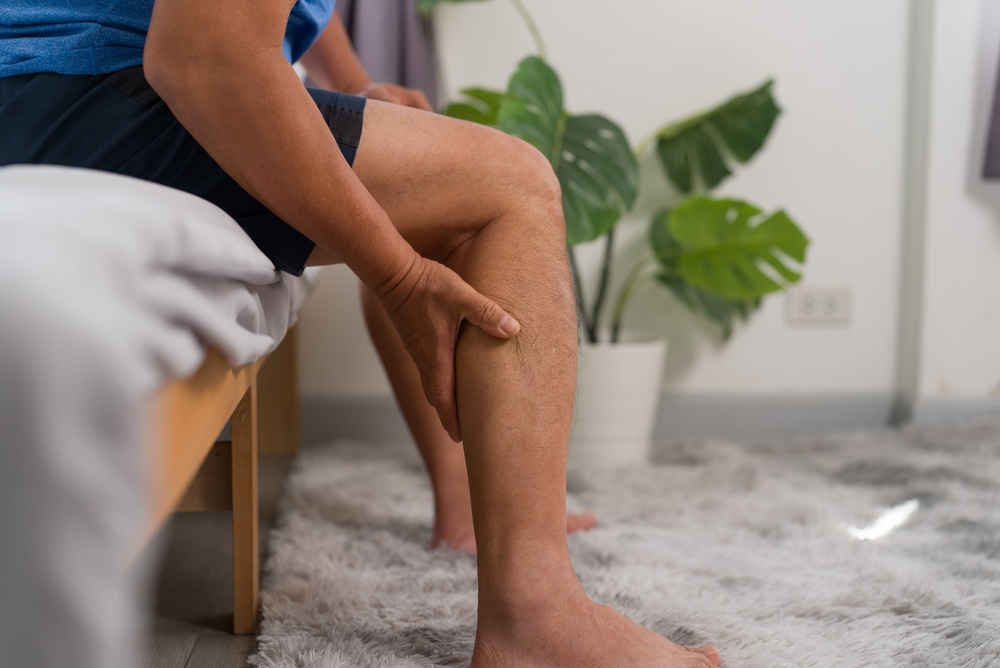
We pay plenty of attention to our heart, brain, bones and joints as we grow older. But when was the last time you thought about your calf muscles?
Probably when they cramped or ached.
Yet those muscles at the back of your lower legs perform an important job every time you stand and walk. The calf-muscle pump is sometimes nicknamed the body’s “second heart” because it helps move blood from the legs back towards the heart.
And the good news is that one of the best ways to keep it working is simply to move.
How your calves help your circulation
Blood travelling down to your feet has gravity on its side. Getting it back upwards is more of a challenge.
The veins in your legs contain one-way valves that help prevent blood from flowing backwards. As you walk, your calf muscles repeatedly contract and relax, squeezing the veins running through and between them. This helps push blood upwards towards the heart, while the valves help stop it from falling back down.
Think of it as a remarkably efficient little pumping system:
Step. Squeeze. Release. Repeat.
You rarely notice it happening — but every walk across the room puts it to work.
The problem with sitting for too long
Unfortunately, modern life gives our calf muscles plenty of time off.
We sit while reading, watching television, working at a computer, travelling or chatting with friends. During prolonged periods of inactivity, the calf-muscle pump is used less effectively and blood can pool more easily in the lower legs.
For some people, this may contribute to swollen ankles and a feeling of heaviness in the legs.
Long periods of immobility are also a recognised risk factor for deep-vein thrombosis (DVT), although age, surgery, certain illnesses, medicines and previous blood clots can also influence individual risk.
The answer isn’t frantic exercise. It is regular movement.
Give your calves a one-minute wake-up call
If you have been sitting for a while, try this.
Place both feet flat on the floor. Keeping your toes down, slowly raise your heels and lower them again. Repeat several times.
Next, keep your heels on the floor and lift your toes towards you.
Better still, if you are able, get up regularly and walk around the room or house for a few minutes.
You can also strengthen your calves while standing. Holding a sturdy chair or counter for support, slowly rise onto your toes, pause briefly and lower your heels with control. If you have significant balance, joint, vascular or medical problems, check with your doctor or physiotherapist about which exercises are appropriate for you.
And don’t underestimate ordinary walking. Every step activates the calf-muscle pump.
Strong calves do more than pump blood
Your calves are also essential for everyday movement. They help propel you forwards when you walk, assist with climbing stairs and contribute to balance and stability.
Maintaining lower-leg strength therefore isn’t simply about circulation. It is part of maintaining mobility and independence.
Don’t ignore sudden swelling
Not every swollen ankle signals something serious, particularly after a long day of sitting or standing. But persistent or unexplained swelling should be discussed with your doctor.
More importantly, sudden swelling in one leg, particularly when accompanied by pain, tenderness, warmth or redness, requires prompt medical attention. Breathlessness or chest pain alongside these symptoms is an emergency.
One small habit to start today
If you spend long periods sitting, make movement part of your day. Get up periodically, walk around, flex your ankles or do a few gentle heel raises.
No equipment. No gym clothes. No complicated routine.
Your calves may be small compared with your heart, but they are an important part of the circulation team.
Sometimes, looking after your health really can begin from the ground up.