






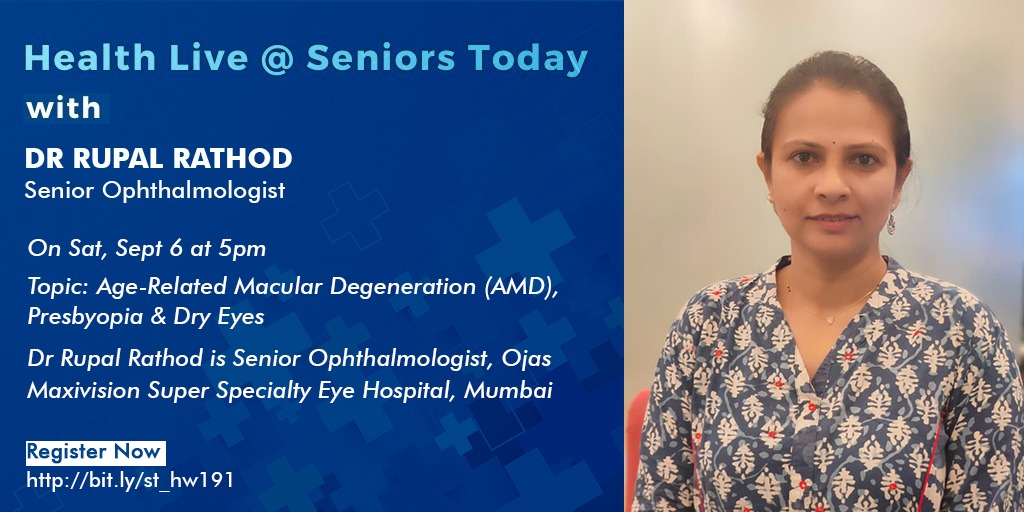
On Saturday,6 September 2025, Health Live@Seniors Today hosted senior ophthalmologist Dr Rupal Rathod, from Ojas Maxivision Super Speciality Hospital, Mumbai. She spoke about three common eye conditions affecting older adults — Age-related Macular Degeneration (AMD), Presbyopia, and Dry Eyes.
She began by explaining the structure of the eye, particularly the macula, which functions as the “camera sensor” responsible for sharp central vision. AMD, she noted, is a degenerative condition of the macula linked to ageing. It does not cause complete blindness since peripheral vision remains unaffected, but it can severely impair central vision.
Dr Rathod described the two main types:
- Dry AMD: the more common, slower form, marked by thinning of the macula and yellowish deposits (drusen). It leads to gradual, fuzzy vision.
- Wet AMD: a more advanced stage involving abnormal blood vessel growth under the retina, leading to bleeding, distortion, and rapid vision loss.
She outlined risk factors including age (typically after 75), genetics, smoking, poor diet, and obesity. Symptoms may include blurred or distorted vision, wavy lines, dark central spots, and dullness of colours.
Diagnosis involves a comprehensive eye exam, an OCT scan, and self-checking with an Amsler grid.
- Dry AMD is managed with monitoring, antioxidants, and lifestyle changes.
- Wet AMD requires urgent intervention with advanced intraocular injections to stabilise vision.
For those with residual impairment, she suggested low vision aids (magnifiers, special lenses, electronic devices) and practical lifestyle measures such as bright lighting, healthy diet, avoiding smoking, and staying socially and physically active.
The session also touched upon Presbyopia, a natural age-related decline in near vision usually beginning in the 40s. This condition, unlike AMD, is universal and easily managed with reading glasses, contact lenses, or advanced refractive surgeries for those wishing to avoid spectacles.
Dr Rathod emphasised the importance of regular eye check-ups (once or twice a year) for senior citizens to ensure early detection and timely management of such conditions. She concluded with practical advice: maintain healthy habits, reduce excessive screen use, use proper lighting, and never hesitate to consult an ophthalmologist if symptoms arise.