


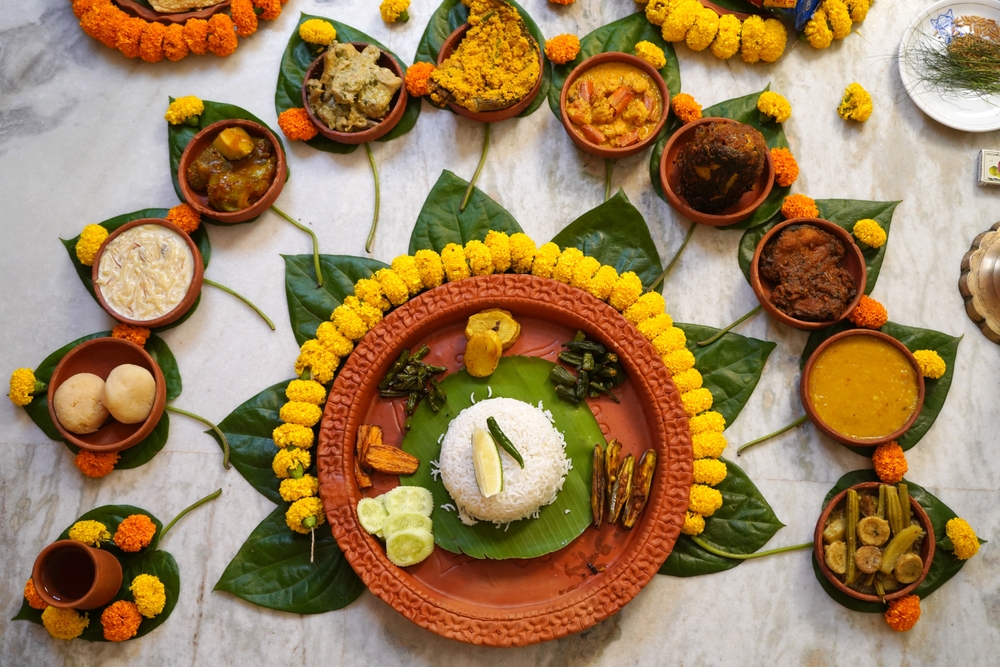
In Bengal, Navratri is celebrated as Durga Puja, a time when devotion, artistry, and flavours converge to create one of India’s grandest festivals. The air fills with the beat of dhak drums, the glow of pandals, and the aromas of festive dishes lovingly prepared in every home. Shared with warmth by Aroti Ghosh, these recipes reflect the heart of Bengal’s culinary tradition—where food is not only an offering to the goddess, but also a way to gather, share, and celebrate together.
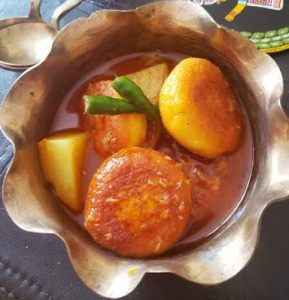
1. Bengali Style Paneer Curry (Chhanar Dalna)
Ingredients
- Paneer (chhana) – 300 g
- Ginger – 1 inch piece
- Green chillies – 2–3
- Tomatoes – 2 medium
- Cumin seeds (jeera) – 1 tsp
- Bay leaves (tejpatta) – 2
- Garam masala – 1 tsp
- Turmeric powder (haldi) – ½ tsp
- Kashmiri red chilli powder – 1 tsp
- Coriander powder (dhaniya) – 1 tsp
- Ghee – 1 tbsp
- Oil – as needed (mustard oil preferred)
- Salt – to taste
- Sugar – 1 tbsp
Preparation Method
Prepare the paneer:
➢ Cut paneer into small cubes.
➢ Heat oil in a pan and fry until lightly golden.
➢ Remove and soak in warm water to keep soft.
Make the spice paste:
➢ Grind ginger, green chillies, and tomatoes into a smooth paste.
➢ Dry-roast cumin seeds, bay leaves, and garam masala on a hot tawa, then grind into a fine powder.
Cook the masala:
➢ In the same pan, add more oil if needed.
➢ Sauté the ginger–chilli–tomato paste for 2–3 minutes.
➢ Add roasted spice powder, turmeric, Kashmiri red chilli powder, coriander powder, and salt.
➢ Cook until oil begins to separate.
Add paneer:
➢ Gently stir in fried paneer cubes.
➢ Cook on low heat for 5–7 minutes, allowing flavours to infuse.
Finish the curry:
➢ Add sugar and ghee, mixing well into the gravy.
➢ Simmer briefly, then remove from heat.
Serve:
➢ Enjoy hot with steamed rice, roti, or paratha.
Tip: For extra flavour, add a drizzle of mustard oil just before serving.
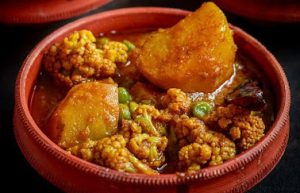
2. Aloo Phulkopir Niramish Torkari (Bengali Style)
Ingredients
- 6 medium potatoes (cut into halves)
- 1 medium cauliflower (cut into medium florets)
- ½ cup green peas (optional)
- 2 medium tomatoes (pureed)
- 1 Tbsp ginger paste
- 50 ml refined vegetable oil (for deep frying)
- ½ Tbsp ghee
- 1 Tsp cumin powder
- 1 Tsp Bengali garam masala powder
- ½ Tsp asafoetida (hing)
- ½ Tsp turmeric powder
- 1 Tsp red chilli powder (Kashmiri preferred)
- 1 Tsp salt (or to taste)
- 1 Tsp sugar
- ½ Tsp cumin seeds
- 2 bay leaves
- 2 dried red chillies
Preparation Method
Prepare vegetables:
➢ Halve potatoes and cut cauliflower into medium pieces.
➢ Puree the tomatoes until smooth.
➢ Coat potatoes and cauliflower with ¼ tsp turmeric powder and ¼ tsp salt.
Fry potatoes & cauliflower:
➢ Heat oil in a pan, fry potatoes until golden, then set aside.
➢ Fry cauliflower florets until golden brown, then set aside.
Make the masala base:
➢ In the same oil, add bay leaves, dried red chillies, cumin seeds, and hing (mixed in 1 Tbsp water).
➢ Add tomato puree and ginger paste; sauté for 2 minutes.
➢ Stir in cumin powder, garam masala, turmeric, chilli powder, sugar, and salt. Cook until the oil separates.
Cook vegetables:
➢ Add fried potatoes; sauté for 5 minutes on low heat.
➢ Pour in 1 cup of water, cover, and cook for 5 minutes until potatoes soften.
➢ Add fried cauliflower and sauté for another 2 minutes.
➢ Add ½ cup of water and simmer on medium heat until the desired consistency.
Finish & serve:
➢ Stir in ghee and mix well.
➢ Serve hot with luchi, kochuri, paratha, or rice.
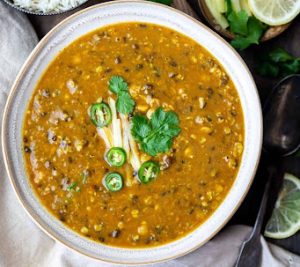
3. Narkel Deva Chholar Daal (Bengali Chana Dal with Coconut)
Ingredients
- 1 cup split Bengal gram (chana dal)
- ½ cup fresh coconut, chopped into small pieces
- 2 green chillies, slit
- 1-inch ginger, grated or paste
- 1 medium tomato, chopped
- 1 Tsp cumin seeds
- 2 bay leaves (tej pata)
- ½ Tsp turmeric powder
- 1 Tsp coriander powder
- 1 Tsp cumin powder
- 1 Tsp salt (or to taste)
- 1 Tbsp sugar
- 2–3 Tbsp ghee (plus extra for garnish if desired)
- 1 Tbsp oil
- Fresh coriander leaves, chopped
Preparation Method
Cook the dal:
➢ Wash and pressure cook the split Bengal gram until soft but not mushy. Set aside.
Prepare tempering:
➢ Heat oil and ghee in a pan.
➢ Add cumin seeds and bay leaves; let them splutter.
➢ Add chopped coconut pieces and fry until lightly golden.
Make masala base:
➢ Add turmeric, coriander powder, cumin powder, tomatoes, ginger paste, and green chillies.
➢ Add salt to taste. Cover and cook for 2 minutes on a low flame.
➢ Once tomatoes soften, roast the masala until oil separates.
Combine with dal:
➢ Add the cooked split gram to the pan.
➢ Stir well, add water as required for the desired consistency.
➢ Add sugar and simmer for 2–3 minutes.
Finish & serve:
➢ Garnish with fresh coriander leaves.
➢ Serve hot with roti, puri, or rice.
4. Shukto Recipe (Mix Vegetable Dish)
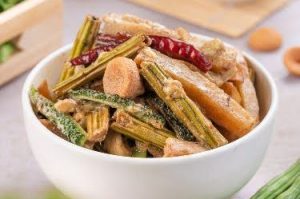
Ingredients
- 50 g urad dal vadi (fried lentil fritters)
- 2 bitter gourds (karela)
- 1 sweet potato (shakarkand)
- 2 ridge gourds (turai)
- 100 g long beans (barbati)
- 100 g potato (aloo)
- 1 medium raw papaya
- 2 raw bananas
- 3–4 small brinjals (baingan)
- 4 drumsticks (sahjan)
- 1 Tbsp mustard seeds
- 2 Tbsp poppy seeds
- ½ Tsp turmeric powder
- 1 Tsp salt (or to taste)
- 2–3 Tbsp mustard oil (for frying)
- 1 cup milk
- ½ Tsp panch phoron (Bengali five-spice mix)
- 1 dried red chilli
- 1 bay leaf
Preparation Method
Prepare the paste:
➢ Soak mustard seeds and poppy seeds in water for 15–20 minutes.
➢ Grind into a smooth paste and keep aside.
Fry the vadi & vegetables:
➢ Heat mustard oil in a pan and fry the urad dal vadi until golden. Remove and set aside.
➢ In the same pan, add more oil if required and sauté all the cut vegetables lightly until they begin to brown. Keep aside.
Make the tempering & base:
➢ In another pan, heat mustard oil.
➢ Add panch phoron, dried red chilli, and bay leaf; let them splutter.
➢ Stir in the mustard–poppy seed paste with turmeric powder and a little water. Sauté until aromatic.
Cook the shukto:
➢ Add the sautéed vegetables and mix well with the spice paste.
➢ Season with salt, cover, and cook on low flame for 10–15 minutes.
➢ Pour in 1 cup of milk, stir gently, and simmer until the vegetables are tender and flavours are well combined.
Serve:
➢ Garnish with fried vadi.
➢ Serve hot with steamed rice, roti, or as part of a Bengali thali.
While Navratri in many parts of India is synonymous with strictly vegetarian fare, Bengal tells a different story. During Durga Puja, certain communities include non-vegetarian delicacies like fish in their festive meals and even in bhog (prasad), reflecting the region’s unique culinary traditions. This mustard fish curry, or Shorshe Bata Maach, is one such beloved dish, deeply tied to Bengali food culture.
5. Shorshe Bata Maach (Mustard Fish)
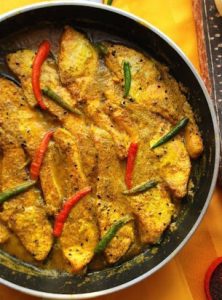
Ingredients
- River fish – cut into medium pieces
- 4 Tbsp mustard seeds – soaked 2 hrs, ground to paste with 1 green chilli & pinch of salt
- 2–4 green chillies – slit lengthwise
- 1½ Tsp kalonji (nigella seeds) or panch phoron
- 2 Tsp turmeric powder
- 2 Tsp red chilli powder
- Salt – to taste
- 1 cup water
- ¾ cup milk (optional, for mellow flavour)
- Mustard oil – preferably pungent, for frying
Preparation Method
Marinate the fish:
➢ Rub fish pieces with 1 Tsp turmeric, 1 Tsp red chilli powder, and salt. Set aside.
Prepare the mustard paste:
➢ Soak mustard seeds for 2 hrs, then grind to a fine paste with 1 green chilli and a pinch of salt.
➢ Mix in remaining turmeric, red chilli powder, salt, and ¼ cup water to form a thick slurry.
Fry the fish:
➢ Heat mustard oil in a pan until smoking hot.
➢ Shallow-fry the marinated fish carefully until lightly golden. Remove and set aside.
Make the curry:
➢ In the same pan, add a little more oil. Temper with kalonji or panch phoron for 15–30 seconds.
➢ Add mustard paste and stir well.
➢ Pour in water mixed with milk, bring to a boil, and mix thoroughly.
Cook the fish:
➢ Gently add the fried fish pieces. Shake the pan lightly to coat without breaking them.
➢ Add slit green chillies and simmer for 12–15 minutes, until fish is cooked through and curry is fragrant.
Serve:
➢ Enjoy piping hot with steamed rice.
As Navratri finds its most vibrant expression in Bengal through Durga Puja, food becomes more than nourishment—it turns into a living tradition. Each recipe offered during this time speaks of devotion, festivity, and the deep cultural roots that bind families and communities together. From simple comfort to festive indulgence, these meals remind us that the spirit of celebration is not only in rituals but also in the joy of sharing. And in Bengal, that joy, much like Durga Puja itself, is timeless.
Recipes courtesy:
Aroti Ghosh