







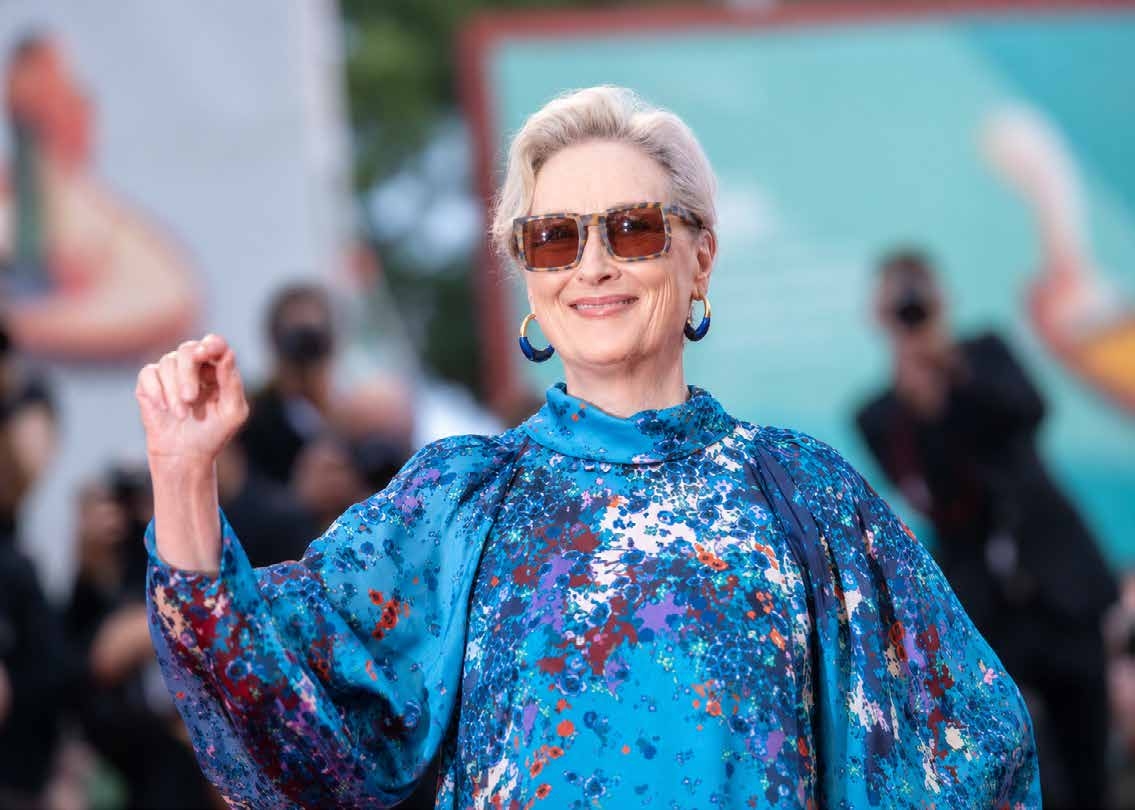
Few have romanced the screen with as much fervour as Meryl Streep, writes Deepa Gahlot
In notoriously sexist and ageist Hollywood, 76-year-old Meryl Streep, leading the cast of The Devil Wears Prada 2, delivered the fourth highest grossing film of the year.
Born on June 22, 1949, with no signs of slowing down careerwise, and a rumoured romance with Martin Short, (following the break-up of a nearly 50-year marriage to Don Gummer), Streep has been called the greatest living actress, and one of the finest of all time. She has been nominated for the Academy Awards an astounding 21 times, she has won it thrice. Add to those 34 Golden Globe nominations, alongside a list of lifetime achievement awards from the American Film Institute, the Kennedy Center, and the Cannes Film Festival.
It is dedication, intelligence, talent, versatility, discipline and maybe luck that led to an introverted girl from New Jersey – “gawky kid with glasses and frizzy hair,” as she once described herself—to redefine screen acting, playing many difficult and complex women with complete understanding. To put it simply, there is nothing she cannot do, no character she cannot bring alive, with her always brilliant performances, disappearing into the role, till the real Meryl Streep is rendered invisible.
Streep showed exceptional talent at an early age, and the ability to sing in a clear, resonant voice. In 1969, during her undergraduate years at Vassar College, when she starred in a campus production of August Strindberg’s Miss Julie, her performance bowled over the faculty. Drama professor Clinton J. Atkinson remarked that no one had taught Meryl how to act; she had simply discovered it within herself.
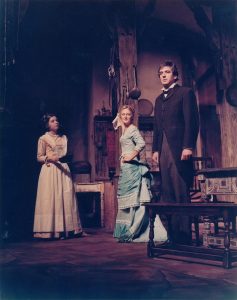
Caption: Bowling everyone over in Miss Julie
After earning her Bachelor of Arts cum laude in 1971, Streep advanced to the tough training of the Yale School of Drama, where she turned into a campus legend, for playing over 40 roles during her tenure, shifting effortlessly from Shakespearean heroines to bedridden 90-year-olds. Upon receiving her Master of Fine Arts in 1975, she relocated to New York City, to work on the stage. Within a year, she made her Broadway debut and soon earned a Tony Award nomination for her blazing performance in Tennessee Williams’s 27 Wagons Full of Cotton.
The inspiration for her cautious entry into cinema was Robert De Niro’s phenomenal performance in Taxi Driver (1976). The actor himself suggested Streep for the role of Linda in Michael Cimino’s Vietnam War masterpiece, The Deer Hunter. Streep accepted the role primarily to remain close to her partner, actor John Cazale, who was dying of terminal lung cancer. Despite her personal grief, her portrayal of a small-town supermarket clerk caught in the psychological crossfire of war was devastatingly subtle. She wrote her own lines for the film to give Linda greater depth, earning her very first Academy Award nomination for Best Supporting Actress.
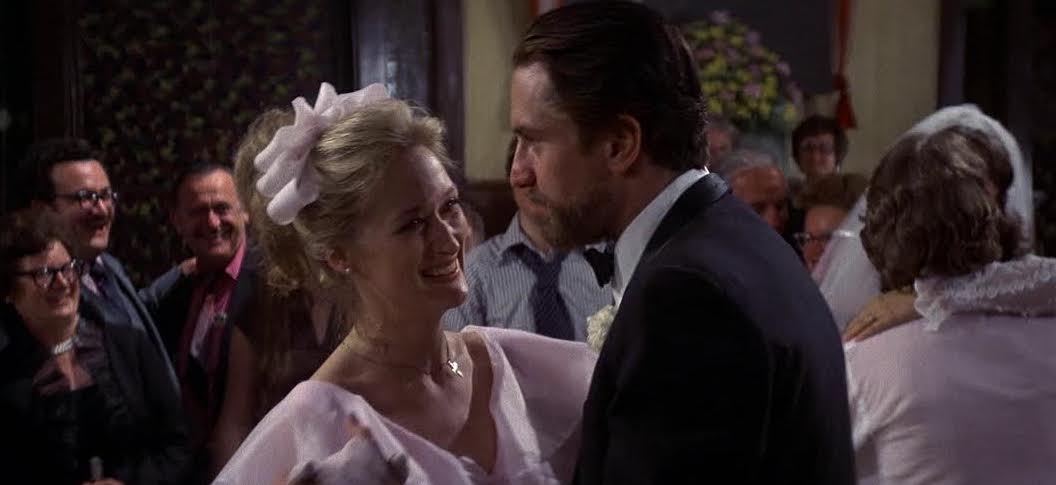
CAPTION: Her first Academy Award nomination came with The Deer Hunter
Directors looking for that kind of singular talent, offered her roles, like Kramer vs. Kramer (1979), in which she played Joanna Kramer, a woman who leaves her husband (Dustin Hoffman) and young son in a bid to find herself, only to return later to contest custody. In the hands of a lesser actress, Joanna could have easily turned into an unsympathetic woman. Streep, however, reworked the courtroom dialogue with director Robert Benton, ensuring Joanna’s confusion and suffocating isolation were credible. The film was a critical and commercial success and Streep’s nuanced performance earned her first Academy Award for Best Supporting Actress.
If the 1970s introduced Meryl Streep as a formidable talent, the 1980s elevated her to an unrivalled dramatic icon. This era became defined by her rigorous “impersonation” style of acting, wherein she completely submerged her own identity beneath the historical realities, behavioural quirks, and vocal dialects of her characters (source: internet). The high point came with Alan J. Pakula’s Sophie’s Choice (1982), in which she played Sophie Zawistowska, a Polish Catholic survivor of Auschwitz living in post-war Brooklyn, haunted by horrific wartime memories. Streep spent months studying Polish and German, achieving a linguistic precision that stunned native speakers. Her physical transformation was equally shocking; she shed weight until she appeared skeletal in the film’s haunting flashback sequences. Her performance earned her the 1982 Academy Award for Best Actress, cementing her reputation as the definitive dramatic actress of her era.
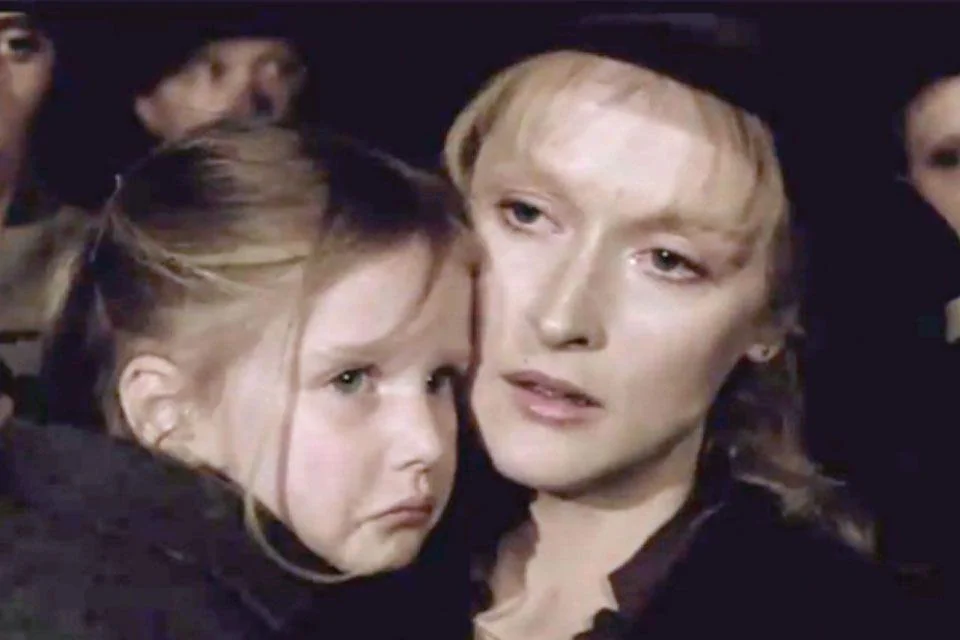
Caption: An award-winning performance in Sophie’s Choice
This film was followed by other top-notch performances, in films like Silkwood (1983), in which she played the eponymous role of a nuclear factory worker and whistleblower who died under mysterious circumstances. In 1985, she starred alongside Robert Redford in Sydney Pollack’s romantic epic Out of Africa, adopting a Danish accent to portray the author, Karen Blixen. Streep concluded the 1980s by defying Australian tabloid caricatures in Fred Schepisi’s A Cry in the Dark (1988), as Lindy Chamberlain—the real-life mother falsely accused of murdering her infant daughter after claiming a dingo took her baby. She played her as a fiercely private woman refusing to play the grieving mother for the media, even though it meant she lost public sympathy. She got yet another Oscar nomination and the Best Actress award at the Cannes Film Festival.
By the dawn of the 1990s, Streep faced a unique industry dilemma. Her reputation for appearing in heavy, dialect-heavy tragedies, backfired on her. Critics began to complain that her work was overly technical, cold, or lacking in spontaneity. Recognizing the danger of being pigeonholed as Hollywood’s “red-eyed special,” Streep made a deliberate pivot toward lighter, more commercially attractive films. She began the decade with Mike Nichols’s Postcards from the Edge (1990), an adaptation of Carrie Fisher’s semi-autobiographical novel. Playing Suzanne Vale, a recovering drug-addicted actress navigating a difficult relationship with her showbiz mother (Shirley MacLaine), she displayed a sharp comedic timing and even showcased her singing voice. She followed this with Robert Zemeckis’s dark, satirical comedy Death Becomes Her (1992). In 1994, she surprised audiences by starring in the action-adventure thriller The River Wild, performing many of her own white-water rafting stunts.
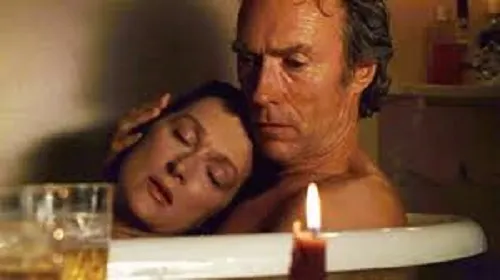
Caption: Intense in The Bridges of Madison County
Her biggest triumph of the decade, however, was Clint Eastwood’s The Bridges of Madison County (1995). Adapting Robert James Waller’s bestselling romance novel, Streep infused the character of Francesca Johnson—an isolated Italian war bride living in rural Iowa—with a deep, quiet yearning. Her chemistry with Eastwood was electric, and the film became a massive box office hit, reminding the industry that Streep could do intense roles as well as soft romantic parts, without sacrificing her artistic integrity.
Many actresses face a sharp decline in opportunities after turning 50, but Meryl Streep’s stock just rose. The renaissance began with Spike Jonze’s meta-comedy Adaptation (2002), where her uninhibited portrayal of journalist Susan Orlean won her a Golden Globe and her 13th Oscar nomination, breaking Katharine Hepburn’s long-standing record. That same year, she appeared in Stephen Daldry’s The Hours, delivering a devastating contemporary performance alongside Nicole Kidman and Julianne Moore.
However, the definitive high of this era arrived in 2006 with David Frankel’s The Devil Wears Prada. Miranda Priestly, the icy, terrifying editor-in-chief of a high-fashion magazine, was a masterclass in understatement, as she struck terror in the staff with her caustic comments delivered in a soft, whispery voice. Her performance was a cultural phenomenon, turning a studio comedy into a massive global hit and earning her another Academy Award nomination. Surprisingly, audiences did not hate her tyranny, they admired her go-getting spirit.
Proving her box office dominance was no fluke, Streep followed this by diving headfirst into Phyllida Lloyd’s Mamma Mia! (2008). At age 59, she danced across Greek rooftops, did mid-air splits, and belted out ABBA anthems. The musical grossed over $600 million worldwide, becoming the biggest commercial hit of her entire career.

Caption: Mamma Mia was Streep’s biggest commercial hit
She ended the decade by earning rave reviews as the culinary icon Julia Child in Nora Ephron’s Julie & Julia (2009). By the 2010s, Streep’s started getting offered formidable historical figures. In 2011, she reunited with director Phyllida Lloyd for the biographical drama The Iron Lady, playing Margaret Thatcher. Streep’s performance was universally praised for its extraordinary feat of not just mimicking the former British Prime Minister, but bringing out all the facets of her controversial personality. Thirty years after her win for Sophie’s Choice, Streep took home her third Academy Award for Best Actress.
The decade continued with a historic string of high-profile roles in films like John Wells’s August: Osage County (2013), Rob Marshall’s Into the Woods (2014); in 2017, she starred as Katharine Graham, the first female publisher of a major American newspaper, in Steven Spielberg’s political thriller The Post, for which she got the her historic 21st Academy Award nomination.
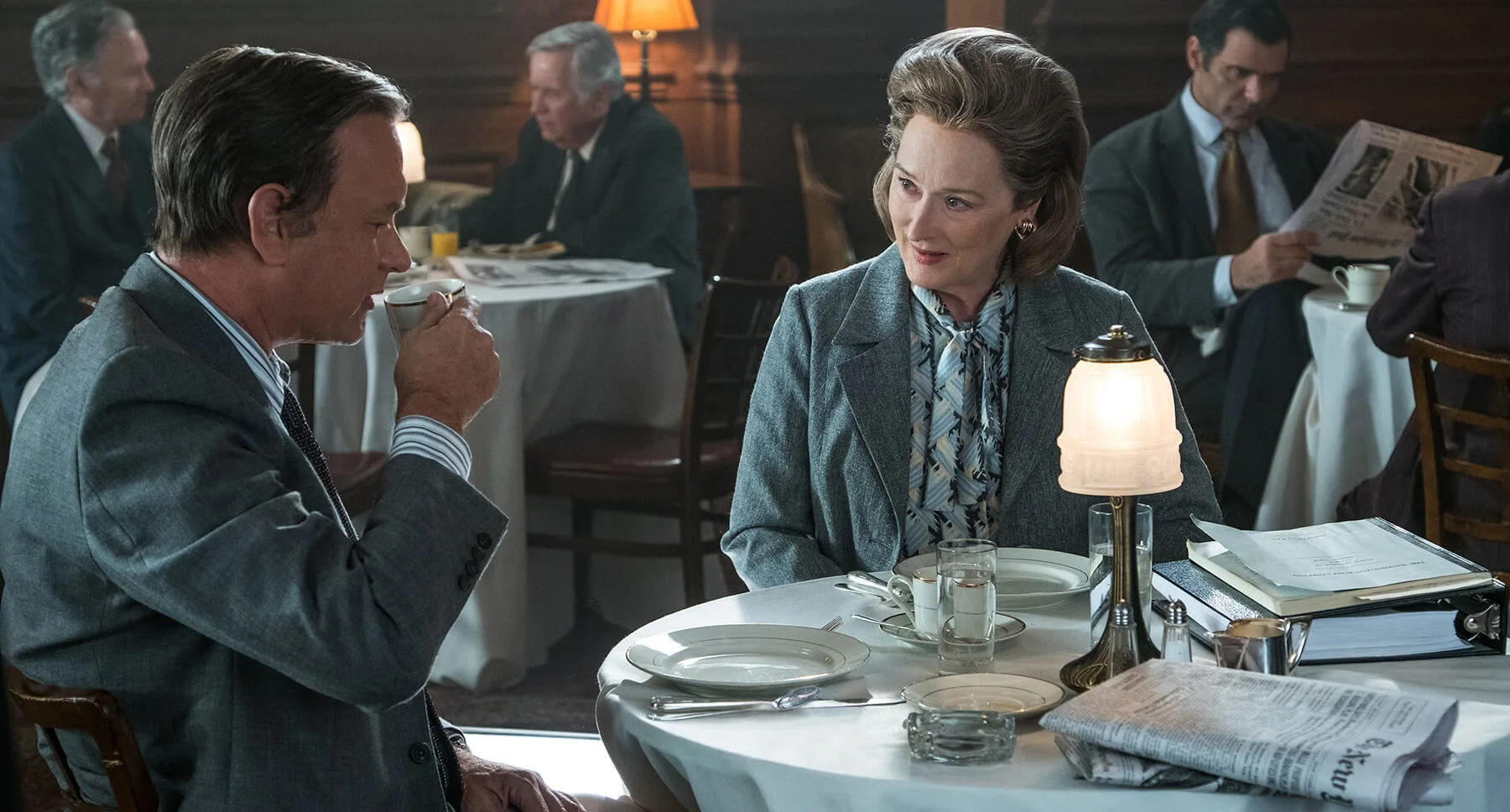
Caption: A historic 21st Academy Award nomination in The Post
As the entertainment landscape shifted toward streaming platforms, Streep adapted seamlessly. In 2019, she joined the second season of HBO’s critically acclaimed drama series Big Little Lies as Mary Louise Wright, a grieving mother searching for the truth behind her son’s death. More recently, she delighted audiences by joining the third and fourth seasons of the hit comedy-mystery series Only Murders in the Building, playing Loretta Durkin, a struggling Broadway actress.
When President Barack Obama awarded her the Presidential Medal of Freedom in 2014, he summarized her cultural impact perfectly, noting that her brilliance lies in her ability to capture the messy, beautiful, and contradictory nature of human existence
Meryl Streep is an enduring icon, because she does not let her formidable reputation come in the way of searching for ways to give life to characters in their journey from page to screen. Revisiting her role as Miranda Priestly in The Devil Wears Prada 2, she turns to an ambitious journalist in whom she sees her young self and says, with a gleam in her eye, “Boy, I love working. I really do, don’t you? I just love it.” Few have romanced the screen with as much fervour as Meryl Streep.