






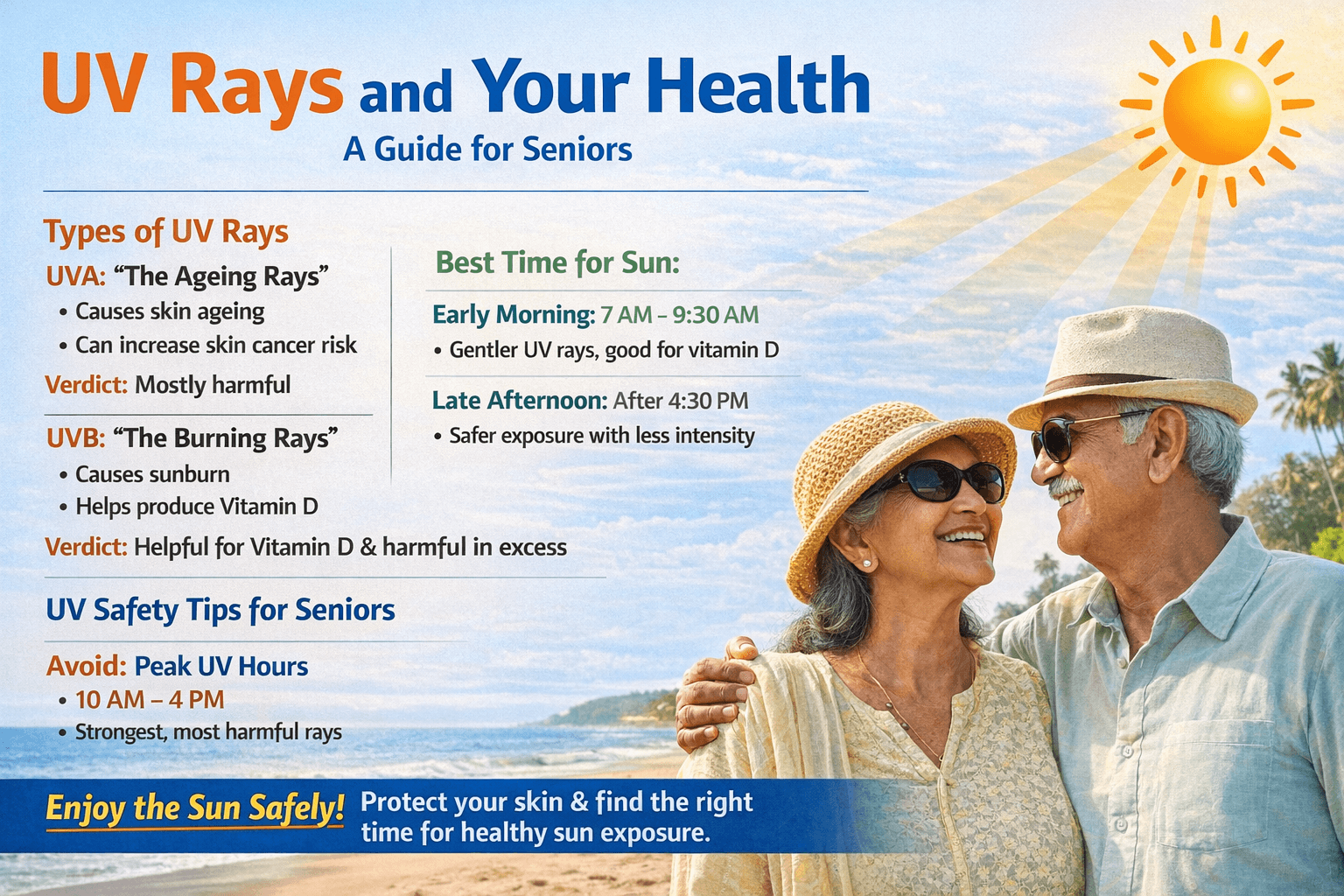
Handled thoughtfully, the Indian sun can support health — without accelerating ageing or increasing risk
India enjoys abundant sunshine for most of the year. While sunlight supports vitamin D production, mood and overall wellbeing, it also brings high levels of ultraviolet (UV) radiation — often stronger and more sustained than in many Western countries.
For seniors in India, balancing the benefits of sunlight with protection against harm is especially important, given our tropical climate and high UV index across much of the country.
Understanding UV Rays in the Indian Context
India’s proximity to the equator means:
- UV levels are strong for most months of the year.
- Peak UV intensity often begins earlier in the day.
- Even winter sun in many regions can be intense.
- Coastal areas (Goa, Kerala, Mumbai, Chennai) and high-altitude regions (Shimla, Leh) experience particularly strong UV exposure.
The Three Types of UV Rays
☀ UVA – The Ageing Rays
- Present all year round.
- Penetrate deep into the skin.
- Accelerate wrinkles, pigmentation and uneven skin tone.
- Increase the risk of skin cancer.
- Contribute to cataracts and other eye damage.
In India: UVA exposure is constant — daily facial protection is advisable.
UVB – The Vitamin D Rays
- Stronger during midday hours.
- Stimulate vitamin D production.
- Cause sunburn and tanning.
- Increase skin cancer risk with prolonged exposure.
In India: UVB is very intense between late morning and mid-afternoon, especially in summer.
🚫 UVC
- Filtered by the ozone layer.
- Not a concern from natural sunlight.
Why UV Protection Matters for Indian Seniors
Many Indians assume darker skin offers full protection. While higher melanin does provide some natural defence, it does not eliminate risk.
With ageing:
- Skin becomes thinner and more fragile.
- Pigmentation issues worsen with sun exposure.
- Cataract risk increases.
- Long-term cumulative sun damage shows up later in life.
At the same time, despite abundant sunshine, vitamin D deficiency is extremely common in India, even among seniors. This is often due to indoor lifestyles, pollution blocking UVB, and consistent sun avoidance.
The goal is not to avoid sunlight — but to manage it wisely.
When Should You Avoid Direct Sun?
Peak UV Hours: 10:00 am – 4:00 pm
(In many parts of India, intense exposure can begin as early as 9:30 am in summer.)
During these hours:
- UVB radiation is strongest.
- Risk of dehydration and heat exhaustion increases.
- Skin damage accumulates quickly.
This is particularly important in:
- April–June (peak summer)
- Coastal and desert regions
- High-altitude hill stations (UV increases with altitude)
Best Times for Safe Sun Exposure in India
✅ Early Morning: 7:00 am – 9:30 am
✅ Late Afternoon: After 4:30 pm
For most Indian seniors:
- 15–20 minutes of sun exposure on arms and legs, 3–4 times per week, is generally adequate in summer.
- Slightly longer exposure may be needed in winter, particularly in North India.
Those with darker skin tones may require a little more exposure to produce sufficient vitamin D.
However, if you are sun-sensitive or on medications that increase sensitivity, consult your doctor before increasing exposure.
Sunscreen in India: What Seniors Need to Know
Given India’s strong UV levels, sunscreen use is often more important than people realise.
When Should Seniors Wear Sunscreen in India?
- Daily on the face, neck and hands.
- Whenever stepping out between 9:30 am and 4:30 pm.
- During morning walks if UV index is already high.
- On beach holidays or pilgrimages with prolonged outdoor exposure.
- Even on cloudy days — UV penetrates clouds and pollution haze.
How Much Sunscreen Should Be Applied?
Most people apply too little.
Recommended amounts:
- Two finger lengths of sunscreen for face and neck.
- Around 30 ml (a small shot glass amount) for full body coverage.
- Don’t forget ears, back of neck, hands and feet.
Applying too little significantly reduces protection.
What SPF Is Suitable in India?
For Indian conditions, choose:
- SPF 30 minimum for daily use.
- SPF 50 during summer, beach visits, hill stations or extended outdoor activity.
- Ensure it is broad-spectrum (protects from both UVA and UVB).
- Water-resistant if sweating heavily.
For sensitive or mature skin, mineral sunscreens (zinc oxide or titanium dioxide) may be gentler.
When to Reapply
- Every two hours when outdoors.
- After sweating heavily.
- After washing face or towel drying.
Remember: sunscreen reduces damage — it does not mean unlimited sun exposure.
Additional Protection for Seniors in India
✔ Wear loose cotton clothing with sleeves
✔ Use a wide-brimmed hat or umbrella
✔ Wear UV-protective sunglasses (important for cataract prevention)
✔ Stay hydrated — dehydration risk is high in Indian summers
✔ Avoid direct afternoon sun, especially during heatwaves
Balancing Sun and Safety
In India, sunlight is plentiful — but so is UV intensity. Seniors should aim for:
- Short, controlled exposure during safer hours.
- Daily facial sunscreen use.
- Avoidance of peak midday sun.
- Regular vitamin D testing if concerned about deficiency.
Handled thoughtfully, the Indian sun can support health — without accelerating ageing or increasing risk.