






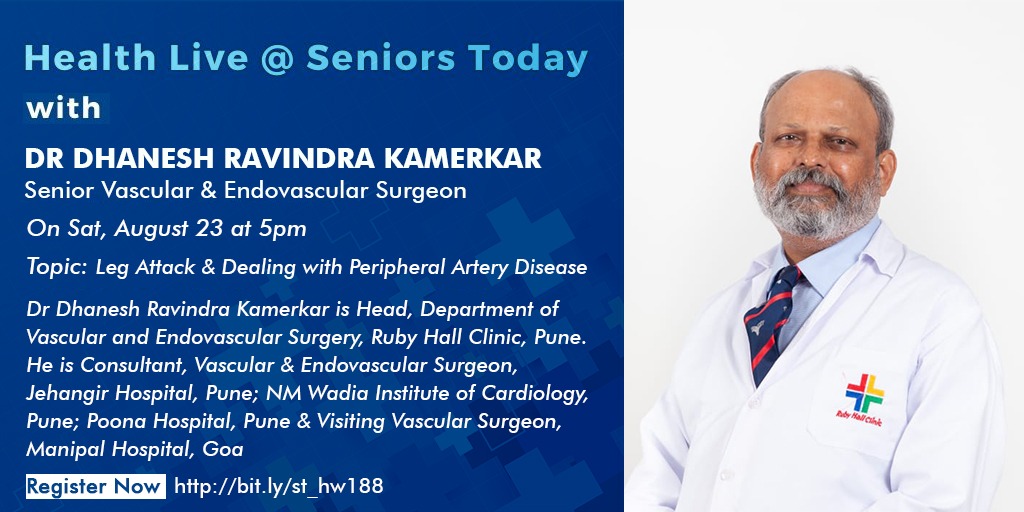
On August 23, 2025, Health Live@Seniors Today, hosted Dr Dhanesh Ravindra Kamerkar, a senior vascular and endovascular surgeon.
Dr Dhanesh Ravindra Kamerkar is Head of the Department of Vascular and Endovascular Surgery, Ruby Hall Clinic, Pune. He is Consultant Vascular & Endovascular Surgeon, Jehangir, Pune. N.M. Wadia Institute of Cardiology, Pune, Poona Hospital & Visiting Vascular surgeon, Manipal Hospital, Goa.
Dr. Kamerkar explained the concept of a “leg attack,” a term he uses to help people understand leg pain in the same way they understand a heart attack. He discussed the causes of leg pain, distinguishing between three main types:
- Peripheral Artery Disease (PAD): This condition, caused by a narrowing of arteries in the legs, is similar to heart blockages and shares risk factors like aging, smoking, diabetes, and high cholesterol. The pain, also known as arterial claudication, occurs specifically when walking and subsides after a brief rest. It typically starts in the calf muscles but can also affect the thighs and buttocks.
- Venous Pathology: This type of leg pain is caused by problems with the veins, such as varicose veins or deep vein thrombosis (DVT). Unlike PAD, this pain worsens with prolonged standing or sitting and improves when the legs are elevated. It is common in people with professions requiring long hours on their feet, like teachers or surgeons.
- Neuropathic Pain: This is a constant pain in the nerves of the legs, often seen in individuals with long-standing diabetes. It isn’t related to a specific position or activity.
Dr. Kamerkar stressed the importance of not ignoring leg pain, especially for older people. Early diagnosis and treatment are crucial to prevent serious complications like gangrene or amputation. He noted that clots from varicose veins could even travel to the lungs, a potentially fatal condition.
During a Q&A session, Dr. Kamerkar clarified that while varicose veins can be hereditary, PAD is not typically hereditary unless it occurs in the family at a young age (40s or 50s). He also distinguished between vascular surgery (traditional open surgery) and endovascular surgery (a less invasive procedure using punctures, similar to angioplasty). For those concerned about leg health, he recommended an Ankle-Brachial Index (ABI) test as an annual preventive checkup.