






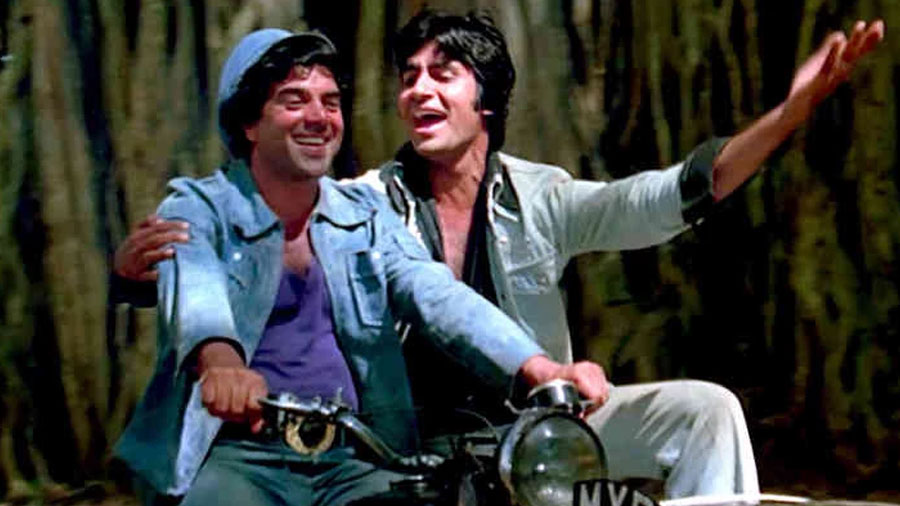
Whenever any friends get together, it’s common for them to pose like Dharmendra and Amitabh Bachchan in Sholay, and sing, “Arrey, meri jeet, teri jeet, teri haar, meri haar, sun ae mere yaar; Tera gham, mera gham, meri jaan, teri jaan, aisa apna pyaar; Jaan pe bhi khelenge, tere liye le lenge, sabse dushmani”.
That image of Veeru on a motorcycle and Jai on the sidecar is still etched in one’s memory. Even 50 years later, ‘Yeh Dosti’ remains one of the quintessential friendship songs. And it’s not the only one in Ramesh Sippy’s blockbuster that keeps coming back to mark specific situations. On Holi, one hears the group number ‘Holi Ke Din’ played everywhere. When a man wants to reconcile with an angry partner, he often sings, “Koi haseena jab rooth jaati hai toh, aur bhi haseen ho jaati hai”.
Cynics may have their own complaints. Some felt that in what was essentially an action and revenge drama, with some comic scenes creating a balance, the music didn’t have much of a role in the overall scenario. Others thought both music director R D Burman and lyricist Anand Bakshi had done more memorable work in the past. The truth, of course, is that in terms of longevity, the music of Sholay still shines. It’s not only the tunes or words of the five songs, but how they have been included in the film’s narrative and portrayed on screen. Even the background score, including the title theme, the regular wailing sounds, and the scene where Jai (Amitabh) plays the mouth organ as Radha (Jaya Bhaduri) looks on, continue to have an impact today. The use of stereophonic sound added to the effect.
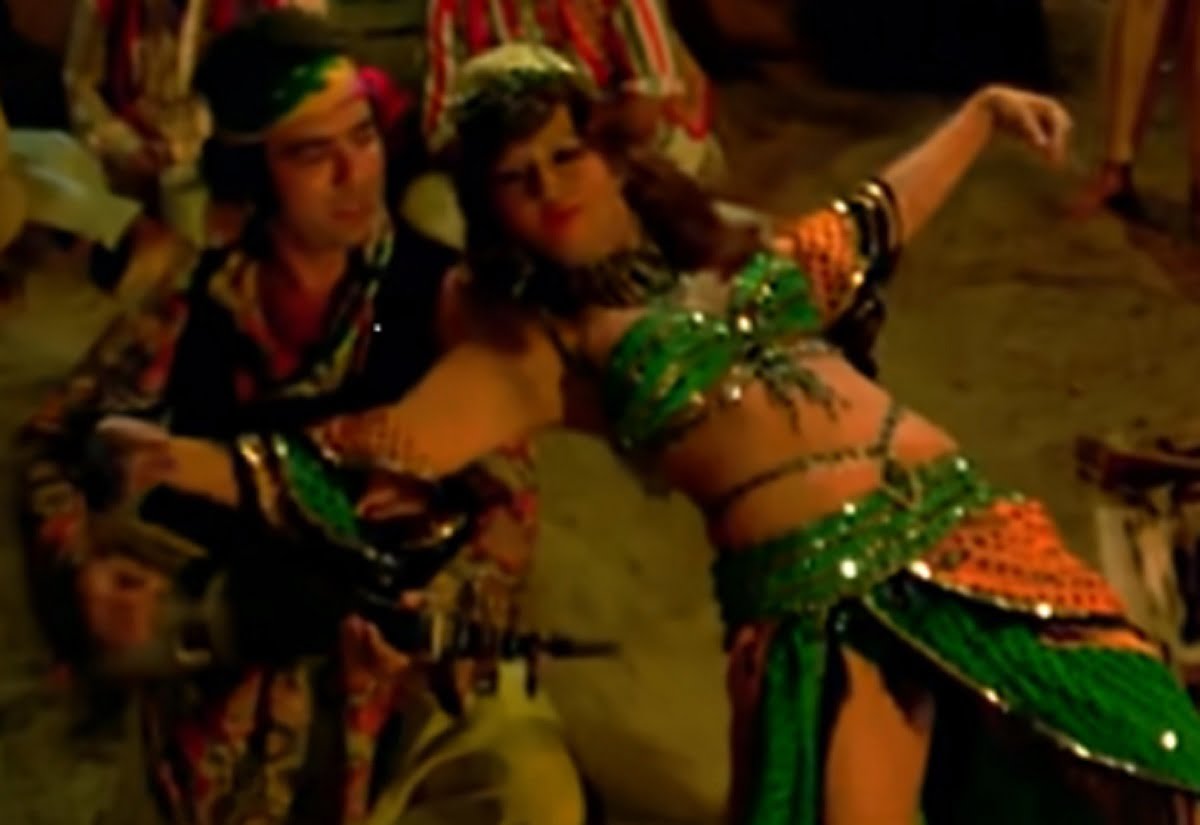
The singers were chosen appropriately by Burman, with Kishore Kumar singing for Veeru (Dharmendra), Manna Dey for Jai and Lata Mangeshkar for the tangewaali Basanti (Hema Malini). In the lone cabaret number ‘Mehbooba Mehbooba’, Burman sang for Jalal Agha as Helen danced on. That song was a huge hit, and is a regular at clubs even today, though it was actually rehashed from Greek singer Demis Roussos’s 1974 number ‘Say You Love Me’.
Interestingly, Burman decided to sing ‘Mehbooba Mehbooba’ himself after other playback singers could not quite capture what he wanted. To achieve the raw tone and raspy effect, he drank hot tea and avoided clearing his throat before recording. The famous beer-bottle rhythm was born in his living room while experimenting with sound. The number bursts into the film as the dacoits led by Gabbar Singh (Amjad Khan) drink and celebrate in their hideout. Helen plays a travelling dancer who holds the entire gang spellbound.
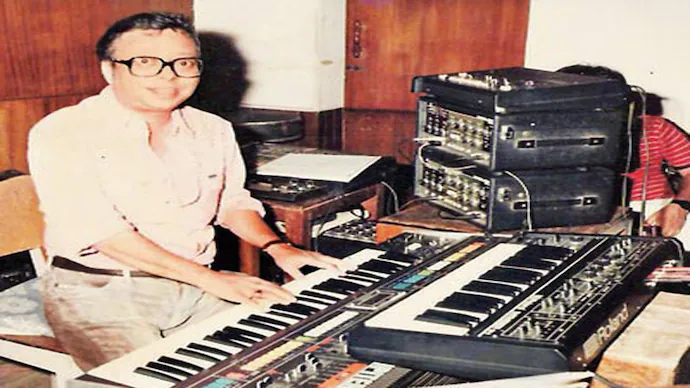
Most of the songs were recorded at Rajkamal Studios in Mumbai, with arrangements being supervised by Manohari Singh and Basudeb Chakraborty. A 70-member orchestra was used and some of Burman’s regular team members like Kersi Lord on keyboard and synthesiser, Manohari on saxophone, Bhupinder Singh on guitar, Bhanu Gupta on harmonica and Maruti Rao Keer on tabla and percussion played a prominent role. The music was sold to Polydor India, which was emerging as a rival to HMV, at an advance of Rs 5 lakh, a massive amount those days. It was necessary to sell 100,000 units to break even, and the label sold five times that number, even releasing a dialogue LP later.
Each song has an interesting story behind it. ‘Yeh Dosti’ has become a cultural reference for friendship, quoted in films, speeches and even political campaigns. Filming the song was no ordinary feat. Director Sippy wanted it to look effortless and free-spirited, and yet be perfectly in sync with the rhythm. The motorcycle and sidecar were tricky to handle on the rocky terrain and the camerawork had to keep both Amitabh and Dharmendra in the frame without losing the sense of movement. Shooting stretched over nearly three weeks in the blazing sun. Manna Dey later remarked that Kishore’s singing brought a cheeky energy that matched Dharmendra perfectly, while his own more measured tone suited Amitabh’s thoughtful Jai. A highlight was the use of harmonica. The song has two versions, with the sad one coming at the film’s end.
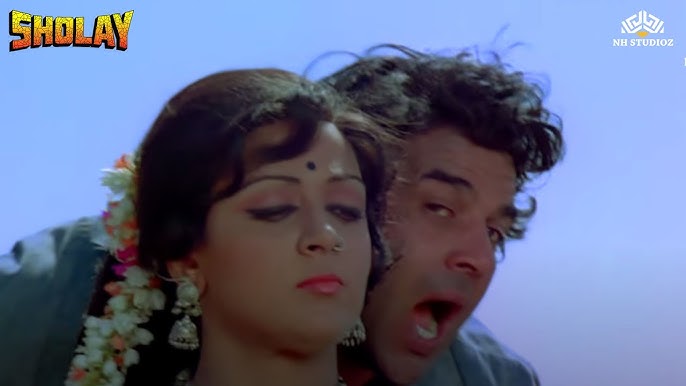
‘Koi Haseena’, filmed on Dharmendra and Hema Malini, begins after Veeru plays a prank on Basanti at a temple. She is annoyed and he tries every trick to win her back. The setting is the countryside. Kishore sings with a teasing lilt to match Dharmendra’s antics. He recorded the song in a single session, deliberately singing with a casual air to capture the feel of a man making up lines on the spot. With Dharmendra and Hema involved in a real-life romance, the sequence looked all the more authentic.
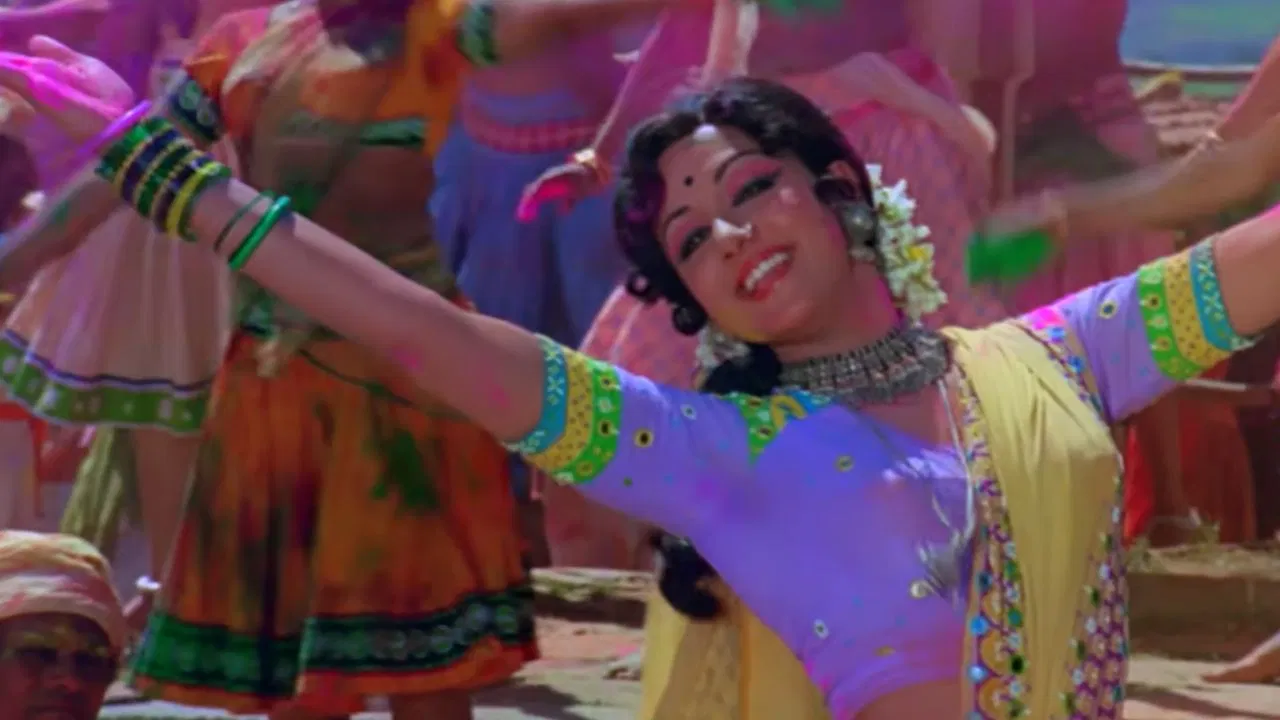
‘Holi Ke Din’ was sung by Kishore and Lata, along with a chorus representing the huge celebratory crowd. It’s a joyful sequence as the entire village comes alive with colour. Veeru and Jai are joined by Basanti, with Radha looking on from the sidelines, Bakshi’s lyrics capture the festival’s playfulness while Burman blends folk beats with modern instrumentation. It is a moment of pure celebration, the last before the shadow of Gabbar darkens the village. Shooting the song was a challenge, as coloured powder and water played havoc with cameras and costumes. The song was shot in unbearable heat too. But the end result was something outstanding, and for many junior artistes, it was a first-time experience.
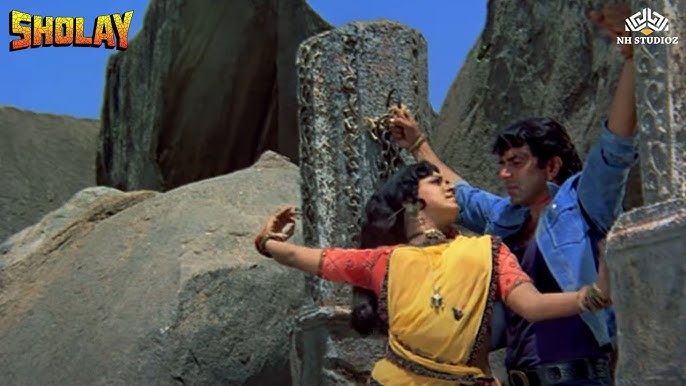
From the storyline’s perspective, ‘Jab Tak Hai Jaan’ comes at a crucial point, when Gabbar Singh forces Basanti to dance on broken glass as Veeru is held captive, his hands tied to pillars. Lata captures the heroine’s mood as she sings, “Pyaar kabhi bhi marta nahin, maut se bhi yeh darta nahin, lut jaayenge mit jaayenge mar jaayenge hum, zinda rahegi hamaari dastan”. Hema later recalled that the sugar-glass used on the set could still cut if stepped on awkwardly. She performed multiple takes while maintaining the intensity of the scene.
Another highlight is the main theme, used in the opening credits and filmed in outdoor locales. With acoustic guitar, horns, strings and whistles, it is reminiscent of Ennio Morricone’s sound in Hollywood curry westerns. Yet, it has a certain Indianness, especially in the use of percussion, that makes it sound very Indian.
That was the speciality of Burman, who composed tunes one could relate to, aided by Bakshi’s lyrics which went with the situations. Together they created songs that have remained relevant even after five decades. The magic lingers.
The songs of Sholay: