






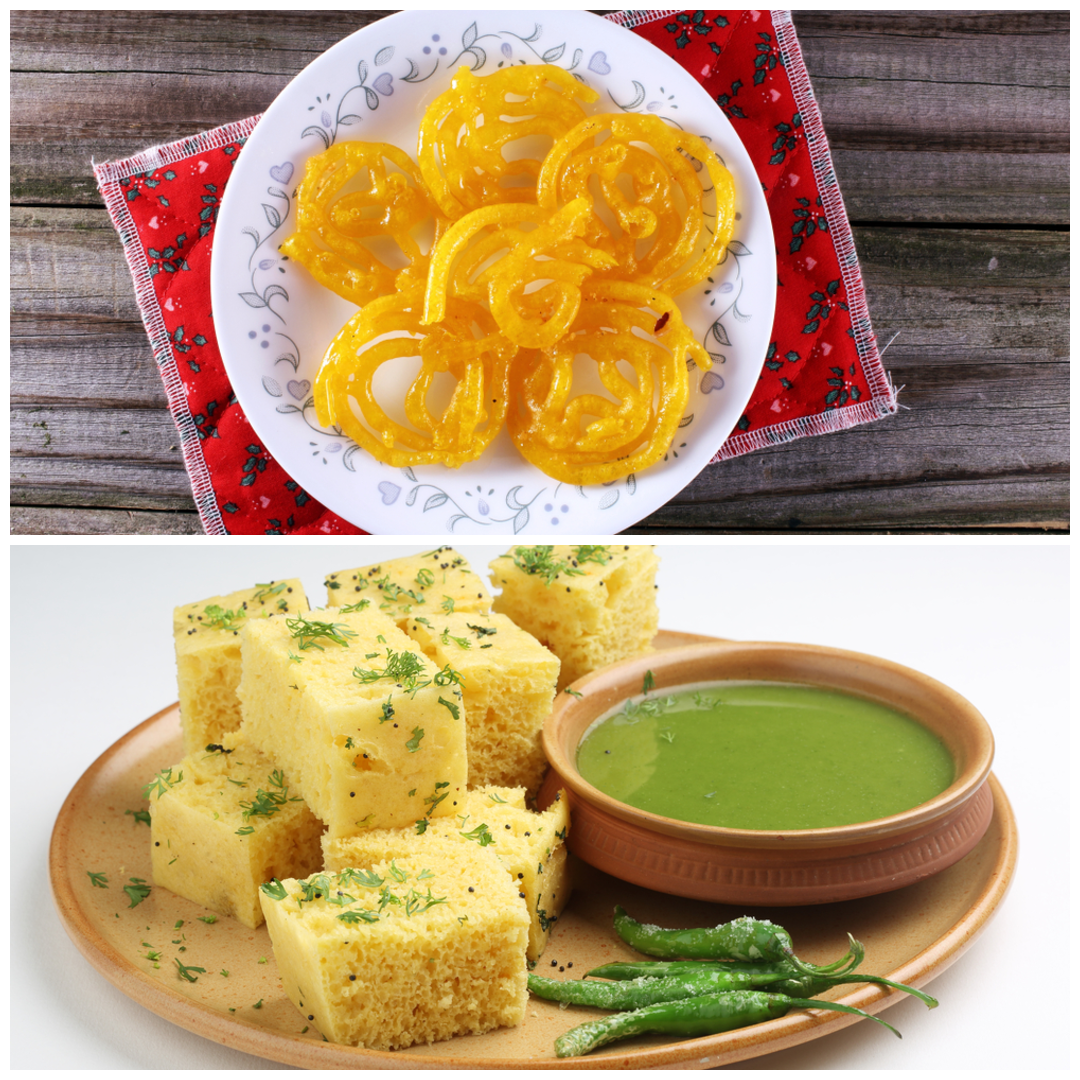
Navratri, especially in Gujarat, is more than a festival; it’s a feeling, an experience. It’s the rustle of crisp patola saris, the hum of old garba tunes playing on the radio, and the comforting aroma of ghee and cumin wafting from the kitchen. For many seniors, it’s a season that brings back memories of dancing barefoot in courtyards, sharing snacks with neighbours, and watching children twirl in circles long after the music fades.
This is a time when food becomes a storyteller. Each dish carries a taste of radiation and the tenderness of home. The recipes shared here are not just for the plate, but for the heart. They’re designed to be gentle, flavourful, and easy to prepare, especially for those who cherish simplicity and comfort.
Whether you are hosting a small gathering, cooking with your grandchildren, or simply enjoying a quiet evening filled with music and memories, let this Navratri be a celebration of culture, connection, and the joy of Gujarati cuisine. In this spirit, one of our Seniors Today family members, Mrs Bharti Shah from Vadodara, shares with us some traditional Gujarati recipes that you can prepare and enjoy during Navratri!
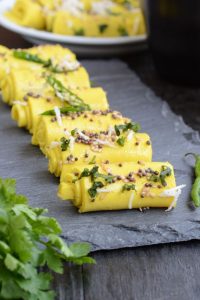
1. Khandvi
Ingredients
- 1 cup gram flour (besan)
- 1 cup buttermilk or 1/3 cup lemon juice (if using lemon juice, use 2 cups water)
- Pinch of turmeric
- Salt to taste
- 2 teaspoons oil
- ½ teaspoon mustard seeds
- 1 teaspoon sesame seeds
- 3–4 green chillies, finely chopped
- Grated dried coconut for garnish
- Fresh coriander for garnish
Preparation Method
Prepare the batter:
- In a bowl, combine gram flour, buttermilk (or lemon juice with water), turmeric, and salt. Mix well to form a smooth batter.
Cook the batter:
- Pour the mixture into a pan over medium heat.
- Stir continuously until it thickens into a smooth, spreadable dough.
Spread the dough:
- Transfer the cooked batter onto a clean plastic sheet or plate.
- Spread it evenly with a spatula.
- Let it cool slightly.
Cut and roll:
- Once cooled, cut into strips or desired shapes.
- Roll each strip gently into tight spirals and place on a serving plate.
Prepare the tempering:
- Heat 2 teaspoons of oil in a small pan.
- Add mustard seeds, sesame seeds, and chopped green chillies. Fry until aromatic.
Garnish and serve:
- Pour the tempering over the Khandvi rolls.
- Garnish with grated copra and fresh coriander.
- Serve immediately.
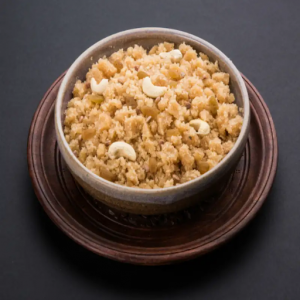
2. Kansar/Lapsi
Ingredients
- 1 bowl thick wheat flour (atta)
- ½ cup water
- 2 teaspoons jaggery
- 1 teaspoon oil
- 2–3 teaspoons ghee
- Ghee and powdered sugar for serving
- A pinch of salt
Preparation Method
- Prepare jaggery syrup:
- In a pan, add ½ cup of water and 2 teaspoons of jaggery.
- Heat on low until the jaggery dissolves and the water comes to a boil.
- Strain the jaggery water to remove impurities and set aside.
Cook the flour:
- In a separate pan, add the strained jaggery water and a pinch of salt.
- Gradually add the wheat flour while stirring continuously with a rolling pin or spatula to avoid lumps.
- Add 1 teaspoon of ghee and cover with a lid.
- Cook on low heat, stirring occasionally, for about 5 minutes until the mixture thickens.
Serve:
- Transfer the cooked Kansar to a serving dish.
- Drizzle with ghee and sprinkle powdered sugar on top
3. Dhokla (Yellow)
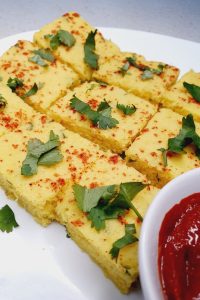
(Note: This recipe is for Yellow Dhokla, which is made from a fermented batter of rice and lentils. It is slightly denser and has a grainier texture than Khaman, which is made entirely from chickpea flour (besan) and is softer, lighter, and fluffier.)
Ingredients
- 2 cups rice
- 1 cup tur dal (pigeon peas)
- ½ cup chickpea dal (chana dal)
- ¼ cup urad dal (split black gram)
- 1 cup curd (yoghurt)
- 2–3 teaspoons green ginger-chilli-garlic paste
- 2 teaspoons oil (for batter)
- Salt to taste
- Pinch of turmeric
- 1 teaspoon baking soda (saji/eno)
- 1 teaspoon sesame seeds
- 2 teaspoons mustard seeds
- Oil for greasing the plate
- Garlic chutney or green chutney, to serve
Method
Soak and grind:
- Wash and soak the rice and lentils for 4–5 hours.
- Drain and grind with curd to form a smooth batter.
Prepare the batter:
- Transfer the batter to a bowl.
- Add warm water (as needed), 2 teaspoons oil, green ginger-chilli-garlic paste, salt, and a pinch of turmeric. Mix well.
Steam the dhokla:
- Grease a steaming plate or tray.
- Just before steaming, add baking soda (saji) to the batter and stir gently.
- Pour the batter onto the greased plate and let it rest for 10–15 minutes to rise slightly.
- Steam on medium heat for 10–12 minutes.
Prepare the tempering:
- Heat 2 teaspoons of oil in a small pan.
- Add mustard seeds and sesame seeds; let them splutter.
- Pour the tempering over the steamed dhokla.
- Sprinkle a pinch of red chilli powder (optional).
Serve:
- Cut the dhokla into desired shapes and serve warm with garlic chutney or green chutney.
4. Magas
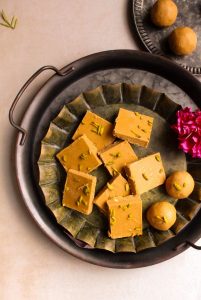
Ingredients
- 250 grams of gram flour (besan)
- 250 grams ghee
- 250 grams powdered sugar
- Milk, as needed to make a paste
- 1–2 teaspoons cardamom powder
- Almonds, chopped (for garnish)
- Pistachios, chopped (for garnish)
- Charoli (optional, for garnish)
- Caraway seeds (ajwain)
- Saffron strands
Method
Prepare the flour paste:
- In a bowl, mix 2 tablespoons of ghee and 4 tablespoons of milk with the gram flour to form a smooth paste.
- Optionally, add a little wheat flour for extra binding.
Roast the flour:
- Heat the remaining ghee in a pan over low heat.
Add caraway seeds and let them sizzle. - Add the gram flour paste and roast on low heat, stirring continuously to avoid burning.
- Cook until the mixture turns a light pink and releases a nutty aroma.
Add flavourings:
- Remove the pan from the heat and let the mixture cool slightly.
- Add cardamom powder and saffron strands, and mix well.
Shape and garnish:
- The mixture can be spread on a plate to set or shaped into laddus.
- Decorate with chopped almonds, pistachios, and charoli.
Storage and serving:
- Magas can be stored in an airtight container for 15–20 days.
- It is often prepared as an offering to God or as a festive sweet during special occasions.
Tip: Stir the flour continuously while roasting to prevent lumps and ensure a smooth texture.
5. Vegetable Handvo
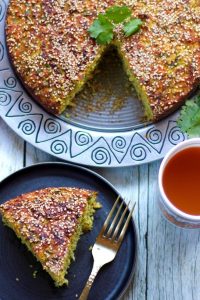
Ingredients
For the batter:
- 1 cup rice
- ½ cup chana dal (split chickpeas)
- ½ cup urad dal (split black gram)
- 1 cup yoghurt (curd)
- 1 teaspoon ginger-green chilli paste
- Salt to taste
- ½ teaspoon turmeric powder
- ½ teaspoon red chilli powder
- 1 teaspoon Eno fruit salt (or baking soda)
Vegetables:
- 1 small carrot, grated
- ½ cup beans, finely chopped
- ½ cup cabbage, finely shredded
- ½ cup bottle gourd (lauki), grated
- 1 small tomato, finely chopped (optional)
For tempering:
- 2 teaspoons oil
- 1 teaspoon mustard seeds
- 1 teaspoon sesame seeds
- A pinch of asafoetida (hing)
- 2–3 green chillies, chopped
- Curry leaves (optional)
Method
Prepare the batter:
- Wash and soak rice and dals for 4–5 hours.
- Grind to a smooth batter using yoghurt and a little water if needed.
- Add turmeric, chilli powder, ginger-green chilli paste, and salt. Mix well.
- Stir in all chopped/grated vegetables.
Steam or bake the handvo:
- Preheat the oven to 180°C (350°F) or prepare a greased steaming pan.
- Just before cooking, add Eno fruit salt to the batter and mix gently.
- Pour the batter into a greased baking tray or handvo cooker.
Prepare tempering:
- Heat 2 teaspoons of oil in a pan.
- Add mustard seeds, sesame seeds, asafoetida, chopped green chillies, and curry leaves. Fry until aromatic.
Cook and garnish:
- Pour the tempering evenly over the batter.
- Bake for 25–30 minutes or steam for 20–25 minutes until golden brown and a toothpick comes out clean.
Serve:
- Cut into squares or slices.
- Serve warm with green chutney or yoghurt.
Tip: You can use any combination of vegetables like bell peppers, zucchini, or peas. Handvo tastes best, slightly crispy on the outside and soft inside.
Tradition doesn’t stand still; it listens, adapts and gently evolves with those who carry it forward. In reimagining familiar rituals with care and creativity, we honour not just the past, but the present moment and all its quiet possibilities.

Recipes courtesy:
Mrs Bharti Shah