Home Blog

The Cool Coastal Berry: Kokum

A coastal treasure with cooling charm and quiet scientific brilliance, kokum deserves a place in your kitchen

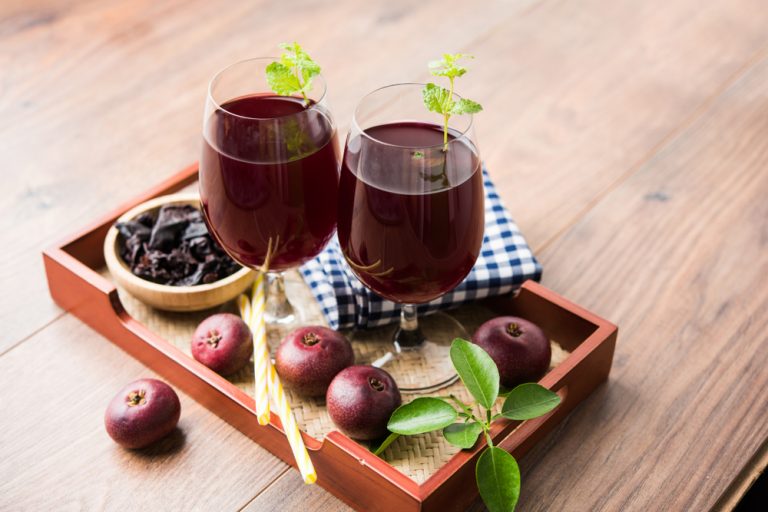
On a sweltering summer afternoon along the Konkan coast, there is nothing quite as restorative as a chilled glass of kokum sherbet—deep ruby in colour, gently tangy, and instantly refreshing. Known scientifically as Garcinia indica, kokum is far more than a culinary delight. It is a nutritional powerhouse, a traditional remedy, and a climate-wise crop perfectly suited to India’s coastal ecology.

Let us explore why this humble berry deserves a place of honour in your summer routine.

What Exactly Is Kokum?

Kokum grows on an evergreen tree native to the Western Ghats, particularly thriving in regions like Goa, Maharashtra, and Karnataka. The fruit is small and plum-like, turning a rich purple when ripe. Once dried, its rind becomes the familiar wrinkled kokum used in curries and drinks.

For generations, kokum has been woven into regional life—from soothing digestive tonics to tangy fish curries. But now, modern science is catching up with tradition.

Science-backed Benefits

Kokum’s benefits are not merely anecdotal—they are backed by its impressive biochemical profile:

Rich in Hydroxycitric Acid (HCA)

Kokum contains hydroxycitric acid, a compound studied for its potential to:

  • Support healthy metabolism 
  • Reduce fat accumulation by inhibiting certain enzymes 
  • Aid appetite regulation 

While research is ongoing, HCA has sparked interest in nutritional science as a natural metabolic aid.

Packed with Antioxidants

Kokum is abundant in anthocyanins—the same class of antioxidants found in berries like blueberries.

These compounds help:

  • Combat oxidative stress 
  • Support heart health 
  • Protect cells from ageing and environmental damage 

Its deep purple hue is a visual cue to its antioxidant richness.

Natural Cooling Properties

In traditional systems like Ayurveda, kokum is prized for its “cooling” (pitta-pacifying) effect.

Scientifically, its hydrating and electrolyte-supporting qualities make it:

  • Ideal for preventing dehydration 
  • Helpful in managing heat fatigue 
  • A gentle alternative to sugary summer drinks 

Digestive Support

Kokum has long been used to:

  • Ease acidity 
  • Improve digestion 
  • Reduce bloating 

Its mild acidity stimulates digestive enzymes, making it a natural digestive tonic after heavy meals.

From Tree to Table: Everyday Uses

Kokum’s versatility is part of its charm:

  • Kokum Sherbet: A refreshing summer drink with cumin, black salt, and a hint of jaggery 
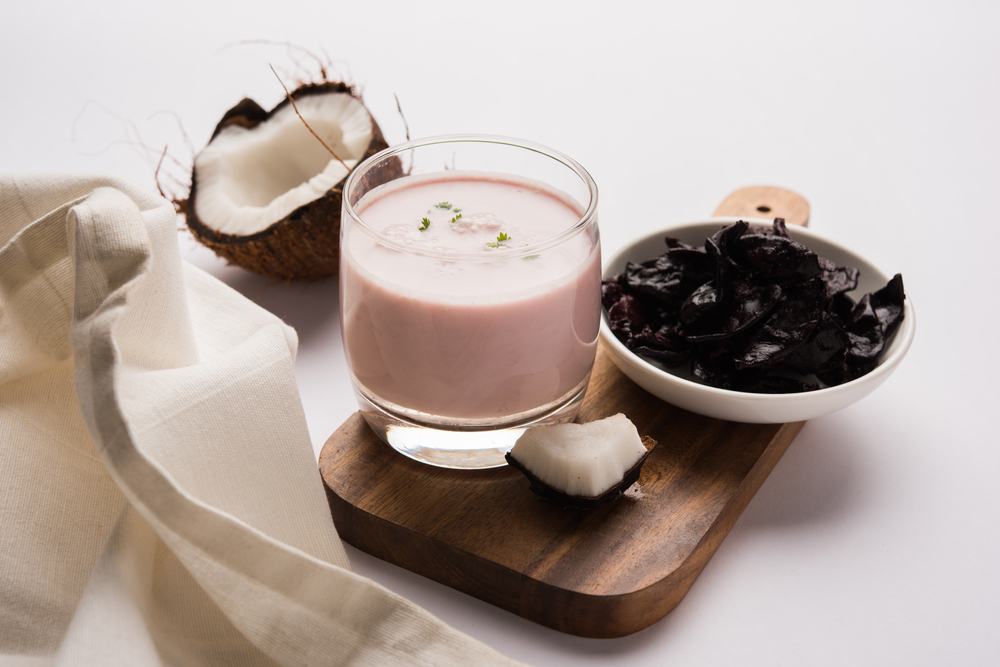
  • Sol Kadhi: A coastal favourite combining kokum with coconut milk 
  • Curries and Gravies: Adds a tangy depth without the sharpness of tamarind 
  • Kokum Butter: Extracted from seeds, used in skincare for its moisturising properties 

An Ecological Ally

Beyond personal health, kokum supports the planet:

  • 🌳 Native and resilient: Thrives in local climates with minimal intervention 
  • 💧 Low water requirement compared to many commercial crops 
  • 🐝 Supports biodiversity: Its flowers attract pollinators 

In an era of climate uncertainty, kokum represents a sustainable, regionally adapted crop that aligns with ecological gardening and farming.

A Gentle Reminder from Nature

In a world increasingly drawn to exotic “superfoods,” kokum quietly reminds us that some of the most powerful remedies are already growing in our backyard.

Its story is one of balance—between tradition and science, flavour and function, indulgence and wellbeing.

So the next time the summer heat rises, reach not just for relief—but for nourishment. A glass of kokum sherbet may well be nature’s way of saying: slow down, cool off, and restore.

Cool Recipe Box: Kokum Summer Specials

Bring the magic of kokum into your kitchen with these refreshing, science-smart recipes—designed to cool the body, aid digestion, and delight the senses during the Indian summer.

  1. Classic Kokum Sherbet

A timeless cooling elixir

Ingredients:

  • 8–10 dried Garcinia indica (kokum petals) 
  • 2–3 tbsp jaggery (adjust to taste) 
  • 1 cup warm water 
  • 2 cups chilled water 
  • A pinch of roasted cumin powder 
  • A pinch of black salt 

Method:

  1. Soak kokum in warm water for 30 minutes. 
  2. Mash gently to release the deep colour and flavour. 
  3. Strain, add jaggery, and stir until dissolved. 
  4. Mix in chilled water, cumin, and black salt. 

Why it works:

Hydrating, electrolyte-balancing, and rich in antioxidants—perfect for beating heat fatigue.

  1. Sol Kadhi (Coastal Comfort)

A soothing digestive from the Konkan coast

Ingredients:

  • 8–10 kokum petals 
  • 1 cup coconut milk 
  • 2 cups water 
  • 2 cloves garlic (crushed) 
  • Fresh coriander leaves 
  • Salt to taste 

Method:

  1. Soak kokum and extract its juice. 
  2. Mix with coconut milk and water. 
  3. Add garlic, salt, and garnish with coriander. 
  4. Chill lightly before serving. 

Why it works:

Combines kokum’s acidity with coconut’s healthy fats—gentle on the stomach and deeply cooling.

🍧 3. Kokum Mint Cooler

A vibrant, garden-fresh twist

Ingredients:

  • Kokum extract (from soaked kokum) 
  • A handful of fresh Mentha (mint leaves) 
  • 1 tbsp honey or jaggery 
  • Chilled water or soda 
  • Ice cubes 

Method:

  1. Blend mint leaves with a little water. 
  2. Mix with kokum extract and sweetener. 
  3. Top with chilled water or soda and ice. 

Why it works:

Mint enhances the cooling effect while adding digestive benefits and freshness.

🍨 4. Kokum & Chia Refresher

A modern, nutrient-rich cooler

Ingredients:

  • 2 tbsp kokum syrup or extract 
  • 1 tsp chia seeds (soaked) 
  • 1 glass chilled water 
  • A dash of lemon juice 

Method:

  1. Mix kokum syrup with water. 
  2. Add soaked chia seeds and lemon juice. 
  3. Stir well and serve chilled. 

Why it works:

Chia adds fibre and hydration, making this drink both refreshing and sustaining.

  1. Kokum Digestive Shot

A tiny tonic with big benefits

Ingredients:

  • 2 tbsp concentrated kokum extract 
  • A pinch of black salt 
  • A pinch of dry ginger powder 

Method:

  1. Mix all ingredients into a small shot glass. 
  2. Sip slowly after meals. 
Why it works:
Stimulates digestion, reduces bloating, and refreshes the palate.

These recipes are more than just summer treats—they are a blend of tradition, taste, and thoughtful nutrition. Whether you sip slowly on a quiet afternoon or serve guests a chilled glass of kokum sherbet, you are partaking in a legacy that beautifully marries science with sensibility.

Herbs & Flowers Add Life to Your Summer Garden

Summer can be a wonderful time to refresh your garden with some fragrant herbs and flowers

At first glance, summer in India—with its blazing sun and parched soil—may not seem like the ideal season to replant a garden. But the truth is more nuanced. Yes, summer can be a wonderful time to refresh your garden, provided you work with nature rather than against it.

In fact, many plants not only tolerate but thrive in temperatures of 35–45°C, as long as they receive adequate sunlight, drainage, and mindful watering. 

So rather than abandoning your garden to the heat, summer offers an opportunity to reimagine it as a resilient, ecological haven—alive with colour, pollinators, and purpose.

Why Summer Replanting Can Work

Summer gardening is less about delicate blooms and more about smart plant choices and sustainable practices:

  • Heat-loving plants flourish: Certain flowering varieties are naturally adapted to intense sunlight and dry spells. 
  • Long daylight hours boost growth 
  • Pollinators are active: Bees, butterflies, and birds are more visible, making it an ideal time to support biodiversity 
  • Lower pest issues for some species 

The key is to choose climate-appropriate, preferably native or well-adapted plants.

6+ Local Flowering Plants Perfect for Indian Summers

Here are beautiful, hardy, and ecologically supportive flowering plants you can confidently add:

  1. Hibiscus (Gudhal)

Large, vibrant blooms that attract bees and butterflies. Flowers almost year-round in warm climates. 

  1. Marigold (Genda)

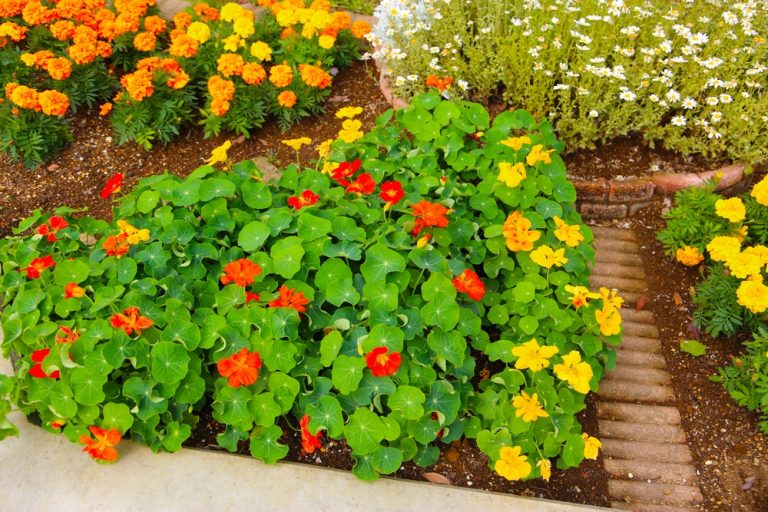
Bright, cheerful, and incredibly resilient. Also acts as a natural pest repellent, making it ideal for eco-friendly gardening. 

  1. Portulaca (Moss Rose)

A summer superstar—thrives in poor soil, needs minimal water, and produces vivid blooms even in harsh heat. 

  1. Ixora

Clusters of tiny flowers that bloom almost all year in tropical regions. Excellent for attracting pollinators. 

  1. Zinnia

Easy to grow, colourful, and loved by butterflies—perfect for adding brightness with minimal effort. 

  1. Vinca (Sadabahar)

Extremely heat-tolerant and low maintenance, with delicate pink, white, or purple blooms. 

  1. Bougainvillea

A classic Indian summer plant—dramatic, drought-resistant, and stunning along walls or trellises. 

  1. Gardenia (Gandhraj)

Elegant, fragrant white flowers that add a touch of serenity to any garden. 

How to Create an Ecologically Supportive Garden

A beautiful garden need not come at the cost of the environment. In fact, summer is a perfect time to shift towards eco-conscious gardening:

  1. Plant for Pollinators

Choose nectar-rich flowers like hibiscus, zinnia, and ixora to support bees and butterflies.

  1. Use Native or Climate-Smart Plants

They require less water, fewer chemicals, and are more resilient.

  1. Mulch Generously

Dry leaves, coconut husk, or compost help:

  • Retain moisture 
  • Keep roots cool 
  • Improve soil health 
  1. Water Wisely

Early morning or evening watering reduces evaporation and stress on plants.

  1. Mix Beauty with Utility

Combine flowering plants with herbs or vegetables—this improves biodiversity and soil vitality.

Summer gardening is less about perfection and more about adaptation and rhythm. Your garden may look different—wilder, more sun-kissed—but it can also become:

  • A refuge for pollinators 
  • A lesson in resilience 
  • A space that thrives despite extremes 

As gardeners often discover, the most beautiful gardens are not those that fight nature—but those that flow with it.

Summer-Friendly Herbs for Indian Gardens

Adding herbs is a wonderful way to make your summer garden not just beautiful, but useful, fragrant, and ecologically rich. Many Indian herbs are surprisingly resilient and thrive in warm conditions, especially with a little shade and regular watering.

Here are 4 excellent herbs you can weave into your summer replanting plan:

🌱 Tulsi (Holy Basil)

Known botanically as Ocimum tenuiflorum, Tulsi is deeply rooted in Indian homes and traditions.

  • Why it works in summer: Loves warmth and sunlight 
  • Ecological benefit: Attracts pollinators like bees 
  • Bonus: Known for its immunity-boosting properties 
  • Tip: Prefers well-drained soil and moderate watering 
🌿 Mint (Pudina)

Part of the genus Mentha, mint grows vigorously—even in the heat.

  • Why it works: Thrives with regular watering and partial shade 
  • Ecological benefit: Its scent can deter certain pests 
  • Bonus: Perfect for cooling summer drinks like chaas and nimbu pani 
  • Tip: Grow in pots—it spreads quickly! 
🌿 Lemongrass

Scientifically known as Cymbopogon citratus, this tall, aromatic herb is ideal for tropical climates.

  • Why it works: Heat-tolerant and low maintenance 
  • Ecological benefit: Naturally repels mosquitoes 
  • Bonus: Excellent for teas and light cooking 
  • Tip: Needs space to grow and good drainage 
🌿 Coriander (Dhania)

Known as Coriandrum sativum, coriander can still grow in early summer with some care.

  • Why it works: Fast-growing, though prefers slightly cooler conditions 
  • Ecological benefit: Flowers attract beneficial insects 
  • Bonus: Fresh leaves for daily cooking 
  • Tip: Provide partial shade and frequent watering to prevent bolting 
A Thoughtful Combination

When paired with your flowering plants—like marigold, hibiscus, or zinnia—these herbs create a balanced garden ecosystem:

  •  Flowers attract pollinators 
  • Herbs deter pests and enrich the soil 
  •  Together, they reduce the need for chemicals 

A summer garden need not be high-maintenance or fragile. With the right mix of hardy flowers and purposeful herbs, it can become a space that nourishes both body and biodiversity.

Urinary Tract Infection (UTI) in Senior Men

0

On 28 Mar, 2026, Seniors Today hosted their weekly Health Live Webinar with Dr Soumyan Dey, who spoke on and answered questions about Urinary Tract Infection (UTI) in Seniors- Symptoms and Care. 

Dr Soumya Dey is a Senior Urologist with over 20 years of experience in the field; managing a wide spectrum of urological disorders. He has completed his MCH in Urology from the Grant Medical College and Sir JJ Group of Hospitals, Mumbai. He is currently serving as an Assistant Professor at the institute. He is the Director of Urology at Fortis Hospital, Navi Mumbai. He specialises in Endourology and minimally invasive urological procedures. He is known for his evidence based practice, surgical precision and compassionate approach to patient care. 

You are diagnosed with Urinary Tract Infection (UTI) when you have any of the following chief complaints:

  1. Burning micturition
  2. Increased frequency of passing urine

These symptoms can also be present in case of 

  • Renal/ ureteric stones
  • Constipation 

Urinary Tract Infection (UTI) is diagnosed when the symptoms are present and the patient is asked to do a urine analysis and the urine analysis reveals numerous pus cells with normal epithelial cells. The urine culture can show a higher count of bacterial colonies. 

Unless the urine analysis shows a large number of pus cells with the culture showing a culture growth, it is not necessarily UTI. The same symptoms can also be present due to other illnesses and we make a confirmatory diagnosis based on the investigations. 

The kidneys drain into the bladder via the ureter. 

The male below the bladder, also has a prostate followed by a long urethra. In females, there is no prostate and a very short urethra after the bladder. 

Any infection of the bladder and the urethra below comes under the lower urinary tract. And everything above, is known as the upper urinary tract. 

The lower urinary tract/ bladder infections are more common and will thus be further discussed. 

Upper urinary tract infections are more serious such as pyelonephritis. 

UTI in common in senior citizens due to the following reasons:

  1. Incomplete bladder emptying 
  2. Prostate enlargement (in men)
  3. Post menopausal changes (in women)
  4. Use of catheters. In these cases, the urinary tract gets colonised, if not infected
  5. Reduced immunity 

Increasing age, with decreasing immunity along with comorbidities such as diabetes, post menopausal changes/ prostate enlargement can cause a higher risk of developing a urinary tract infection in women. 

Symptoms which should not be ignored:

  1. Burning urination 
  2. Frequent urination 
  3. Fever with chills 
  4. Blood in urine 
  5. Confusion or sudden weakness 
  6. Pain in lower abdomen 
  7. Recurrent infections 

Risk factors for Urinary Tract Infection (UTI):

  1. Uncontrolled diabetes mellitus 
  2. Poor hydration. Adequate hydration is an important preventive step to avoid UTI. If you drink enough water to achieve pale/ clear urine, you can avoid Urinary Tract Infection (UTI). 
  3. Urinary obstruction due to prostate enlargement, urethral stenosis 
  4. Increase catheter use 
  5. Poor hygiene 

It can be more than just a simple Urinary Tract Infection (UTI) when there are the following symptoms in addition to the above mentioned ones:

  1. Blood in urine 
  2. Recurrent urine 
  3. Loss of weight poor response to treatment 

This can be due to prostate issues, tumours, stones, etc. 

Catheter care is very important to avoid Urinary Tract Infection (UTI). This can be done by:

  1. Keeping the catheter clean 
  2. Do not use a catheter unless necessary 
  3. Ensure proper drainage of catheter 
  4. Repeated change in the catheter 

This can be done by ensuring the following:

  1. Collection bag should always be below the level of the body 
  2. Check the tube for kinking. There should be no kinks in the tube 
  3. Empty the collection when it is half/ 1/3rd full 
  4. Maintain a closed drainage system 
  5. Avoid overfilling of the balloon (8cc is enough)

Preventive measure that can be taken:

  1. Keep your blood sugar levels under control 
  2. Keep yourself well hydrated 
  3. Avoid taking antibiotics unnecessarily, unless there is documented growth in your urine culture 

The treatment basics for Urinary Tract Infection (UTI) are:

  1. Always consult your doctor if you have any of the above mentioned symptoms 
  2. Before starting any antibiotics, get your urine culture and urine routine investigation done. Take antibiotics only when needed, which is when there is presence of pus cells in the urine. 
  3. In a catheterised patient, the indications for antibiotics are different ie- fever, blood in urine, pain in lower abdomen 
  4. Once you have started antibiotics, continue the antibiotics until your culture report comes negative for growth

Recurrent Urinary Tract Infection (UTI) is common in women. For this the patient can be put on urinary prophylaxis for which the patient is put on urinary antiseptics. These are less than antibiotics- Nitrofurantoin is a common antiseptic- this can be taken for 3 days without consulting a doctor either. At the end of the 3 days, if your symptoms still persist, visit your physician. 

Entertainment Review: Detective Hole

He’s Harry Hole, pronounced Hoo-leh, a Scandi-Noir icon, created by best-selling Norwegian author, Jo Nesbo.

He has adapted one of his own novels, The Devil’s Star, for this excellent Netflix crime series.

Like most fictional detectives, Harry is tormented, dysfunctional,  a recovering alcoholic, battling old demons, that include the death of his partner in a crash, when he was drunk driving while pursuing a bank robber, five years earlier.

Tobias Santelmann plays him as a weary, unapologetic misanthrope, softened just a little by the presence of a girlfriend (Pia Tjelta) and her cheeky preteen son, Oleg (Maxime Baune Bochud)

Still haunted by the bank heist, in which a hostage was killed, he wants to reopen the case and is up against an evil, corrupt colleague, Tom Waaler (Joel Kinnaman).  His new partner Ellen (Ingrid Bolso Berdal) is killed when she is unable to reach him, while he is bonding with Oleg. The shock and horror at her brutal murder reduces him to tears. There’s also a serial killer on the loose, so there’s no peace for Harry.

The plot kicks off with a heatwave in Oslo—a rare happening that reflects the mounting pressure on the police, trying to control drug gangs, when the discovery of a woman’s severed finger marked with a pentagram, sets off a hunt for a serial killer whose method is as ritualistic as it is grisly 

Since Nesbo himself is  showrunner, he ensures the intricate plot isn’t lost in translation. The series does not sacrifice mood for pace, so it is a slow-burn thriller.

Visually, the show, shot by Ronald Plante, is stunning. Directors Oystein Karlsen and Anna Zackrisson avoid making  make Oslo touristy. The city look attractive, yet menacing,  marked by a harsh and melancholic music score (Nick Cave, Warren Ellis), adding to Harry’s taste that runs to Ramones.

The nine-episode Detective Hole is bleak, dark and borderline depressing, but also utterly gripping.

Detective Hole
Created by Jo Nesbo
Cast: Tobias Santelmann, Joel Kinnaman, Pia Tjelta and others
On Netflix

10 Mobile Games to Sharpen Your Memory

Here are 10 delightful mobile games that can help keep your memory sharp, attention focused, and spirits high

In a world where smartphones are as common as morning chai, they can also become powerful little tools for keeping the mind agile. Memory, like muscle, thrives on regular use—and the right kind of play can make that exercise both enjoyable and rewarding.

As the saying goes, “We do not stop playing because we grow old; we grow old because we stop playing.” —  is often attributed to George Bernard Shaw.

Here are 10 delightful mobile games that can help keep your memory sharp, attention focused, and spirits high.

  1. Mahjong – The Art of Patience and Pattern

Originating in China centuries ago, Mahjong is far more than a game—it’s a mindful ritual.

Mobile versions of Mahjong require you to match tiles based on symbols and patterns. The challenge lies in remembering which tiles are available and planning ahead.

Why it helps:

  • Improves visual memory and pattern recognition 
  • Enhances concentration 
  • Encourages strategic thinking 

Anecdote:
Many seniors say Mahjong feels like “tidying the mind”—each matched tile brings a small sense of order and calm.

  1. Solitaire – The Classic Card Companion

Few games are as timeless as Solitaire. Whether you remember it from a deck of cards or your early computer days, its mobile version remains just as satisfying.

Why it helps:

  • Strengthens short-term memory (remembering card sequences) 
  • Improves problem-solving skills 
  • Encourages patience and planning 

Tip: Try different variations like Klondike or Spider Solitaire to keep things interesting.

  1. Crossword & Word Puzzle Apps – A Feast for the Mind

Word games are wonderful for keeping language skills sharp. Apps offering crosswords, word searches, and anagrams can be both stimulating and nostalgic.

Popular options include apps like Wordscapes or Words With Friends.

Why it helps:

  • Boosts vocabulary and recall 
  • Strengthens verbal memory 
  • Keeps the brain engaged with language patterns 

Quote:
“Words are, of course, the most powerful drug used by mankind.” — Rudyard Kipling

  1. Brain Training Apps – A Personal Gym for Your Mind

Dedicated brain-training apps offer short daily exercises designed by cognitive scientists.

Apps such as Lumosity and Peak include memory challenges, attention games, and problem-solving tasks.

Why it helps:

  • Targets multiple cognitive functions 
  • Tracks progress over time 
  • Offers variety to prevent boredom 

Anecdote:
Many users describe these apps as “a morning walk for the brain”—a daily ritual that sets a positive tone for the day.

  1. Jigsaw Puzzle Apps – Piece by Piece, Thought by Thought

Jigsaw puzzles are not just for rainy afternoons anymore. Mobile versions allow you to solve beautiful puzzles at your own pace.

Why it helps:

  • Enhances visual-spatial memory 
  • Encourages patience and focus 
  • Provides a calming, meditative experience 

Choose themes you love—nature, Indian landscapes, or even old Bollywood posters—to add a personal touch.

More Games to Keep Your Mind Dancing…..

  1. Sudoku – The Joy of Logical Thinking

A favourite across generations, Sudoku is a number puzzle that requires placing digits in a grid without repetition.

You can try mobile apps like Sudoku.com or Sudoku – Classic Sudoku Puzzle.

Why it helps:

  • Strengthens logical reasoning 
  • Improves working memory 
  • Enhances concentration and attention to detail 

Anecdote:
Many seniors say starting the day with Sudoku feels like “switching the brain on”—a gentle but effective mental warm-up.

  1. Memory Match Games – Simple Yet Powerful

These are classic card-flip games where you match pairs by remembering their positions.

Apps like Memory Games: Brain Training offer colourful, easy-to-use versions.

Why it helps:

  • Directly improves short-term memory 
  • Enhances visual recall 
  • Ideal for beginners or those who prefer simple gameplay 
  1. Chess – Strategy Meets Memory

The timeless game of kings is now easily accessible on mobile phones.

Try apps like Chess.com.

Why it helps:

  • Boosts long-term memory (remembering patterns and strategies) 
  • Encourages planning and foresight 
  • Keeps the mind deeply engaged 

Quote:
“Chess is the gymnasium of the mind.” — Blaise Pascal

  1. 2048 – Numbers with a Twist

A simple yet addictive sliding tile game where you combine numbers to reach 2048.

Available on apps like 2048.

Why it helps:

  • Improves numerical memory 
  • Encourages strategic thinking 
  • Sharpens quick decision-making 
  1. Trivia & Quiz Games – Test Your Knowledge

Quiz-based apps are fantastic for recalling general knowledge, history, and culture.

Try QuizUp or Kahoot!.

Why it helps:

  • Strengthens recall memory 
  • Encourages learning new facts 
  • Sparks curiosity and conversation 

Be A Healthy Gamer

While games are wonderful tools, balance is key. Pair your digital playtime with:

  • A short walk in fresh air 
  • Conversations with loved ones 
  • A nourishing Indian diet rich in nuts, fruits, and spices 

After all, a healthy mind thrives in a healthy body.

In India, where tradition meets technology, these small digital games offer a beautiful bridge between the past and present. They remind us that learning never stops—and neither should joy.

So the next time you reach for your phone, consider this: instead of scrolling endlessly, why not play your way to a sharper, happier mind?

Because sometimes, the simplest games bring the greatest clarity.

Every mind is unique. Some may enjoy numbers, others words, and some the quiet satisfaction of fitting puzzle pieces together. The secret is simple: choose what brings you joy.

Because when enjoyment meets effort, memory doesn’t just improve—it thrives.

The Importance of Eye Contact

The small gesture that speaks volumes is as invaluable as ever

In a world increasingly filled with screens, notifications, and hurried conversations, one of the simplest human gestures is quietly fading away—eye contact.

And yet, this small act—meeting someone’s gaze for just a few seconds—can communicate warmth, trust, attention, and even affection more powerfully than words ever could.

For many seniors, who have witnessed a slower, more personal way of living, the art of eye contact is not new. But it is perhaps more valuable now than ever.

When Eyes Did the Talking

There was a time when conversations were unhurried.

Neighbours would pause at the gate, shopkeepers would look up and greet you by name, and family discussions happened face-to-face—without the interruption of a ringing phone.

Eye contact was natural then. It wasn’t something one had to remember to do—it simply happened.

You could tell if someone was genuinely listening. You could sense kindness, curiosity, or even concern—all through the eyes.

As the poet Ralph Waldo Emerson beautifully said, “The eyes indicate the antiquity of the soul.” There is depth in a gaze that no hurried message can replace.

The Doctor Who Looked Up

A senior gentleman once shared a small but telling story.

He had visited two doctors on different occasions. The first kept his eyes fixed on a computer screen, typing notes while asking questions. Efficient, perhaps—but distant.

The second doctor, however, paused, looked up, and held his gaze while listening. No grand gestures, no lengthy conversation—just a few moments of genuine attention.

“Strangely,” he said, “I felt better before the medicine even began.”

Such is the quiet power of eye contact. It reassures. It says, “I see you. You matter.”

Why Eye Contact Still Matters

Even today, in our fast-paced world, eye contact plays a vital role in everyday interactions:

  • It builds trust 
  • It deepens connection 
  • It improves communication 
  • It enhances presence 

A warm, attentive gaze can transform even the simplest exchange into something meaningful.

When Eye Contact Becomes Too Much

Like many good things, eye contact works best in balance.

There is a fine line between a warm, engaging gaze and an uncomfortable stare—and most of us can sense the difference instinctively.

An acceptable eye contact:

  • Feels natural and relaxed 
  • Comes and goes during conversation 
  • Is accompanied by soft expressions—like a nod or a smile 

An uncomfortable stare, on the other hand:

  • Lasts too long without a break 
  • Feels intense or unblinking 
  • Lacks warmth or expression 
  • Makes the other person self-conscious or uneasy 

If eye contact says, “I’m listening,” a stare can feel like, “I’m scrutinising.”

A Gentle Rule of Thumb

A simple and practical guide is the “three-to-five second rule.”

Hold eye contact briefly, then look away naturally—perhaps to the side, or while thinking—before returning your gaze.

This rhythm mirrors natural conversation and keeps the interaction comfortable for both people.

Cultural Sensitivity Matters

In India, eye contact carries nuance and respect.

While a confident gaze is appreciated, prolonged or overly direct staring—especially across genders or towards elders—can be perceived as intrusive or even disrespectful.

In public spaces, what might be intended as curiosity can easily be misinterpreted as discomfort.

Being mindful of this helps ensure that eye contact remains a gesture of connection, not unease.

 The Train Journey

A lady once recalled a long train journey where a fellow passenger across the aisle kept looking at her continuously.

At first, she smiled politely. But as the gaze lingered—unbroken, expressionless—it began to feel uncomfortable. She eventually turned away, focusing on her book, relieved when the journey ended.

“It wasn’t what he said,” she reflected later. “It was what he didn’t stop doing.”

A small reminder: intention may be harmless, but impact matters more.

The Gentle Art of Looking Away

Looking away is not rude—it is part of respectful communication.

In fact, it shows emotional intelligence:

  • It gives the other person space 
  • It reduces intensity 
  • It keeps the interaction balanced 

Think of eye contact as a conversation, not a fixed gaze. It should flow, not fixate.

Eye contact is one of the simplest ways to show kindness and presence.

It can comfort without words, connect without effort, and remind someone that they are seen.

But like all meaningful gestures, it carries a quiet responsibility—to be used with sensitivity, warmth, and awareness.

As Mahatma Gandhi reminded us, “The best way to find yourself is to lose yourself in the service of others.” Sometimes, that service begins with something as simple as how we look at another person.

So the next time you meet someone’s eyes, let it be gentle. Let it be brief. Let it be kind.

Because the difference between connection and discomfort… is often just a moment too long.

The Charm of Cashews

 A nut with a story, a soul, and a smile, we love our cashews in India

There is something quietly indulgent about a handful of cashews.

Perhaps it’s their gentle curve, their creamy richness, or the way they elevate everything—from a humble upma to a festive pulao. In India, cashews are not merely a snack; they are a small celebration tucked into everyday life.

But behind their buttery taste lies a fascinating story, surprising health benefits, and a versatility that has charmed kitchens for centuries.

A Nut That Travelled the World

Cashews were not originally Indian. They arrived on our shores in the 16th century, brought by Portuguese traders from Brazil. Over time, they found a natural home along India’s western coastline—particularly in Goa, Kerala, and Karnataka.

Today, India is one of the largest producers and consumers of cashews, and the humble kaju has woven itself into our culinary traditions—from mithai shops to home kitchens.

There is a quiet poetry in that journey: a foreign seed becoming deeply Indian.

A Curious Fruit with a Hidden Treasure

Here’s a delightful fact: the cashew is not actually a nut in the botanical sense—it is a seed.

It grows attached to the bottom of the colourful cashew apple, a juicy fruit that is often overlooked but used in regional delicacies (and even fermented into local drinks in Goa).

The seed itself is encased in a toxic shell, which must be carefully processed before it becomes the familiar, safe-to-eat cashew. This makes every cashew kernel a small triumph of careful handling and craftsmanship.

Health Benefits: Small Nut, Big Goodness

For seniors looking to maintain strength, energy, and overall well-being, cashews offer a range of benefits when enjoyed in moderation:

  1. Heart-Friendly Fats

Cashews are rich in healthy monounsaturated fats, which help support heart health and manage cholesterol levels.

  1. Bone Strength

They contain magnesium and phosphorus—important minerals for maintaining strong bones, especially in later years.

  1. Gentle Energy Boost

Cashews provide a steady source of energy without the sharp spikes associated with sugary snacks.

  1. Brain and Mood Support

With nutrients like zinc and tryptophan, cashews may support cognitive health and emotional well-being.

  1. Eye Health

They contain antioxidants such as lutein and zeaxanthin, which contribute to protecting vision.

A gentle reminder: a small handful (about 6–8 cashews) is quite sufficient. As delicious as they are, moderation keeps them beneficial.

The Cashew Jar at Home

Many of us will remember a familiar sight—a steel dabba tucked safely in the kitchen cupboard, filled with cashews reserved for “special use”.

Children were warned not to touch it casually. Yet, every now and then, a loving grandmother would slip a few into tiny hands with a conspiratorial smile.

Those cashews tasted richer—not because of their price, but because of the affection that accompanied them.

Cashews in our Kitchens

 The quiet stars of many dishes, cashews have a remarkable ability to play many roles:

  • They add richness to gravies like korma and butter masala 
  • They bring crunch to pulao and biryani 
  • They lend creaminess to sweets like kaju katli 
  • They transform into dairy-free pastes and sauces 

As the celebrated chef Sanjeev Kapoor once said, “The simplest ingredient, when used thoughtfully, can create the most memorable dish.” Cashews are a perfect example of this philosophy.

Simple, Delightful Recipes

Here are a few easy, senior-friendly ways to enjoy cashews:

  1. Lightly Roasted Masala Cashews

Ingredients:

  • 1 cup cashews 
  • 1 tsp ghee 
  • A pinch of turmeric 
  • A pinch of black pepper 
  • Salt to taste 

Method:
Gently heat ghee in a pan, add cashews, and roast on low flame until golden. Sprinkle turmeric, pepper, and salt. Toss well.

Why it’s lovely: Crunchy, warm, and far healthier than packaged snacks.

  1. Creamy Cashew Chutney

Ingredients:

  • ½ cup soaked cashews 
  • 1 green chilli (optional) 
  • A small piece of ginger 
  • Salt and lemon juice 

Method:
Blend everything into a smooth paste with a little water.

Why it’s lovely: A soft, easy-to-digest accompaniment for idlis, dosas, or even toast.

  1. Gentle Cashew Kheer (Low Sugar)

Ingredients:

  • 2 tbsp cashew paste 
  • 2 cups milk (or plant-based milk) 
  • A few strands of saffron 
  • A small amount of jaggery or sugar 

Method:
Simmer milk, add cashew paste, and stir gently. Sweeten lightly and add saffron.

Why it’s lovely: Comforting, nourishing, and not overly sweet.

  1. Cashew & Vegetable Stir-In

Add a small handful of cashews to sautéed vegetables—beans, carrots, or even cabbage—for a simple yet elegant upgrade.

A Nut That Teaches Balance

Cashews remind us of something important: richness need not be excessive.

A few pieces can elevate a dish. A small portion can satisfy the palate. A modest indulgence can bring genuine pleasure.

In many ways, this mirrors a larger life lesson—especially in our later years—of enjoying life’s comforts without excess, and finding joy in simplicity.

The charm of cashews lies not only in their taste, but in their story.

They travelled across oceans, endured careful processing, and found their way into our homes, festivals, and memories.

So the next time you enjoy a handful of cashews, pause for a moment.

Savour the flavour.
Appreciate the journey.
And enjoy the quiet luxury of it all.

How to Cultivate Delight Even on “Bad” Days

Some days simply don’t go to plan.

The tea is too strong (or too weak!), the knees protest a little louder than usual, the news feels heavier than it should, and even the sunshine seems to have taken a day off. We all have such days—no matter our age, wisdom, or experience.

And yet, hidden quietly within even the most ordinary or “bad” days, there is always the possibility of delight.

Not loud, celebratory joy—but small, gentle, almost mischievous moments of lightness.

Delight Is Not Denial

Let’s be clear: cultivating delight is not about pretending everything is perfect. It’s not about brushing away genuine worries, aches, or disappointments.

As the poet Rabindranath Tagore once reflected, “Clouds come floating into my life… to add colour to my sunset sky.”

Even clouds, it seems, have their purpose.

Delight is about noticing—even when things aren’t quite right.

Start Small: The Five-Minute Lift

On difficult days, grand plans can feel exhausting. Instead, think in terms of five-minute delights:

  • Stepping out onto the balcony and noticing the evening breeze 
  • Listening to an old favourite song from your youth 
  • Savouring a small bowl of fresh fruit or a spoonful of homemade pickle 
  • Watching a bird go about its busy, important life 

Delight doesn’t demand effort—it rewards attention.

The Gentle Art of Reframing

A “bad” day often gathers momentum. One small irritation leads to another, and before long, the whole day feels coloured by it.

But what if we quietly reframed the narrative?

  • A cancelled plan becomes unexpected rest 
  • A quiet afternoon becomes a chance to revisit a forgotten hobby 
  • A rainy day becomes the perfect excuse for pakoras and chai 

This isn’t forced positivity—it’s a soft shift in perspective.

Borrow Joy from Memory

Our later years come with a remarkable advantage: a treasury of memories.

On days when the present feels dull, gently open that treasury:

  • A childhood summer spent under mango trees 
  • The first salary and what it meant 
  • A festival celebrated with loved ones long ago 

Memory is not just nostalgia—it is a reliable source of warmth.

Stay Lightly Connected

Even on days when you don’t feel particularly social, a small connection can work wonders:

  • A short phone call to a friend 
  • A message to a grandchild 
  • A smile exchanged with a neighbour 

Human connection, even in small doses, has a way of lifting the spirit.

Create Tiny Rituals of Delight

Rituals give structure to uncertain days. They don’t have to be elaborate:

  • Morning tea in your favourite cup 
  • A short prayer, meditation, or moment of gratitude 
  • An evening walk, even if it’s just a few steps 

Over time, these rituals become little anchors of calm.

Allow Yourself to Feel—And Then Shift Gently

It’s perfectly alright to have a “bad” day.

Feel the frustration, the tiredness, the quiet sadness if it comes. But don’t unpack and stay there too long. As the saying goes, “Feel it, but don’t feed it.”

After acknowledging the feeling, gently ask:
“What is one small thing that could bring me a little ease right now?”

Find Delight in Giving

One of the most reliable ways to feel better is to bring a moment of ease to someone else:

  • Sharing food with a neighbour 
  • Offering kind words to someone who needs them 
  • Passing on a book you’ve enjoyed 

Delight, interestingly, multiplies when shared.

A Final Thought

Even on the most unremarkable—or slightly troublesome—days, life offers small invitations to smile.

A cup of tea.
A familiar song.
A quiet moment of peace.

Delight does not demand perfection. It simply asks us to notice.

So the next time a “bad” day arrives (as it inevitably will), don’t try to chase it away entirely.

Instead, sit with it… and gently look around.

You may just find that delight has been there all along—waiting patiently for you to see it.

Post-Menopausal Women: Fit & Strong at 60 & Independent at 80

0

On 21 Mar, 2026, Seniors Today hosted their weekly Health Live Webinar with a Senior Consultant, Obstetrics and Gynaecology, Dr Alka Gupta who spoke on and answered questions on Post Menopausal Women: Fit and Strong at 60. Independent at 80. 

About Dr Alka Gupta:

Dr Alka Gupta is a senior consultant in Obstetrics and Gynaecology based in Gurugram with over four decades of experience. Her academic journey began at Springdales School, which she completed in 1975. She then earned her MBBS from the Lady Hardinge Medical College in 1980, followed by an MD in Obstetrics and Gynaecology from Maulana Azad Medical College, Delhi, in 1985.

Dr. Gupta started her professional career at BL Kapoor Hospital and soon established herself in private practice in North Delhi. In 2005, she joined Max Hospital, Pitampura, and in 2009, moved to Fortis Hospital, Shalimar Bagh, continuing her journey of serving women with dedication and care.

Since 2020, she has been practising in Gurugram with the CK Birla Group of Hospitals, and also runs her own clinic in Gurugram  offering trusted, personalised care to generations of women.

We have only one body and we need to fuel it properly, move it daily, rest it wisely and most importantly, we have to always respect it. 

In this era of social media, we have all read a lot about ways to stay fit. 

As women, we need to be aware of the changes that our body goes through as we age. If we are aware of these changes, it makes it easier to adapt to the new era/ phase of our life with much more ease. 

The muscle of the uterus is the myometrium. It opens into the fallopian tubes which end in the ovaries which are called ande- daani  in Hindi. The cervix forms the mouth of the uterus, followed by the vagina. Semen, during intercourse is deposited in the vagina. 

Every month, an egg (known as the follicle which is a balloon-like structure with an egg inside) starts maturing and achieves a certain size and ruptures. The fallopian tube is operated from the ovary, picks up the egg anode and brings it to the tube. The egg, while it was maturing, the inner lining of the uterus, called the endometrium, was also increasing. Once the egg enters the tube, if there are sperms here, they come swimming up and meet the egg and one of them fertilise it. This is followed by the tubes moving the egg into the uterine cavity. 

If no fertilisation occurs, a message goes to the brain that no pregnancy has occurred and the endometrial thickening has gone to waste. Then this endometrial lining gets necrosed and falls. Through the blood vessels, the endometrial lining falls except for its basal layer. The falling endometrium is what is called a “period”. 

When one period is happening, another ovary starts making an egg. 

Because there are a finite number of ovaries, one fine day these eggs finish. When the eggs finish, the brain continues to send the FSH (follicular Stimulating Hormone) and LH (Luteinising hormone) for the formation and maturation of the egg starts reducing their production, leading to a rise in the value of FSH and LH in our blood stream, due to lack of ovaries to act on. 

Once the ovarian reserve empties, that is how we know we have entered into menopause. 

When we have had no periods for 12 consecutive months and the ovaries have stopped releasing eggs is when we say the woman has achieved menopause. It is a retrospective diagnosis. 

In the caucasian population it is attained by the age of 51 years. 

In the Asian population, it is attained between 46-48 years of age for the majority of women. 

The ovary which was earlier responsive is no longer responsive. It used to produce 2 hormones- oestrogen and progesterone. 

Oestrogen is what keeps us young. Once the ovary is not producing oestrogen which is our happy hormone, many changes occur in the female body.

Oestrogen is a very powerful regulator of metabolism. Metabolism is the conversion of the food and liquid that we take into energy. 

Before menopause, oestrogen directs fat to the hips and thighs, this is known as the pear shaped body. This is protective to our metabolism. 

After menopause when our happy hormone is no longer being produced and the male androgens are rising, our fat shifts to the belly- leading to the apple shaped body. This belly fat silently triggers inflammation and fat overload in the organs. This raises the risk of diabetes, heart diseases, high blood pressure, high cholesterol, weak bones in women after menopause. This also leads to a decrease in the resting energy expenditure. 

The REE falls by 200- 300 kCal/ day during the perimenopause and menopausal phase.

Resting Energy Expenditure (REE) or Basal Metabolic Rate (BMR) are the indices of the energy that we expend while we are resting- energy used in breathing, blood circulation, temperature regulation, etc. 

The SWAN (Study of Women Across Nations) study and the WHI (World Health Initiative) have over the years given guidelines on peri menopause and menopause and beyond.

Metabolic syndrome:

You can identify if you have metabolic syndrome or not, regardless of whether you are male or female. If you have 3 or more of the undermentioned conditions, you have metabolic syndrome. 

  1. High fasting blood sugar. Anything over 100 mg/dL 
  2. High blood pressure 
  3. High triglycerides. If more than 150 mg/dL, that is not good 
  4. Low HDL (High Density Lipoprotein). It should be more than 40 mg/dL in men and more than 50 mg/dL in women 
  5. Waist circumference. In men- 40 inches is permitted, in females it is 31.5 inches/ 80 cms (for asian women). You can measure it by placing the measuring tape between your ribs at and the pelvic bone, just above the umbilicus. Take the measurement during exhalation in the morning time, without clothes or very thin clothes. 

If 3 of the above are more than the normal range, it is a silent indicator of a chronic disease. And this will need to be managed with age. 

The LDL that rises post menopause needs to be kept in check. 

The normal BMI is between 18.5 to 23 kg/m2 (in the Indian population). 

BMI > 23 kg/m2 is over weight 

BMI > 25 kg/m2 is obesity 

The solution to all of this is to:

  • Eat smart 
  • Exercise/ move daily 
  • Get adequate sleep and rest 
  • Get your regular check ups

As we age, our bones become weak. Spongy bones can lead to fragility and fractures. 

Bone health is very important. 

To prevent our bones from going weak, you should do weight bearing exercises, avoid smoking, limit your alcohol intake, and have a balanced diet with enough protein. 

Fall prevention is very important. So is supplementation.  

Post menopause, the daily requirement of calcium rises to 1200 mg/ day. 

Vit D helps in absorption of calcium and the daily requirement is 600-800 IU/ day. The main source is sunlight; red meats, egg yolks are also sources. However, over the age of 50, it is not helpful because our body stops converting Vitamin D25 to D3 under our skin over the age of 50 years. By the age of 70, there is no conversion. Which gives rise to the need for supplementation. 

The same holds true for Vit B12. 

Some sources of calcium include:

  • 250 ml of buffalo milk has 20 mg of calcium 
  • Lentils 
  • Dry fruits like almonds 
  • Sesame seeds 
  • Leaves- spinach, mustard, radish leaves, methi leaves, drumstick leaves 
  • Okra, cabbage 

Muscle health is also just as important. It starts at 40, speeds up after 60- in both men and women. This can also lead to risk of fall and loss of independence. 

We can fight it by staying active, eating enough protein, and doing regular strength exercise.  

Because of thinning of the bladder and the lining of the vaginal tissues, it leads to frequent urination, urgency, and frequent urinary tract infections. 50% of women will have urinary incontinence. 

Entertainment Review: Chiraiya

The issue of marital rape is still a legal grey area in India, which gives Shashant Shah’s six-episode series, Chiraiya (On JioHotstar), the ammunition to attack outdated social norms that place family honour over a woman’s dignity.

Well-meaning through the show it, the strangely cardboard characters, simplistic treatment and unconvincing script takes away from the seriousness of the message.

Kamlesh (Divya Dutta) is an extra-traditional woman, who believes that women should even read the news, because a wife’s duty lies in the kitchen. She is not totally uneducated, but misspells her own name, speaks like a village idiot, and disapproves of independent women. This is a bit strange because her husband (Faisal Rashd) is truly progressive, though her father-in-law (Sanjay Mishra) pretends to be egalitarian.

When the family goes to meet a prospective bride for the younger son, Arun (Siddarth Shaw), Kamlesh does not like the woman, Pooja (Prasanna Bisht), because she sings an English song and wears a low cut blouse. But Arun insists, so the engagement goes ahead.

Kamlesh sees Pooja as part of a Pride Parade and is aghast. “Tum lybian ho?” she asks, and breaks off the engagement. The family soothes things over and Arun marries Pooja. Why she agrees to an arranged marriage without even talking to the potential groom is odd. On the wedding night, encouraged by the usual male buddies telling him to prove his dominance, Arun forces himself on Pooja when she refuses, saying she is unwell. Pooja immediately mutters rape and runs away. She is sent right back by her mother, who says “these things” are a part of marriage. Arun believes marriage has given him the legal right to override his wife’s protests and rape her at will.

When she sees Pooja’s suffering, Kamlesh decides to stand up against the family and get justice for her sister-in-law, only to be informed by her lawyer grandfather (Tinnu Anand) that there is no law against marital rape. Kamlesh also realises that her own encouragement of patriarchy turned Arun into an unfeeling monster.

When a film picks up a placard of protesting a social ill, there is no room for subtlety or realism. Everybody makes statements, everybody has epiphanies, and everybody has a point-of-view, even the so-far silent, ladoo-eating grandmother (Sarita Joshi). Writer Divya Nidhi Sharma batters the issue on the head, but remains within the sanctity of the family. Kamlesh declares her own reform, and sudden understanding of the system that oppresses women, but never does she tell Pooja—the woke one who talks of consent and equality—to walk out of the marriage. For her, the beginning of a woman’s independence begins from making a dish of her own choice! The hypocrisy of this kind of half-baked feminist awakening does nothing for the cause.

Chiraiya
Directed by Shashant Shah
Cast: Divya Dutta, Sanjay Mishra, Siddharth Shaw and others
On JioHotstar

International Day of Happiness – March 20, 2026

Finding light, peace and contentment in uncertain times can be challenging, but where there is hope there is that glimmer of joy

Every year on March 20, the world pauses—however briefly—to mark the International Day of Happiness. It is a gentle reminder that happiness is not a luxury, but a fundamental human goal. Yet, in today’s climate of global conflict, economic uncertainty, and social unrest, the idea of happiness can feel distant, even indulgent.

For many of us—who have witnessed decades of change, resilience, and renewal—this day holds a deeper, more reflective meaning. It invites us not to ignore the world’s troubles, but to find steadiness and equanimity within them.

“Happiness is not the absence of problems, but the ability to deal with them.”

This often-quoted line rings especially true today. News cycles bring images of conflict, displacement, and instability. Families may feel the ripple effects—rising costs, concerns for younger generations, or simply the emotional weight of uncertainty.

And yet, happiness has never been about perfect conditions. It is about perspective.

Consider the story of Mr. Sharma, a 72-year-old retired teacher from Pune. During the pandemic and in the years that followed, he found himself increasingly anxious about the world his grandchildren were inheriting. “I realised,” he says, “that I could not change the world’s direction, but I could shape the atmosphere in my own home.”

He began small rituals—morning tea with gratitude, evening walks with neighbours, and storytelling sessions with his grandchildren. “I stopped chasing happiness,” he reflects. “I started creating it.”

The Quiet Strength of Seniors

We seniors carry a unique advantage: lived experience. Having navigated personal and national challenges—be it economic shifts, social changes, or health crises—they understand something profound:

This too shall pass.

That quiet resilience can become a source of happiness—not just for oneself, but for the entire family. In uncertain times, younger generations often look to elders for reassurance—not in grand speeches, but in calm presence.

A simple smile, a shared meal, or even a reassuring “we will get through this” can be deeply grounding.

“Count your age by friends, not years. Count your life by smiles, not tears.”

In India’s culturally rich and community-driven society, happiness often lives in connection.

  • A neighbour dropping in unannounced
  • A phone call from an old friend
  • The laughter of grandchildren during a festival
  • The familiar comfort of homemade food

These moments may seem small, but they are powerful anchors in turbulent times.

When Relationships Hurt: Healing from Betrayal

But what happens when those very relationships—the ones we rely on for comfort—become a source of pain?

For many, especially later in life, betrayal by a friend, partner, or even family member can feel deeply unsettling. It challenges not only trust in others, but sometimes trust in oneself.

You may find yourself wondering:
Was I wrong to trust? Should I now keep my distance from everyone?

These questions are natural. They are the mind’s way of trying to protect you.

“The wound is the place where the light enters you.” – Rumi

Betrayal changes you. But it does not have to diminish you.

Healing is not about returning to who you were before.
It is about becoming someone wiser, more aware, and more at peace.

And importantly—healing does not mean:

  • forgetting what happened
  • excusing hurtful behaviour
  • or allowing the same patterns to repeat

It means choosing not to let that experience define the rest of your life.

A Quiet Realisation

With time, many seniors come to understand:

Not all relationships are meant to last forever.

Some people enter our lives:

  • for a season
  • for a lesson
  • or to show us what we will no longer accept

Letting go, then, is not failure.
It is clarity.

“Holding on to anger is like drinking poison and expecting the other person to die.”

Unresolved hurt often lingers quietly, affecting our peace long after the event has passed. Letting go of anger does not mean the other person was right—it simply means you are choosing not to carry that burden any longer.

Gentle Ways to Heal

  • Allow yourself to grieve the loss of what you believed the relationship was
  • Rebuild trust slowly, beginning with your own judgement
  • Create emotional boundaries that protect your peace
  • Stay open to connection, but without over-dependence
  • Nurture your own life—through hobbies, routines, and self-care

One retired banker once shared:
“I thought I had lost everything—trust, closeness, belonging. Then one morning, sitting quietly with my tea, I realised… I had not lost myself. And that was enough to begin again.”

Finding Joy in the Everyday

Whether relationships are strong, strained, or evolving, happiness does not depend on perfection.

It is often found in the ordinary:

  • Morning sunlight on your balcony or outside on  your walk
  • A favourite old song playing softly
  • Tending to a garden
  • A peaceful cup of chai
  • A moment of prayer or meditation

Even amidst global instability, these small anchors bring calm.

A Gentle Shift in Perspective

It is natural to feel affected by the state of the world—and by personal disappointments. But constant focus on distress can cloud hope.

Balance awareness with intention:

  • limit overwhelming news
  • seek uplifting conversations
  • focus on what you can control—your actions, your responses, your mindset

The Gift of Gratitude

Gratitude remains one of the simplest paths to contentment.

At the end of each day, pause and reflect on three small things that brought you comfort or ease. Over time, this quiet practice can shift your outlook—from what is missing to what is present.

A Feel-Good Takeaway

The world may not always feel stable. Relationships may not always unfold as we hope. But within all of this, one truth remains:

Peace is still possible.

Happiness, especially in later years, is not about constant joy—it is about:

  • acceptance
  • self-respect
  • emotional balance
  • and finding meaning in simple, everyday moments

You have lived through change, challenge, and uncertainty before.
You have adapted, endured, and found moments of joy along the way.

That ability is still within you.

So on this International Day of Happiness:

  • be gentle with your past
  • be present in your day
  • and be open—carefully, wisely—to life as it continues to unfold

Because even in troubled times, happiness is not something far away—it is something you can quietly create, within yourself—one moment at a time.

The Science of Contentment: A Different Path to Well-Being!

When we stop forcing happiness, we create space for something deeper, softer, and more enduring: the quiet power of contentment, writes Dr Monika M Dass

It is a Saturday afternoon and you finally have a moment to breathe. You have ticked things off on your to-do list, the house is mostly in order, and you should feel good – maybe even happy. But instead, there is a faint tug of “not enough”: Not productive enough. Not healthy enough. Not successful enough. Not happy enough.

This is the happiness paradox: The more we chase happiness, the more it slips away. Modern well-being culture often tells us to optimise our lives, maximise our potential, and constantly elevate our mood. Yet psychological research shows that this pursuit can create a subtle pressure that actually reduces well-being.

So, if happiness is not the answer, what is?

A growing body of research points to a quieter, steadier alternative: contentment – the sense that this moment is enough.

The Science of Contentment: A Different Path to Well-being:

New research shows that contentment is not the same as happiness, nor is it simply a weaker version of it. It is a distinct low-arousal positive emotion characterised by a sense of calmness, sufficiency, and acceptance of the present moment.

The research behind Contentment and Self-Acceptance: Wellbeing Beyond Happiness (Cordaro et al., 2024) explored this emotion through a series of six studies. Together, their findings showed that contentment has its own distinct emotional profile, clearly differentiated from happiness, joy, and other high-arousal positive states, offering an alternative approach to well-being through key pathways.

  1. Contentment broadens and builds. Barbara Fredrickson’s Broaden-and-Build Theory suggests that positive emotions help us expand our perspective, think more creatively, and build long-term psychological resources. 
  2. Contentment supports both hedonic and eudaimonic well-being. Psychologists often describe well-being in two broad ways. Hedonic well-being refers to feeling good, such as experiencing pleasure, comfort, or satisfaction. Eudaimonic well-being refers to living well, which includes meaning, purpose, authenticity, and self-acceptance. Contentment contributes to both. As a calm, positive emotion, it enhances hedonic well-being by creating feelings of ease and pleasantness. At the same time, its qualities of completeness, acceptance, and “enoughness” align strongly with eudaimonic well-being by supporting a deeper sense of meaning, self-acceptance and psychological stability.
  3. Contentment is linked with unconditional self-acceptance. People who experience more contentment also tend to report higher levels of self-acceptance – the ability to accept oneself without harsh self-judgment or external comparison. Unlike self-esteem, which fluctuates with successes and failures, self-acceptance offers a stable foundation.
  4. Contentment protects against the emotional rollercoaster. High-arousal states like joy, pride, or excitement are wonderful but fleeting. Contentment is more sustainable because it does not depend on external conditions. It aligns closely with mindfulness and acceptance-based approaches.

Contentment can be cultivated. In experimental studies where participants were guided to recall a contentment experience, the emotional shift increased self-acceptance and boosted well-being measures, a sign that contentment is learnable, not fixed.

What Ancient Wisdom Can Teach Us About Contentment:

Although psychology has only recently begun studying contentment in-depth, the idea itself is centuries old. In Buddhist traditions, for example, contentment is understood as a fundamental quality for easing suffering and cultivating inner freedom. Rather than striving for constant pleasure or achievement, Buddhist teachings encourage a quiet satisfaction with what is present (santosa).

From this view, discontent arises when we cling, grasp, or compare. Contentment develops when we stop trying to push experience away or pull something else toward us. It is not resignation, but an attitude of open acceptance, which creates the conditions for clarity, compassion, and equanimity.

In this sense, contentment aligns well with the Buddhist tradition of the Middle Way – a balanced path that avoids the extremes of excess craving and excess avoidance. Rather than chasing constant pleasure or denying our needs, the Middle Way encourages a steady, open acceptance of experience as it is. 

This balance mirrors what modern psychology is now observing. By easing the drive to acquire and by grounding us in the present moment, contentment creates a stable emotional centre that supports both feeling well and living well.

Why Contentment Might Be What We are Really Looking for:

Contentment is not passive. It is active acceptance – the ability to recognise sufficiency in the present moment.

Contentment helps us:

  • feel grounded instead of frantic.
  • be present instead of future-obsessed.
  • savour rather than acquire.
  • accept rather than judge.
  • respond rather than react.

Focusing on contentment does not mean rejecting pleasure or hedonic well-being. Instead, contentment provides the grounding that allows us to enjoy life’s highs without being destabilised by its lows. It offers equanimity, a steady inner state that weathers both joy and difficulty.

How to Build Contentment in Daily Life:

  1. Notice moments of “enoughness.” Pause once or twice a day and ask: “What is already enough right now?”
  2. Savour small experiences. Take 15 seconds to notice the warmth of a cup, sunlight, food, or connection.
  3. Practice non-striving. Let the moment be what it is, instead of trying to optimise it.
  4. Replace self-judgment with self-acceptance. Shift from “I need to be better” to “I can grow and still be enough now.”
  5. Create small rituals of calm. Engage in slow breathing, stretching, warm showers, nature, and quiet routines.

The Social Fabric of Contentment:

The social implications of contentment are profound. Content individuals tend to radiate positivity, which can be infectious. They are often less envious, more cooperative, and possess a heightened capacity for empathy. These traits are conducive to building and maintaining strong, healthy relationships, which has been shown to be a cornerstone of life satisfaction. Content people are not just happier within themselves – they are a source of happiness for those around them.

Happiness is wonderful when it comes. But contentment (steady, grounded, quiet) might be what allows us to truly flourish. It is the emotion of enoughness, the understanding that life does not have to be perfect to be complete. When we stop forcing happiness, we create space for something deeper, softer, and more enduring: the quiet power of contentment.

15 Natural Ways To Beat The Heat

0

Heatwaves arrive earlier, stay longer and feel more draining than they once did.  Here are some practical ways to keep cool, writes Tina Vora

Indian summers have grown fiercer over the years. Heatwaves arrive earlier, stay longer and feel more draining than they once did. For senior citizens, whose bodies may not regulate temperature as efficiently as before, the season can be particularly demanding. Yet, with a few mindful habits and natural remedies, it is entirely possible to stay cool, comfortable and safe. A quick note before we begin: some foods traditionally considered “cooling” — such as bananas, sweet fruits, sherbets and sugary drinks — may not be suitable for those living with diabetes. Please choose the options that align with your dietary needs, or opt for unsweetened versions wherever possible.

  1. Stay Hydrated — Smartly and Steadily
    Water remains the simplest and most effective defence against heat. Sip small amounts throughout the day rather than drinking large quantities at once. Lemon water, coconut water, chaas and light homemade sherbets like bel or aam panna are excellent choices, provided they are not overly sweet. Packaged juices and fizzy drinks tend to dehydrate the body and are best avoided.
  2. Choose Cooling, Water-Rich Foods
    Summer is the season to lighten the diet. Cucumbers, melons, tender coconut, curd, yoghurt, lauki, tori and ash gourd help the body stay hydrated. Leafy greens cooked lightly are gentle on digestion. Fruits like watermelon and muskmelon are refreshing, though those with diabetes should consume sweet fruits in moderation.
  3. Replenish Salts Naturally
    Sweating leads to the loss of essential salts. Seniors can safely replenish these through a pinch of rock salt in lemon water, homemade ORS or coconut water. This helps prevent fatigue, dizziness and muscle cramps, which are common during peak summer.
  4. Use Traditional Cooling Remedies
    A light application of coconut oil on the scalp before a bath, sandalwood paste on the forehead and arms, or a gentle dab of rose water on the face can soothe the skin and reduce body heat. These simple, time-tested remedies bring both comfort and calm.

  1. Keep Your Home Naturally Cool
    Drawing curtains during the hottest hours, using light-coloured cotton drapes and allowing cross-ventilation early in the morning and late in the evening can make a noticeable difference. Cotton bedsheets and avoiding foam mattresses help the body breathe better at night. Even without air-conditioning, these adjustments create a more pleasant indoor environment.
  2. Take Cool or Lukewarm Showers
    A cool shower once or twice a day helps regulate body temperature. Adding a few drops of khus or rose essence to the bathwater can be refreshing. Very cold water, however, can shock the system and is best avoided.
  3. Dress for the Season
    Loose, breathable cotton or mulmul garments in light colours reflect heat and allow the skin to breathe. Open footwear keeps the feet cool, and a wide-brimmed hat or umbrella offers protection when stepping outdoors. Synthetic fabrics trap heat and can irritate the skin.
  4. Slow Down and Pace Yourself
    The body tires faster in the heat. Seniors should avoid stepping out between 11 am and 4 pm, take short breaks during household chores and listen to the body’s signals. Gentle indoor stretching or yoga helps maintain mobility without strain.
  5. Keep Indoor Air Fresh and Moist
    A bowl of water with a few drops of eucalyptus oil, a simple humidifier or indoor plants such as aloe vera, money plant or peace lily can help maintain freshness. These small touches make the home feel more breathable.

  1. Enjoy Natural Cooling Drinks
    Aam panna prevents heatstroke, bel sherbet cools the digestive system, sattu provides energy and jaljeera aids digestion. Those with diabetes should opt for unsweetened or lightly sweetened versions to stay safe while enjoying these traditional favourites.
  2. Sleep Comfortably
    A cool shower before bedtime, a thin cotton sheet and a ceiling fan on low or medium speed help create a restful environment. A clay matka filled with cool water placed near the bed can subtly cool the room. Heavy meals at night raise body temperature and are best avoided.
  3. Spend Time in Shaded, Green Spaces
    Early mornings and late evenings are ideal for gentle walks, sitting under a tree or light stretching outdoors. Greenery naturally cools the surroundings and lifts the mood.
  4. Choose Foods That Help Retain Water
    Oranges, sweet lime and sabja (basil) seeds soaked in water help the body retain moisture. Bananas also help, though they may not be ideal for those with diabetes. Alternatives like soaked sabja or tender coconut water offer similar benefits.

  1. Keep a Cool Cloth Handy
    A simple cotton cloth dipped in cool water and placed on the forehead, wrists, ankles or the back of the neck can bring instant relief during sudden heat spells. It is a small but powerful tool to keep nearby.
  2. Recognise the Warning Signs of Heat Stress
    Excessive sweating or sudden lack of sweating, dizziness, rapid heartbeat, nausea or confusion are signs that the body is struggling. Move to a cool place, sip water slowly and seek medical help without delay.

Do’s & Don’t for a Healthy Summer

0

On 14 Mar, 2026, Seniors Today hosted their weekly Health Live with  Rutu Dhodapkar, She spoke and answered questions about Do’s and Don’ts for a Healthy Summer. 

Rutu Dhodapkar is Chief Dietician at the P D Hinduja Hospital and Medical Research Centre, Khar, Mumbai. She is a clinical dietitian at P D Hinduja Hospital and Medical Research Center. She has over two decades of experience. She specialises in dietetics and therapeutic nutrition management. She has certifications in bariatric nutrition and diabetic education.

  • There are some do’s and don’ts that we are all aware of, which should be kept in mind but we tend to overlook them. Some of them are mentioned below for you to follow: 
    • Drink plenty of water and fluids- 8- 10 glasses of water. You can enhance your water with lemon, mint and cucumber. 
    • Eat a healthy diet. Eat light, frequent meals. Focus on seasonal water rich fruits and vegetables. Incorporate cooling food items such as buttermilk.Use healthy cooking methods such as steaming, boiling. Avoid deep frying. 
    • Limit your consumption of sugary and caffeinated food items, fried and spicy food items 
    •  Avoid stale food items. 4 hours after cooking/ preparing a meal due consideration should be given to the method of storage and preservation eg- refrigeration.
    • Stay cool- wear loose, light coloured clothes.
    • Keep your curtains shut.
    • Wear sunscreen/ spf creams when going out in the sun.
    • Eye protection is also very important. Wear eyeglasses. 
    • Stay active. Exercise should be a part of your routine. This should ideally be done either early morning or late evening. 
  • Food recommendations (Do’s):
    • There are some foods which are hydrating super foods. These include watermelon, musk melon, cucumber, coconut water, and lemonade. 
    • You can also make alkaline water, infused water, probiotic kanjis, etc. 
    • You should also have vitamin (A, C) rich foods to improve your immunity. 
    • Mangos are rich in Vitamin A and Vitamin C. When you bring mangoes from the market, you need to soak them in water for at least 3-4 hrs- after which it is ready to consume. 
    • Oranges and lemons are rich in Vit C, strengthen our immune system and should be consumed as a whole fruit instead of a juice. 
    • Papaya has good enzymes that aids our digestion and improves gut health. 
    • Spinach is rich in iron and antioxidants and supports blood circulation. It is also a fibre rich food item. 
    • Bell peppers and tomatoes also have Vitamin C and fibre.
    • Certain protein rich food items can be incorporated in your diet such as greek yogurt, lentils, nuts and seeds. 
    • Cooling and detoxifying foods such as mint and basil help in keeping you cool, removing toxins and also aids in making you feel fresh. 
    • Aloe vera juice is not just hydrating but also anti-inflammatory. 
    • Buttermilk cools the body and also aids digestion. You can add mint and jeera powder to the drink as well.
    • Every boosting foods include quinoa, brown oats, millets, etc. these are rich in fibre and essential amino acids.
    • Herbal drinks can be included in your diet- tulsi and lemon is the best, chamomile is also good. Lemon ginger tea and holy basil tea are also good options.

  • Food recommendations (Don’ts):
    • Avoid alcohol 
    • Avoid sugary and caffeinated food items
    • Refrain from very spicy and oily food items 
    • Do not take excessive salt or refined sugar 
    • Instead of having pickles, you can take immunity pickles which can be made by mixing kaacha turmeric, ginger in lemon juice. 

Recipe for Probiotic Kaanji:

  1. You can make it with carrots, amla and beetroots. 
  2. Roughly grate/ powder some mustard seeds. 
  3. Add very little salt and black pepper 
  4. You can also use green chilli/ chilli powder (optional)
  5. Add ginger powder/ grated ginger 
  6. If you’d like your kanji to be sweet, you can add jaggery to it. 
  7. Add lemon juice. 
  8. Mix all the ingredients.
  9. Place in sunlight for 2 days 

Recipe for Infused Water:

  1. Infused water can have cucumber, mint, grated alma, grated ginger, etc. 
  2. Place the ingredients of your choice in water for 4- 6 hours 
  3. Refrigerate and consume 

Seven Healthy No-Cook Veg Recipes

0

Simple, nutritious dishes that require no gas, microwave or other heating device, writes Udai Mathur

For many senior citizens, especially those living alone or trying to reduce time in the kitchen, meals that require no cooking can be both practical and healthy. Fortunately, a number of Indian and global dishes can be prepared using fresh ingredients without the need for gas, microwave or other heating devices. These recipes are also light, nutritious and easy to digest.

Here are seven simple vegetarian recipes that can be prepared quickly using everyday ingredients.

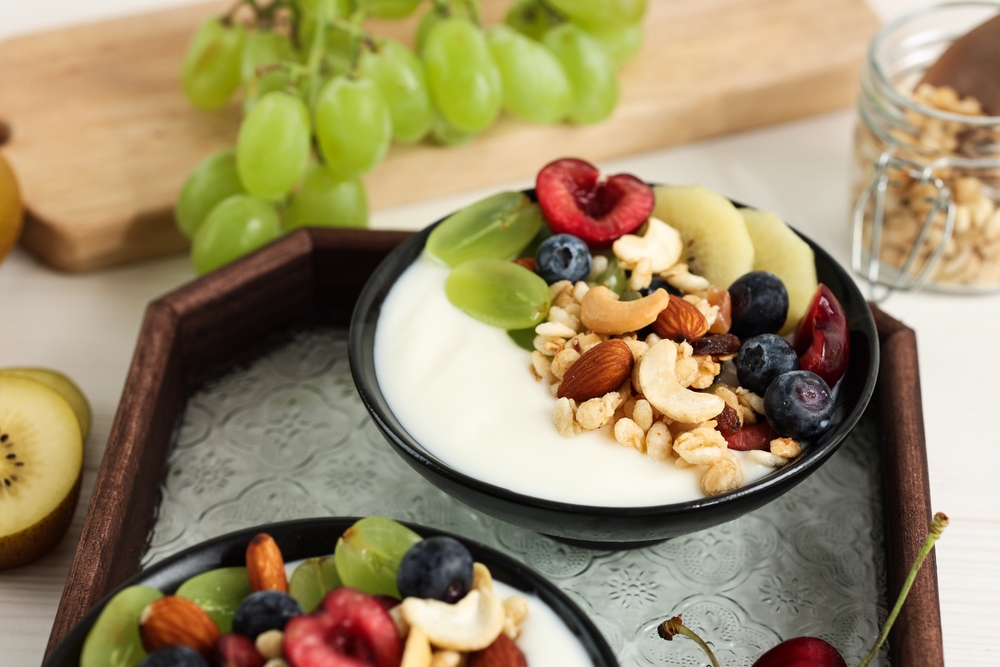
  1. Fresh Fruit And Nut Yoghurt Bowl

This dish is rich in protein, fibre and natural sweetness

Ingredients:
1 cup plain yoghurt or curd
1 chopped apple
1 small banana sliced
A handful of pomegranate seeds
1 tablespoon chopped almonds or walnuts
1 teaspoon honey (optional)
Method:
Place the yoghurt in a bowl. Add the chopped fruits and nuts. Drizzle honey if desired and mix gently. This makes a wholesome breakfast or evening snack.

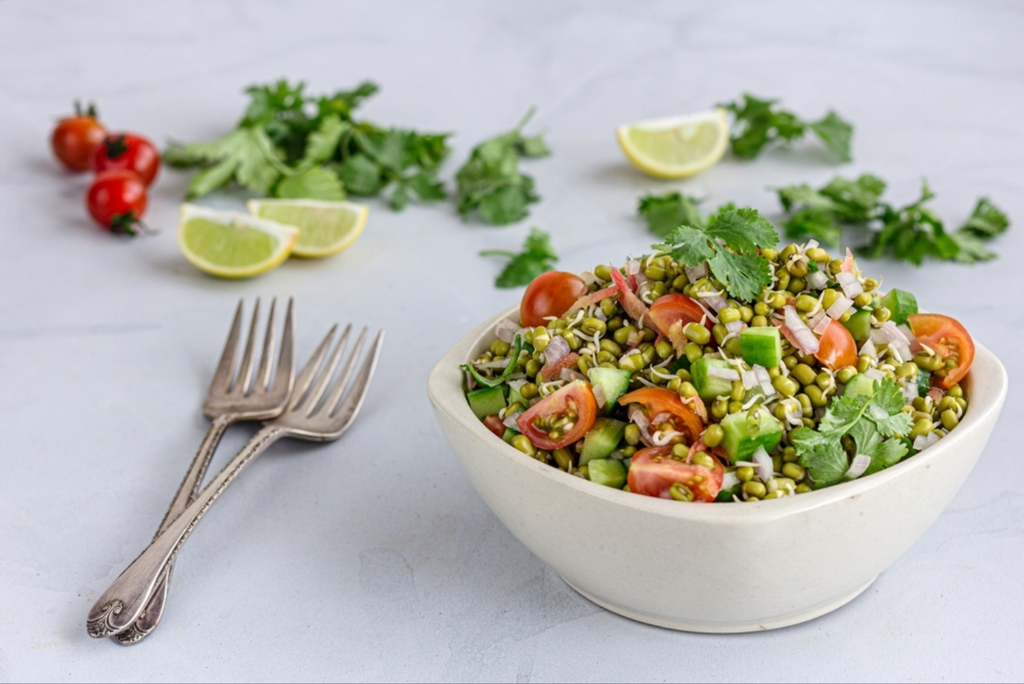
2. Sprouted Moong Salad. 


Sprouts are packed with protein, vitamins and enzymes

Ingredients:
1 cup sprouted green moong
1 small cucumber finely chopped
1 small tomato chopped
1 tablespoon chopped coriander leaves
Juice of half a lemon
Salt and pepper to taste
Method:
Combine all ingredients in a bowl. Toss gently with lemon juice, salt and pepper. Serve immediately for a refreshing and protein-rich snack.

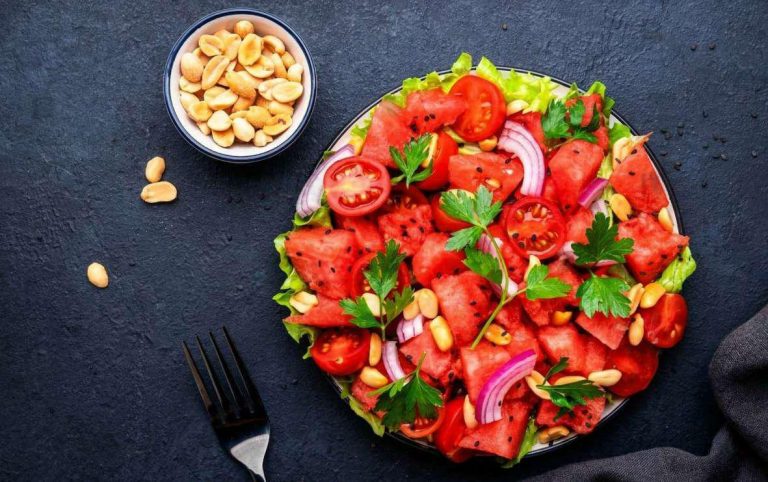
3. Peanut And Vegetable Chaat

A crunchy, satisfying option that is rich in plant protein

Ingredients:
1 cup roasted peanuts
1 small onion finely chopped
1 small tomato chopped
1 small cucumber chopped
1 teaspoon chaat masala
Juice of half a lemon
Fresh coriander leaves
Method:
Mix all ingredients together in a bowl. Adjust seasoning with chaat masala and lemon juice. Garnish with coriander leaves before serving.

4. Paneer And Cucumber Salad

A light dish with good protein content

Ingredients:
1 cup paneer cubes
1 cucumber diced
1 small tomato chopped
1 tablespoon olive oil
Salt and black pepper
A pinch of dried oregano (optional)
Method:
Place paneer, cucumber and tomato in a bowl. Add olive oil, salt, pepper and oregano. Toss gently and serve fresh.

5. Creamy Avocado Sandwich

A nutritious sandwich that requires no cooking

Ingredients:
2 slices whole wheat bread
1 ripe avocado
1 teaspoon lemon juice
Salt and pepper
A few slices of tomato and cucumber
Method:
Mash the avocado with lemon juice, salt and pepper. Spread the mixture on the bread slices. Add tomato and cucumber slices and close the sandwich.

6. Sweet Dates And Dry Fruit Bites

A natural dessert with no added sugar

Ingredients:
8–10 seedless dates
2 tablespoons chopped almonds
1 tablespoon chopped pistachios
1 tablespoon grated coconut
Method:
Mash the dates with a spoon until soft. Mix in the nuts and coconut. Roll into small bite-sized balls and refrigerate for a short while before serving.

7. Banana And Peanut Butter Smoothie

A filling drink that works well for breakfast or as a snack

Ingredients:

1 banana
1 cup milk or almond milk
1 tablespoon peanut butter
1 teaspoon honey (optional)

Method:

Blend all the ingredients together in a mixer until smooth. Serve immediately.

These recipes require minimal effort and no heat, making them ideal for senior citizens who prefer quick meals that are both healthy and convenient. They also work well during times when cooking fuel may be in short supply, while still ensuring balanced nutrition and variety in everyday meals.

The Great Indian Aloo Story

0

Udai Mathur takes us down the potato trail, sharing recipes that are comforting and with a healthy twist

It is a scene familiar in almost every Indian household: the aromatic sizzle of jeera and hing hitting the pan, followed by the satisfying thud of diced potatoes. Whether you call it Aloo in the North, Urulaikizhangu in the South or Alu in the East, this humble tuber is more than just a vegetable; it is a comfort, a staple, and for many, the very heart of the meal.

However, for those of us navigating our golden years, a diagnosis of “sugar” (diabetes) often feels like a door closing on these simple pleasures. We are frequently told that the potato is the enemy, a “starch bomb” that must be banished from the kitchen. But is that the whole truth? Or is there a way to balance our heritage flavours with our health?

Let’s pull back the curtain on the potato and explore how we can manage our blood sugar without losing the joy of the dining table.

The Science of the ‘Sugar’ Spike

To understand why doctors are often wary of potatoes, we first need to look at how our bodies handle fuel. Whether we are in our sixties or our eighties, our bodies run on glucose, a type of sugar derived from the carbohydrates we eat.

Think of your body like a vintage car. The food you eat is the petrol. When you eat starchy foods like potatoes, rice, or wheat, your digestive system breaks them down into glucose, which enters your bloodstream. To use this “petrol,” your body needs a key called insulin to open the doors to your cells.

As we age, this system can become a little temperamental. In Type 2 diabetes—which is common as we get older—the locks on our cells become “rusty” (insulin resistance), or our body just doesn’t produce enough keys to keep up. When the glucose can’t get into the cells, it stays in the blood, leading to high sugar levels that can, over time, affect our heart, kidneys, and eyesight.

The Potato Paradox: Friend or Foe?

The potato gets a bad reputation because it is a “high-carb” food. Because it is mostly starch, it can cause a rapid rise in blood glucose. In medical terms, it has a high Glycaemic Index (GI).

However, the “truth” about the potato is that it isn’t just a lump of sugar. It is packed with Vitamin C, potassium (excellent for blood pressure), and Vitamin B6. The secret to enjoying it lies not in total avoidance, but in how we cook it and what we pair it with.

The Magic of the ‘Cooling’ Method

Here is a bit of kitchen science that every Indian grandparent should know: if you boil a potato and let it cool down completely before eating it—or even better, keep it in the fridge overnight—something wonderful happens. The starch transforms into “resistant starch.”

This type of starch acts more like fibre. It bypasses the small intestine and doesn’t cause that dreaded sugar spike. So, a cold Aloo Chaat or a dish made with cooled, boiled potatoes is much kinder to your blood sugar than a hot, mashed potato or a fried Pakora.

Refining the Indian Plate

In India, we rarely eat a potato by itself. It is usually part of a larger, vibrant meal. This is our greatest advantage. By using a few traditional techniques, we can “blunt” the impact of the potato:

  • The Fibre Buffer: Never let the potato travel alone. If you are making a sabzi, load it with green beans, peas, or Palak (spinach). The fibre in the green vegetables slows down the digestion of the potato starch.
  • Protein Pairing: Always ensure there is a bowl of Dal, a serving of curd, or some paneer on your plate. Protein is excellent at stabilising blood sugar.
  • The Roti Rule: If you are having a small portion of potatoes, try to reduce your rice or roti portion for that meal. Think of it as a trade-off.
  • Mind the Oil: Often, it isn’t the potato that causes the problem, but the heavy ghee or refined oil we use to fry it. Steaming, light sautéing, or pressure-cooking are your best friends.

Living with diabetes in your senior years is not about punishment; it is about mindfulness. You don’t have to say a permanent goodbye to the Aloo. Instead, invite it to the table as a guest rather than the guest of honour.

3 Healthy, Senior-Friendly Potato Recipes

These recipes use the “boil and cool” method or high-fibre pairings to make them safer for blood sugar management.

  1. The “Cool” Dahi Aloo (Potato in Spiced Curd)

This dish uses the resistant starch method. Cooling the potatoes and pairing them with protein-rich curd makes it a much safer option.

  • Ingredients: 2 medium potatoes (boiled the night before and chilled), 1 cup low-fat curd, green chillies, ginger paste, and curry leaves.
  • Method: Dice the cold potatoes. Whisk the curd with a little roasted cumin powder (jeera). Heat half a teaspoon of oil, add mustard seeds and curry leaves, then turn off the heat. Stir in the cold potatoes and the curd.
  • Why it works: The cold potato has less impact on sugar, and the curd provides protein and probiotics.
  1. Aloo-Palak (Potato with Spinach)

A classic North Indian dish where the greens do the heavy lifting.

  • Ingredients: 1 small potato, 2 large bunches of fresh spinach (Palak), garlic, and minimal oil.
  • Method: Use a 3:1 ratio (three parts spinach to one part potato). Sauté the garlic and a little onion, add the spinach until it wilts, and then toss in small cubes of boiled potato.
  • Why it works: The massive amount of fibre in the spinach acts as a “speed bump,” slowing down how quickly your body absorbs the starch from the potato.
  1. Bengali-Style Lau-Aloo (Bottle Gourd & Potato)

A light, “shanti” dish that is easy on the digestion and the blood sugar.

  • Ingredients: 1 cup Lau (Bottle Gourd/Doodhi), half a potato, kalonji (black onion seeds), and turmeric.
  • Method: Bottle gourd has a very high water content and very low calories. Stew the gourd and the potato together with minimal spices.
  • Why it works: By “diluting” the potato with a high-volume, low-calorie vegetable like Lau, you get the satisfaction of eating a full bowl of sabzi with only a fraction of the carbohydrate load.

The Mind Is Willing, But The Flesh Is Not

When the body begins to protest and the years gather quietly behind us, strength becomes less about youth and more about resolve, writes Vickram Sethi

There comes a moment — usually while getting up from a low chair, climbing a flight of steps, or negotiating with a small trolley bag — when the body delivers a quiet but unmistakable message. It says: we are no longer coasting. Things now require real effort, attention, and conscious action.

I am, as they say, “pushing” 70, dragging a respectable train of years behind me, and yet somehow failing to collect much muscle along the way. The irony is not lost on me. I went to a military school; the long marches and cross-country runs seem to have evaporated. Decades of carrying responsibility, expectation, and the occasional existential worry — and still my legs feel oddly heavy, as if they’ve grown tired of themselves.

It isn’t that I feel old. Not in the dramatic, cane-waving sense. It’s subtler than that. A stiffness that arrives uninvited. A jar lid that resists longer than it should. A realisation, one morning, that strength is no longer a given but something that must be actively negotiated with.

Perhaps this is also the time to wrap up unfinished business.

Taking up serious weight training in one’s early seventies feels a bit like being handed unexpected permission. Permission to start late. Permission to surprise oneself. Permission to believe that decline is not the only narrative available to us once birthdays begin to feel less festive and more reflective.

Once I decided to begin training — weights, strength and all that accompanies it — what struck me most was not the bravado of barbells or the numbers attached to them. It was a quiet pride. The dignity of doing something difficult and doing it deliberately.

There is something deeply reassuring about the idea that the body, even after years of neglect, is still capable of learning new tricks — provided we are willing to listen to it again.

My own ambition, however, is far humbler. I would like to be able to lift my grandson when he comes charging at me shouting, “Dadu! Dadu!”

This may sound whimsical, but it is born out of necessity. He has a habit of bounding joyfully into the room and running straight up to me. There is something magical about a grandchild rushing towards you — two little hands like magic wands that change everything.

At present, the weight training involves a series of awkward manoeuvres, a mildly offended lower back, and a good deal of bargaining between the trainer and my spine. If I do not grow some better muscles, these joyous “Dadu” moments may become difficult.

Strength, I am learning, is not about vanity at this stage of life. It is about insurance. It is about future-proofing the everyday moments that matter. Picking up a child. Lifting a suitcase. Catching yourself before a fall becomes a headline.

Muscle, it turns out, is not merely aesthetic; it is deeply practical.

And yet many of us were raised to believe that gyms are for the young, the shiny, and the already fit. Walking into a training routine after a certain age can feel like arriving at a party where you do not know the dress code — and everyone else seems to have arrived decades earlier.

There is a certain self-consciousness that comes with it: the feeling of being slightly out of place in a world obsessed with speed and spectacle.

But here is the secret no one tells you early enough: everyone in that room is negotiating something. Injury. Age. Insecurity. Ambition. The mirrors may reflect bodies, but the real work is happening internally.

And there is a peculiar freedom in lifting weights when you are no longer trying to impress anyone. You are there to serve your future self — the one who would like to keep doing things independently for as long as possible.

There is also something unexpectedly meditative about strength training. The slow, deliberate movements. The attention to breath. The conversation between effort and rest.

It demands presence in a way that much of modern life does not.

You cannot scroll while squatting.
You cannot multitask while deadlifting.

For a few minutes, the world narrows to a simple question: can I lift this safely and well?

Progress, when it comes, is wonderfully unglamorous. An extra kilogram. One more repetition. The quiet surprise of realising that something which once felt impossible now feels merely challenging.

These are not triumphs that invite applause. But they bring a deep sense of satisfaction.

Of course, there are days when the body pushes back. When joints creak like old floorboards and enthusiasm must be coaxed rather than summoned. On those days, the temptation to retreat into the familiar — the chair, the cup of coffee, the comforting fiction that rest alone will keep us capable — is strong.

Sometimes I even call the trainer and cancel the appointment.

But strength is not built in comfort. It is built in conversation with resistance.

What I am learning, slowly and with occasional grumbling, is that ageing does not require surrender. It requires adaptation. We cannot train the way we once did, nor should we want to. But we can train wisely. Patiently. With respect for the miles already travelled.

Ageing, after all, is not a failure of strength; it is a reminder to redefine it.

And if strength today looks like patience, persistence, and simply showing up despite doubt, then perhaps I am stronger than I thought.

If I can lift my grandson without fear, climb a staircase without strategy, or travel without dreading the luggage carousel, that will be victory enough. Not the loud, triumphant kind, but the deeply satisfying sort that settles quietly into daily life.

There is a particular satisfaction in feeling physically capable again — not youthful, but reliable.

To trust your body is a quiet joy. To know that when life asks you to lift something — your grandchild, a bag, or simply yourself up a flight of steps — you are less likely to be undone by it.

So yes, the mind is willing but the flesh is not.

At least not yet.

But perhaps, with patience, that too will change.

Senior Stars Shine Bright

0

Deepa Gahlot celebrates the seasoned actors who continue to command attention with their craft and charisma

If there is an industry more sexist and ageist than any other, it is show business. Older actors want to be paired with actresses half their age, so women over 40 find themselves being edged out. However, romance is not the only thing actresses are expected to do, so there are a bunch of super talented senior actresses, who still have roles written for them, if not in cinema then on streaming projects. Youth cannot hold a candle to them, as their stardom shines brighter than the limelight.

A pick of ten actress who are over 70, and still hard at work:

Shabana Azmi (75):

After over 50 years of working continuously, she shows no signs of slowing down. Undoubtedly one of India’s finest actresses, with a record of five National Awards (an unparalleled three in a row), she is also a dedicated social activist. In the last five years, she has acted as the lead in the web show, Dabba Cartel, and films like Bun TikkiGhoomer, Rocky Aur Rani Kii Prem Kahaani, TV series Halo and The Empire and British film, What’s Love Got to Do with It?  Her upcoming projects include Lahore 1947Awarapan 2 and USA vs Raj.

Meryl Streep (76):

Regarded as the greatest living actress, she continues to headline major projects. Following her recent roles in The PromExtrapolationsDon’t Look Up and Only Murders In The Building, in just the last five years. She reprises her role as Miranda Priestly in the upcoming sequel to The Devil Wears Prada.  The film reportedly follows her navigating the decline of traditional magazine publishing while facing off against her former assistant, Emily (Emily Blunt), who is now a high-powered executive. She is also attached to a much-awaited series adaptation of Jonathan Franzen’s award-winning novel, The Corrections. She will be playing Enid Lambert, the family matriarch, in the complex family drama.  She holds the record for the most Academy Award acting nominations (21 total, with 17 for Best Actress, 4 for Best Supporting Actress) and has won three times.

Sigourney Weaver (76):

She remains a major force in mainstream Hollywood with her ongoing central roles in the Avatar franchise, in the role of Kiri. In the last five years, she has appeared in films like Dust Bunny, The Gorge, Master Gardener, Call Jane, Ghostbusters: Afterlife and The Good House. Her upcoming films include a new Star Wars movie, The Mandalorian and Grogu and the next in the Avatar series. She is renowned for playing strong, intelligent women and was once known as the Queen of Sci-Fi for playing Ellen Ripley (Alien), Dr. Grace Augustine and Kiri in Avatar, and Dana Barrett in Ghostbusters.

Jessica Lange (76):

In the last five years, the glamorous Hollywood star has acted in the TV film The Great Lillian HallFeud: Capore vs. The Swans, and Marlow. In 2026, she confirmed to return for the 13th season of American Horror Story; also in Long Day’s Journey Into Night, the film adaptation of Eugene O’Neill’s play, she reprises her Tony-winning role as Mary Tyrone alongside Ed Harris. She is also set to star in The Year of Magical Thinking, a film adaptation of Joan Didion’s acclaimed memoir and the Marlene Dietrich Biopic, in which she portrays the legendary actress during her later years in Las Vegas.

Glenn Close (78):

The scary psychopath of Fatal Attraction (1987). is a versatile actress, who continues to land significant roles, such as her acclaimed performance in Hillbilly Elegy and her third Golden Globe win for The Wife. In the last five years, she has done more work than younger actresses. Her film roles include Back in Action, Wake Up Dead Man: A Knives Out Mystery (2025), The Summer Book, Brothers, The Deliverance, Heart of Stone, Swan Song, and on TV she acted in All’s Fair, The New LookTehran, The Woman in the House Across the Street from the Girl in the Window. Her upcoming projects include The Hunger Games: Sunrise On The Reaping,  and Up to No Good. Filmmakers looking to cast formidable older women need look no further than her.

Helen Mirren (80):

The British stage and screen diva remains highly active, recently starring in the miniseries Catherine the Great, major feature films like The Good Liar and the streaming show The Thursday Murder Club. Over the last five years, she has acted in Goodbye June, White Bird, Shazam! Fury Of The Gods, F9: The Fast Saga, Fast X, Golda (as Israeli Prime Minister Golda Meir).  All varied roles and significant ones.

Susan Sarandon (80):

The ever graceful actress has remained active in both film and television, featuring in projects like Blue Beetle, Monarch, The Fabulous Four, The Six Triple Eight, The GutterGracie and Pedro: Pets to the Rescue, Maybe I Do, Ride the Eagle,Jolt and Nonnas.  Her upcoming films include The Accompanist, in which she plays a mysterious foster parent who takes in a young girl after a botched child-welfare investigation; in Unmerciful Good Fortune, a supernatural thriller based on the play by Edwin Sánchez; and the indie drama, Exit Right, in which she plays a woman with inoperable cancer who, afraid of being trapped indoors, moves into a tent in her backyard.

Aparna Sen (81):

Though the Bengal star has cut down on acting and concentrated on direction, she did make a significant screen appearance in the film Ei Raat Tomar Amaar and the documentary Parama: A Journey with Aparna Sen. Her recent work as director include The Rapist and Her Indian Summer.

Jane Fonda (88):

A major star and fitness guru, she has maintained a prolific screen career, concluding her long-running series Grace and Frankie.  In the last five years, she has appeared in This Is Me. Now: A Love Story,Book Club: The Next Chapter, 80 for BradyMoving On. She is slated to act in The Summer Book, based on Tove Jansson’s novel, about a young girl and her grandmother spending a summer on an island in the Gulf of Finland. She is known for playing complex, strong-willed, and often socially conscious women, choosing roles that challenged stereotypes, from her early sex kitten image to roles reflecting her political and social activism

Ellen Burstyn (93):

One of the oldest actresses still working, in the last five years, she has continued a busy career, highlighted by her return as Chris MacNeil in The Exorcist: Believer, and a recurring role as Bernadette Stabler in Law & Order: Organised Crime. She also starred in Pieces Of A Woman, Queen Bee, Mother, Couch, This Ordinary Thing, Three MonthsThe First Lady. Obviously age does not come in the way of her talent and willingness to continue working well past retirement age. Having played women facing deep personal, emotional, or spiritual crises throughout her career, she is recognized for her strong and complex performances.

Change in the Aged

0

We have no choice but to be conscious about this cosmic law and continue living without fear or dread, writes Nagesh Alai

Fortuity or adversity; neither can be predicated nor can anyone be prepared for it. It is just nature’s way of hurling a curved ball towards us; we either catch it or drop it or hit it or get hit by it. There can really be no perfect response or reaction to it except the willingness to accept and adapt to the consequent change and go with the flow, especially the elders getting on in age.

Verily, health issues and debilities and ways and means of handling them permeate most conversations about the geriatrics. The challenges of the waning body and the impact on the physicality of routine existence are indubitable and the ability and resources to handle it are far too varied, but uniformly the stoic and resilient face it admirably while others get by with social support. Could it be any different in the case of other changes or circumstances that disturb and disrupt an ageing engine that was otherwise chugging along whistling in the dusk of life.

For Trilok and Unnati, happily married for over 40 years with two lovely daughters, both settled abroad with their respective spouses and children, it was like any other day a month ago. Unnati had just returned home that afternoon, after a week’s hospital stay, for a minor surgical intervention. As usual, they retired to bed at night. Within 15 minutes, Trilok heard a whimper and sob from Unnati and nudged her to find out if she is okay and should he be calling a doctor. He didn’t get any response from Unnati. Her body had turned cold. She had quietly, without much ado, migrated to her creator’s portals. A massive cardiac arrest had ensured that and attempts at reviving her for the next hour didn’t help. Trilok was staring at a life without his life partner whom he adored. With the help of his wife’s siblings who were just a few kilometres away and his own siblings, Trilok had to move the mortal remains to a mortuary for a day, awaiting the return of one of his daughters for the cremation. A practical and complacent man that Trilok is, though much bereft at the irreparable loss, is coming to terms and getting on with life. He did not get into any of the usual rites and rituals. He is getting onto a flight in the next one week to the far away west, to be with his elder daughter who was precluded by the distance to see her mother before her final journey. A family reunion of sort to grieve in private and re-live the memorable times spent with the beloved family matron. This family support and engagement, albeit in distant lands, is what’s going to keep him going for the remainder of his time. 

An elderly couple, very healthy, in their seventies and empty nesters for long, with both their children living abroad and never to return, recently took the decision to move lock, stock and barrel, from their centrally located and comfortable home in Mumbai, to a distant assisted living facility in distant Bengaluru, to experience the facilities in advance and be prepared to face any potential inclement geriatric times of the future. It is anybody’s guess as to how the assisted living will pan out at the crucial times of need, especially if there is any incapacity of mind and body. The call to his children in distant lands is inevitable, but equally its questionable about their ability to be in India for any extended time. We all live in hope, not to become despondent about the probabilities and imponderables of time. Another friend, much senior to me in school, had moved from his cozy independent bungalow in Chennai to the distant Kovai to be amid people of his profile and age. One of the reasons to choose Kovai was proximity to his daughter should he face any impossible situation of limb and life. 

Donald, nudging 80, discovered that Joan, 74, his partner of 45 years, is showing signs of Alzheimer’s. Albeit at early stages and medication continuing, he is worried no end about the gradual and inescapable eventualities of the debilitating condition and is always by her side. I get to meet them almost every day at our morning walks. One hopes that this delightful couple, full of joie-de-vivre, can cope well with the active support and companionship of their daughter and her family, who fortunately live in the same housing complex.

Another elderly couple, closer home, is trying to come to grips with the imminent departure of their elder son, daughter-in-law and a bonnie 8-month-old bundle of joy to Bengaluru in the next few weeks. Their younger son had migrated abroad a year ago and the couple was left with the joy of only periodic video connects and conversations. The arrival of the grand daughter had been an immeasurable joy for them, showering the grand child with all the affection and cuddles and seeing her grow from cradle to crawl and from bawl to giggle with the daily joy rides in the pram to soak in the sun, great the chirping birds and feel the manicure plants and hedges along the way. They are dreading the upcoming absence of the immeasurable joy of daily delightful times with their tiny tot and wondering how to cope. In a quite matter of fact way, the son is expecting his mother to travel with them for a few months to Bengaluru for initial support in bringing up the child, working parents that both are. Besides the disruption due to the shift of city, the elderly couple will also have to contend with living separately in their sunset years, a dilemma with no easy solutions and gaps between the said and the unsaid.

There are a galore of such cases of forced non-health situations which render asunder settled lives. Most common are the migration of children from rural areas to metros to make a living, leaving the parents to manage the evening of their lives on their own. Sudden loss of a child due to various reasons, natural or medical or accidents, can lead to unbearable bereavement and anguish. A senior citizen, in our complex, was shocked to wake up to the new year to find his 40 years old son taken away from him. He is bereft to say the least but is coping and helping his son’s family deal with the untimely loss. He has been compelled to don his biz gears again.

Life is both beautiful and not so beautiful and life has its own algorithm and randomness of selection of any of us to tranquillity or tumult. Given this time-tested reality, it’s best to brace up to face what may be dished out to us – good or bad. If faith can move mountains, belief can help face the hurricanes. After all, none can escape karma, but can only move within it. Philosophically, we are both the cause and the experiencer. We have no choice but to be conscious about this cosmic law and continue living without fear or dread. Karma not only decides but also provides, rest assured.

Gujarati Edge: Decoding the Business Instinct

What is it about the Gujarati community that produces such a profound and enduring instinct for enterprise, asks Harsh Goenka

A few days ago, a statistic stopped me in my tracks: the combined market capitalisation of the Ambani and Adani empires rivalled the GDP of several nations. It was a powerful reminder of a larger truth. That Gujaratis are exceptionally successful in business. So what is it about the Gujarati community that produces such a profound and enduring instinct for enterprise?

Their success reflects a symptom of a deeper cultural phenomenon. Representing roughly 5% of India’s population, Gujaratis contribute over 8% of the national GDP and an impressive 18% of its industrial output. Of the Forbes 100 richest Indians, 19 are Gujaratis. The figures are striking, but to truly understand them one must look beyond statistics and into the region’s deep history and its unique cultural DNA.

Gujarat’s tryst with commerce is etched into its geography and history. Lothal’s 4,500-year-old tidal dockyard stands as testament to an ancient maritime instinct. Millennia later, Surat, Cambay and Porbandar flourished as bustling hubs of global trade, its merchants sailing the Arabian Sea and forging commercial networks stretching from the Middle East to Africa.

By the early 20th century, this entrepreneurial DNA found a new expression and Ahmedabad earned the moniker “Manchester of the East.” Families like Sarabhai, Mafatlal and Lalbhai dominated the textile mill industry, forming the backbone of the city’s economy and shaping India’s early industrial landscape.

When the licence raj began to fade, Gujarati capital moved decisively into chemicals, transforming towns like Ankleshwar and Vapi into industrial powerhouses. Pharmaceuticals emerged as another area of strength. Companies such as Sun Pharma under Dilip Shanghvi, Zydus led by Pankaj Patel, and Torrent under Sudhir Mehta rose to global prominence. In FMCG and consumer durables too, Gujarat gave India some of its most trusted household names- the enduring quality of Asian Paints, the ubiquitous adhesive of Pidilite, the healthy nourishment of Marico, the sweet nostalgia of Parle, and the detergent disruption of Nirma.

Even India’s financial markets carry a distinct Gujarati imprint. The state has produced both institution builders such as Deepak Parekh and Uday Kotak, and controversial market operators like Harshad Mehta and Ketan Parekh, reflecting, in many ways, the full spectrum of ambition, brilliance and risk-taking that defines the Gujarati business spirit.

What explains the consistent out performance of this community? The real explanation lies in a deeply embedded cultural framework that treats enterprise as a natural, almost inevitable, life path.

  1. The Normalisation of Risk and Failure

In a Gujarati family, a teenager with a business idea will be grilled and questioned, warned of pitfalls, but rarely discouraged. Instead, he is likely to be sent to work with an uncle, a cousin, or a family friend to learn the ropes. Business is seen as a legitimate, respectable craft to be mastered through apprenticeship.

Crucially, failure carries far less stigma. A venture that collapses is treated as a “lesson,” a stepping stone to the next attempt. This creates a powerful resilience and willingness to take calculated risks from an early age. This same instinct has historically pushed Gujaratis to migrate from their villages in search of opportunity, often with little capital but great confidence in their instincts and community networks. From East Africa to the UK and the US, these networks helped newcomers find their footing, share information, and gradually build businesses of their own.

  1. Optimised Frugality

Secondly, there is a unique relationship with money, best described as “optimised frugality.” It is the instinct to squeeze the last bit of toothpaste, reuse an envelope as scrap paper, and sell old newspapers. Yet this thrift is paired with a deep understanding that capital must circulate. Idle money is a cardinal sin.

Dinner table conversations often revolve around margins, stock markets and stories of entrepreneurial success. Children grow up in this ecosystem, helping in the family business, observing negotiations, and internalising the importance of margins and cash flow. This creates a powerful blend of cost-consciousness and a constant hunger for growth.

  1. The Power of the Diaspora

Travel comes naturally to Gujaratis. They have built one of the biggest business diasporas in the world, extending to over 100 countries. The “Patel motel” phenomenon in the United States, where families of Gujarati origin own more than half of all motels, is a classic example. Gujarati enterprises also dominate the global diamond trade, with nearly 90% of the world’s diamonds passing through Surat. It is an extraordinary statistic and indicative of their mastery over a complex supply chain woven around trust and efficiency. This global network serves as a powerful conduit for capital, market intelligence and trust.

  1. The Central Role of Women

Often understated is the central role of women. A Gujarati housewife is rarely just a homemaker. She is a micro-entrepreneur, supplementing income through dabbas, snacks, tailoring, or tuitions. This grassroots enterprise scales into phenomena like the Amul dairy cooperative, powered by millions of women, or Lijjat Papad, which began with a handful of housewives led by Jaswantiben Popat and grew into an international brand. In the corporate world, this strength is reflected in leaders like Kiran Mazumdar-Shaw of Biocon and Nita Ambani, who has institutionalised corporate philanthropy on a massive scale.

  1. Ownership Over Employment

Another powerful cultural trait is the preference for ownership over employment. While many communities prioritize stable salaried jobs, Gujaratis instinctively gravitate toward enterprise. Running a modest shop, a trading desk, or a small manufacturing unit is often seen as more desirable than working for someone else. The idea of “dhando” carries social respect and personal pride. The aspiration is always to create an asset, however modest, that can grow across generations.

  1. Adaptability and Market Sensitivity

Closely linked to this instinct is an extraordinary adaptability. Gujarati entrepreneurs have a remarkable ability to read shifts in the economic wind and reposition themselves accordingly. From trading commodities in Africa to running newspaper kiosks in England or entering emerging sectors at home, they have repeatedly demonstrated an agility to adjust to new markets, new technologies and new environments. This constant reinvention allows them to stay ahead of economic cycles while others remain tied to legacy industries.

However, this formidable cultural machinery is not infallible. The technology sector, for instance, has not seen the same level of Gujarati dominance, with very few unicorn founders or IT leaders (barring notable exceptions like Azim Premji) emerging from the community. This may stem from a historical educational preference for studying commerce over technical fields. Furthermore, the transition from the high energy, founder driven style to professionally managed, deeply institutional structures remains a critical challenge for many family businesses as they scale. But as history has proved, adaptation and capacity for reinvention is woven into their fabric. It is only a matter of time before we see Gujarati enterprise foraying into new avenues as opportunities presented themselves. 

What explains the meteoric rise of the two particular giants- Ambani and Adani? Their success lies in aligning ambition with national destiny. Both groups have staked their fortunes on sectors central to India’s growth story- energy, infrastructure, and digital connectivity, placing bold bets years ahead of the curve. This is paired with an unparalleled scale of execution and an ability to work at scale which places them in a league of their own. Reliance is transforming from a petrochemical colossus into a new-energy powerhouse, while Adani has consolidated its grip on the very gateways of the economy, from ports, airports to power lines.

Most importantly, Gujaratis have shown their visionary prowess in nation building as well. From the leadership of Mahatma Gandhi and Sardar Patel in gaining independence and stitching together a young country, to Prime Minister Modi’s model of developmental governance, three of India’s most consequential leaders have emerged from this one state. Enterprise, leadership, and statecraft have flowed from the same soil.

What Gujarat has built is a living, breathing philosophy of enterprise. From the first merchant who set sail from Surat with nothing but nerve and a trading instinct, to the billionaires reshaping India’s energy and digital future, the thread is unbroken. The community has survived colonial disruption, the stranglehold of the licence raj and the volatility of global markets, emerging stronger each time, not despite adversity, but because of it. Resilience, frugality, mobility, and an almost genetic restlessness, are the product of a culture that has always believed that commerce is more than a livelihood. It is a calling. And Gujarat, it seems, will keep answering it.

The Sky’s the Limit for India’s White-Ball Empire

Expectations have skyrocketed after the Indian team under captain Suryakumar ‘Sky’ Yadav successfully defended the Men’s T20 World Cup title. What will it take for the team to win forthcoming events in the shortest format? Sunil Warrier analyses the win and looks at the way ahead

After India completed an emphatic title-win in the ICC 2026 Men’s T20 World Cup over New Zealand, former England captain and no-nonsense commentator Michael Atherton told Sky Sports Cricket that India are more than a “pre-eminent T20 side”. “They are the pre-eminent white-ball side at the moment,” he said.

And then he goes on to make a very dangerous prediction – ominous for the other teams and burdenful of expectations for the Indians. “They may well mop it all up, there is a 50-over World Cup next year, and they have the chance now to hold the Champions Trophy, T20 World Cup, and the 50-over World Cup (to be hosted by South Africa-Zimbabwe and Namibia in 2027) all in one go, and that will surely be their aim,” Atherton went on to say.

Atherton has based his prediction on the fact that “they have won 30 out of 32 ICC global games in the last two years” and “have only been beaten by Australia in the 50-over World Cup final and by South Africa in the T20 Super 8 stage”.

The former cricketer as well as the rest of the world will need to be told that India is targeting not just ICC events. They also intend to annex the Olympic gold when cricket makes its debut at Los Angeles in 2028 and the next T20 World Cup the same year – not happy with a three-peat, they want a hat-trick. This year there is also the Asian Games in Japan. Though India will aim for a top podium finish, it is not known yet if the best team will be sent.

After joining a select band of World Cup-winning captains – Kapil Dev, MS Dhoni and Rohit Sharma, captain Suryakumar Yadav said: “It feels good to win 2024 and 2026 back-to-back. The next target is the Olympics and T20 World Cup. The team has good momentum.”

Such is the aura of the team led by Yadav that Indian supporters now firmly believe that our T20 team is invincible and can conjure up magic at any venue and against any opposition. Expectations have truly Sky-rocketed.

Indian supporters firmly believe the T20 team is invincible

Credit for India’s T20 success should go to not just Yadav and his band but also to coach Gautam Gambhir and the selection panel led by former Indian allrounder Ajit Agarkar. There was no guarantee that the team picked by them would go on to win the title. But, what’s important is that they decided to select the best players possible by taking brave and bold decisions.

They dared to drop Test captain Shubman Gill, elevate Yadav to captaincy over Hardik Pandya, chose to ignore the experienced Shreyas Iyer’s recent good form but trusted Ishan Kishan on the same premise. They completely overlooked Rishabh Pant and Yashasvi Jaiswal who were part of the squad two years ago. They resurrected and persisted with Sanju Samson even though he was not in the greatest of form in the run-up to the Ahmedabad win.

Samson deserved best player of the tournament

Even during the campaign, the decision-makers made courageous decisions to open with Samson, who found form to emerge best player, Varun Chakravarthy, who claimed 14 wickets but leaked runs, continued with allrounder Shivam Dube even though he didn’t bowl much, retained Abhishek Sharma despite a string of poor scores and kept the effervescent Rinku Singh on the bench. It’s another matter that different players rose to the occasion at different times, but the fact is that the selection committee backed themselves and trusted the players to come good. They did, and how!

Those in the hotseat will need to continue to make decisions, some that are out-of-the-box and most that are daring. Will they look short-term – only this year — or long-term – till 2028 Olympics and next T20 World Cup — is going to be the moot question? Should they lock in key members and work around the others or just look at current form to pick teams? There’s an oceanic pool of talent to pick players from and it is not going to be an easy task for the selection committee.

Credit for India’s T20 : Yadav and Gautam Gambhir

For starters, the committee members will have to take a call on captain Yadav who, at 35, is not going to get any younger two years from now. Though certainty in the playing XI was the main factor for him to be chosen as captain, Yadav, the batter, was hardly in the prolific form that one is so used to seeing him in. 

Then there is the dilemma of when to wrap and unwrap the ‘once-in-a-generation’ fast bowler Jasprit Bumrah from mothballs. Thirty-four in two years, Bumrah’s body would have taken a lot more toll despite restricted usage. From now to the 2028 Olympics, how much should he play to ensure the body remains fit to deliver more trophies. At the T20 World Cup, he was in brilliant, parsimonious and imperious form.

Considered to be the young man’s game, there will be some others from this batch who will be on the other side of 30. One can always argue that there are players in other teams who are pushing 40, so why can’t India persist with some younger ‘veterans’. Selecting players with a view to win titles over the next two years is going to be a crazy challenge and a headache for the selection committee.

The nursery for the selectors will continue to be the Indian Premier League which will see three more editions before the 2028 Los Angeles Olympics. The event is not only the richest in terms of money but also for the wealth and quality of homegrown players it throws up with remarkable consistency in every edition.

The gentleman’s game of cricket which, in India, had players largely from state capitals like Mumbai, Bengaluru, Chennai, Kolkata, Hyderabad and the national capital of Delhi, has thrown the net so wide that a Samson comes from the fishing village of Vizhinjam in Thiruvananthapuram, an Ishan Kishan hails from Patna and plays for Jharkhand, and a Rinku Singh is from Aligarh in Uttar Pradesh. And there are many more with rags-to-riches and meritorious stories.

Enthused by the moolah and players that the IPL harvests, even state associations are holding their own T20 tournaments. While the player pool in the IPL is filled up with players from top cricket-playing nations, state tournaments are forced to look at village, taluka and gram panchayat levels to select players. Talent scouts are roaming around the countryside with an eagle eye to pick the next Bumrah and Yadav.

One is not sure how many T20 internationals India are scheduled to play over the next 30 months. As such, the form of players will continue to be tested in the IPL, the 18th edition of which begins on March 28. 

The team that won the T20 World Cup certainly deserves all the accolades and monetary awards. But all of them, including the likes of Mohammed Siraj, Kuldeep Yadav and Washington Sundar who did not get to play much, will be under review. And so will be fast bowler Harshit Rana who was unlucky to miss out due to an injury and will join the IPL towards the end.

Players like Gill and Jaiswal will be keen to prove a point and their T20 worth. This will put the pressure on players like Abhishek Sharma, Sanju Samson and Ishan Kishan. A couple of ill-timed swishes is enough to bring about the downfall of the World Cup heroes. Every run, wicket and catch will matter. Every movement will be under hawk-eyed scrutiny.

Then, let’s not forget one certain Vaibhav Suryavanshi. All of 15 now, he exploded on the national cricketing landscape with a breathtaking 101 off merely 38 balls playing for Rajasthan Royals against Gujarat Titans last year. Youngest, fastest, quickest, bravest and several other ‘ests’ are now attested to Suryavanshi’s name. In the final of the 2026 ICC Under-19 Cricket World Cup, Vaibhav smashed 175 runs off 80 balls against England, smashing 15 fours and 15 sixes in a record-breaking knock. Needless to say, India won that title too.

With the kind of reputation he will come before the IPL, expectations will be high from Suryavanshi. Oh, did we forget to say where he is from — Samastipur in Bihar. In good form, he is expected to score heavily in the coming IPL. Rival teams may well sign up for Israel’s Iron Dome for protection from Suryavanshi’s missile hits.

National selectors would be in a quandary when to blood him and, more importantly, who to drop. If Sachin Tendulkar could be blooded into the international arena at 16, why can’t Suryavanshi too be inducted into the national senior team. The youngster is already being hailed as the next Sachin. He certainly has all the trappings of the former star.

In the coming two years and more, difficult decisions will have to be taken. Many will be unpleasant and the selectors, the coach and captain (whoever it be) will need to have the conviction to stand by them. Criticism will come from all quarters and every Amar, Akbar and Anthony will seek justification. The selectors will have to continue to remain brave and bold.

Entertainment Review: Scarpetta

The medical examiner Kay Scarpetta is the unusual creation of bestselling author Patricia Cornwell. Over 29 books, the crime-fighting forensic pathologist has dealt with difficult cases, problematic home life and office politics.

She now finds herself on screen (on Amazon Prime Video), adapted by Liz Sarnoff, played by the alabaster-skinned Nicole Kidman, and as her younger self, by Rosy McEwen (a terrific work of casting). She is married to FBI profiler Benton Wesley (Simon Baker/Hunter Parrish), but has a relationship of trust and friendship with her high-strung sister Dorothy’s (Jamie Lee Curtis/Amanda Righetti) husband, Pete (Bobby Cannavale/Jake Cannavale). Kay had raised Dorothy’s daughter, Lucy (Ariana DeBose), while her mother was too busy partying. The young woman is troubled and still obsessing over her dead partner Janet (Janet Montgomery), with whose AI avatar she constantly chats.

Into this chaotic cauldron drops a horribly mutilated body lying naked by the railway tracks, that has similarities with a case Kay had helped solve in the past.  It had also ended Pete’s career as a cop, for a murder rap he took to protect Kay. Years later, Kay and Benton have returned to Virginia, where he has a palatial mansion and she has been appointed Chief Medical Officer. She brings in Pere as a consultant, which annoys her sister, husband and niece. Her nemesis of the past, Elvin Reddy (Lenny Clarke) is now her boss, and plants his own mole, Maggie (Stephanie Faracy)  as her secretary.

Kay’s life and career start to unravel as the secret she and Pete had kept hidden for decades is about to explode. A set of fingerprints is found on the body connect the victim to a series of homicides 28 years earlier. If it turns out they had the wrong man in 1998, then they would have to pay the price in the present.

The series, based loosely on Scarpetta’s 1990 introduction Postmortem, diverges from the source material in some ways, mainly in the portrayal of Kay. At home, her sister is constantly throwing tantrums and Lucy unloads her trauma on everybody around her. Unlike the cool and professional character in the book, Scarpetta, as played by Kidman, is just weirdly clinical, and also, when it comes to her treatment of Pete, very self-centred. Even Janet’s AI bot can see that Pete is in love with Kay, and Dorothy yells her jealousy without any filters, but Kay is oblivious.

The show has graphic autopsy scenes as Scarpetta handles corpses with a view to collect forensic data, which can be off putting. Readers of Corenwell’s books might be disappointed by the show. Others might find it watchable if the gore doesn’t bother them.

Scarpetta
Developed by Liz Sarnoff
Cast: Nicole Kidman, Simon Baker, Jamie Lee Curtis, Bobby Cannavale, Rosie McEwen and others

Amazon Prime Video

International Day of Action for Rivers – March 14, 2026

From providing fresh water and supporting biodiversity to regulating the climate and sustaining cultural traditions, healthy, free-flowing rivers have always been critical for people and the planet. But rivers worldwide are at risk–increasingly fragmented, polluted, and undermined by climate change and irresponsible development projects. When rivers are at risk, so too is our collective future. 

Healthy rivers and access to clean water are fundamental human rights that connect us all. The International Day of Action for Rivers is a time to come together in solidarity with rivers and the communities that protect and defend them. By taking action on behalf of rivers, we affirm that we have the power to protect rivers and ensure that communities have access to clean, free-flowing water and the right to participate in decisions directly affecting rivers, and ultimately, their lives.

The theme of this year’s International Day of Action for Rivers is Protect Rivers, Protect People. At a time of intensifying climate impacts and global crises, when both people and planet face enormous threats to life and liberty, it is our collective responsibility to protect our shared waters. This has never been more urgent than it is today.

Rivers are life-giving systems. Without them, our health, food security, livelihoods, and communities are at risk. We cannot survive or thrive without healthy rivers.

When rivers are polluted, over-extracted, diverted, or blocked by destructive infrastructure, it is vulnerable communities and river ecosystems that suffer first. Protecting rivers is not only about safeguarding human well-being; it is about defending biodiversity, strengthening climate resilience, and securing a just and livable future for generations to come.

Isn’t it ironic that we humans are poisoning the very waters that give us life? By consuming unaccounted for amounts of nano plastics that we have dumped into our water bodies, we have shot ourselves in both feet. Would you not agree?

Join us and communities around the world in making rivers our priority. Together, through our voices, our actions, and our commitments, we can honour and protect these precious lifelines.

https://www.internationalrivers.org/take-action/international-day-of-action-for-rivers/

The Summer Dahi Guide

10 cooling yogurt foods and drinks to beat the heat

When summer temperatures soar, traditional Indian kitchens instinctively reach for one humble yet powerful ingredient: dahi, or fresh yogurt. Light, refreshing and incredibly versatile, yogurt has been a staple in warm climates for centuries—not just for flavour but also for its soothing and digestive benefits.

From a nutritional perspective, yogurt contains beneficial probiotic bacteria that help support gut health, along with protein, calcium and B vitamins. Research from the Harvard T.H. Chan School of Public Health suggests that fermented foods such as yogurt can help maintain a healthy microbiome and support digestion.

But beyond the science, yogurt-based foods are simply one of the most refreshing ways to cool down. 

Here is your Summer Dahi Guide—ten delicious yogurt dishes and drinks that keep you nourished and comfortable in warm weather.

  1. Lassi – The Classic Summer Cooler

Perhaps the most iconic yogurt drink in South Asia, Lassi is wonderfully simple yet incredibly refreshing.

Traditionally made by blending yogurt with water, it can be served either sweet or savoury. Popular variations include mango lassi, rose lassi or salted lassi flavoured with roasted cumin.

Its combination of hydration and probiotics makes it a perfect summer drink.

  1. Chaas – Light, Spiced Buttermilk

Chaas is lighter and thinner than lassi, making it ideal for hot afternoons.

Prepared by whisking yogurt with water and adding spices such as roasted cumin, ginger, curry leaves and rock salt, chaas is often enjoyed after meals to aid digestion and prevent heaviness.

  1. Cucumber Raita – The Instant Cool Down

Few dishes cool the palate as effectively as Raita, especially when made with cucumber.

Cucumbers contain over 90% water, and when mixed with yogurt, mint and roasted cumin powder they create a refreshing side dish that perfectly balances spicy foods.

  1. Mint and Coriander Dahi Dip

A vibrant yogurt dip made with fresh mint, coriander, green chilli and lemon juice is a summer essential.

This herb-packed dahi chutney pairs beautifully with grilled vegetables, kebabs or roasted potatoes, adding freshness and brightness to any meal.

  1. Shrikhand – A Chilled Yogurt Dessert

Rich, fragrant and indulgent, Shrikhand is a classic dessert from western India.

It is made by straining yogurt until thick and creamy, then flavouring it with saffron, cardamom and sugar. Garnished with pistachios or almonds, shrikhand is served chilled and feels wonderfully luxurious on a warm day.

  1. Fruit and Yogurt Smoothies

Blending yogurt with fresh seasonal fruits creates a cooling and nutritious drink packed with vitamins and antioxidants.

Popular combinations include:

  • Mango and yogurt
  • Strawberry and yogurt
  • Banana and honey yogurt
  • Papaya yogurt smoothies

These smoothies are light yet satisfying and make an excellent breakfast or afternoon refresher.

  1. Dahi Puri – A Tangy Street Food Favourite

A playful and flavourful treat, Dahi Puri combines crisp puris filled with potatoes, chutneys and generous spoonfuls of chilled yogurt.

The yogurt balances the tangy tamarind and spicy chutneys, creating a delightful burst of sweet, sour and cooling flavours.

  1. Kadhi – Comfort Food with a Tangy Twist

Though served warm, Kadhi remains a beloved yogurt-based dish across India.

Made with yogurt and gram flour, it forms a tangy curry often tempered with mustard seeds, curry leaves and turmeric. Served with rice, kadhi is comforting yet light enough for warmer weather.

  1. Frozen Yogurt with Fruit

For a modern twist on traditional dahi desserts, frozen yogurt makes a delicious summer treat.

Blend thick yogurt with honey and fruit, freeze lightly, and you have a refreshing dessert that is lighter than ice cream while still creamy and satisfying.

  1. Dahi with Seasonal Fruits and Nuts

Sometimes simplicity is best. A bowl of chilled yogurt topped with fresh fruits such as mango, berries, banana or pomegranate and sprinkled with nuts creates a quick, nourishing summer dish.

It is rich in protein, probiotics and natural sweetness—perfect for breakfast, dessert or a midday snack.

Why Yogurt Works So Well in Summer

There are several reasons yogurt-based foods feel especially refreshing in warm weather:

  • High water content helps maintain hydration
  • Fermented probiotics support digestive health
  • Natural acidity stimulates appetite
  • Protein helps maintain energy without heaviness

In traditional wellness systems such as Ayurveda, yogurt-based drinks like chaas are also believed to help balance the body during hot weather.

Regional Dahi Delights Worth Discovering

Across India, yogurt is celebrated in countless regional dishes that bring together cooling flavours, tradition and nourishment. Here are a few more dahi-based favourites worth exploring.

The Bengali Favourite: Mishti Doi with Gud

No discussion of yogurt desserts would be complete without Mishti Doi, a beloved Bengali sweet known for its creamy texture and caramel colour.

Traditionally set in earthen pots, mishti doi is made by fermenting sweetened milk and yogurt cultures. In many traditional homes, it is sweetened with Jaggery—or gud—instead of refined sugar. The jaggery gives the yogurt a warm golden hue and a deep caramel-like sweetness.

Served chilled, it is both comforting and refreshing, and remains a treasured dessert in cities such as Kolkata.

Dahi Bhalla – A Festive North Indian Treat

Soft lentil dumplings soaked in creamy yogurt make Dahi Bhalla a favourite during festivals and family gatherings.

The fluffy dumplings absorb the yogurt beautifully and are topped with tamarind chutney, mint chutney and roasted spices, creating a delightful balance of sweet, tangy and cooling flavours.

Mattha – Rajasthan’s Summer Refresher

In the hot desert regions of western India, Mattha is a staple summer drink.

Similar to chaas but often more spiced, mattha is made with yogurt, water, roasted cumin, black pepper and fresh herbs. It is valued not only for its refreshing taste but also for helping maintain hydration in extremely warm climates.

Dahi Vada – A Timeless Street Favourite

Another beloved yogurt dish is Dahi Vada, where soft lentil fritters are soaked in chilled yogurt and topped with spices, tamarind chutney and coriander.

The combination of creamy yogurt, tangy chutneys and soft dumplings creates a dish that is indulgent yet wonderfully cooling.

A Cooling Tradition That Never Goes Out of Style

From the sweet richness of mishti doi in Bengal to the spiced buttermilk of Rajasthan, yogurt continues to be one of the most versatile and refreshing ingredients in Indian cuisine.

Whether enjoyed as a drink, dessert or savoury dish, dahi remains one of the most delicious ways to stay cool during the summer months.

From a simple glass of lassi to a festive bowl of dahi puri, yogurt-based dishes have long been part of summer eating traditions across India.

They are refreshing, nourishing and endlessly adaptable—proving that one of the best ways to stay cool during the hottest months may already be sitting in your refrigerator.

So this summer, embrace the versatility of dahi and explore these deliciouslycooling dishes that celebrate one of the most beloved ingredients in the Indian kitchen.

The Myth of the Deteriorating Brain

Why You Should Never Stop Learning Something New—Especially As You Age

For decades, ageing has been closely associated with an inevitable decline in mental ability. Many people assume that memory fades, thinking slows, and learning becomes increasingly difficult after a certain age. While it is true that some aspects of cognitive processing may change over time, modern neuroscience strongly challenges the idea that the brain simply “deteriorates” with age.

In fact, research in neuroscience and psychology reveals a far more optimistic reality: the human brain remains remarkably adaptable throughout life. Continuing to learn new skills, ideas and experiences may not only maintain cognitive function but can actively strengthen the brain well into later life.

Understanding how the brain changes—and how learning protects it—can transform the way we think about ageing.

The Brain Is Designed to Adapt

One of the most important discoveries in modern neuroscience is neuroplasticity—the brain’s ability to reorganise and form new neural connections throughout life.

For many years, scientists believed the brain stopped developing in adulthood. However, studies now show that neural pathways continue to change in response to learning, experiences and environmental stimulation.

According to research from the Harvard Medical School and the National Institute on Aging, engaging in mentally stimulating activities can strengthen connections between brain cells, improving cognitive resilience.

This means that the brain behaves much like a muscle:
the more it is used and challenged, the stronger and more efficient it becomes.

Ageing Does Not Mean Cognitive Collapse

While certain mental processes such as reaction speed may slow slightly with age, other abilities often remain stable—or even improve.

Research published in the journal Psychological Science shows that older adults frequently maintain strong abilities in areas such as:

  • Vocabulary
  • Emotional intelligence
  • Pattern recognition
  • Strategic thinking
  • Problem solving based on experience

These strengths are often referred to as “crystallised intelligence”—knowledge and skills accumulated through life experience.

In many ways, ageing brains are not declining; they are becoming more specialised and efficient at using what they know.

Learning Protects the Brain

One of the strongest predictors of cognitive longevity is continued mental engagement.

Large population studies, including the well-known Nun Study and research from University College London, suggest that people who engage regularly in intellectually stimulating activities have a lower risk of cognitive decline and dementia.

Learning new skills stimulates several beneficial brain processes:

1. Formation of New Neural Connections

When we learn something unfamiliar—such as a language, musical instrument, or digital skill—the brain forms new neural pathways.

2. Increased Cognitive Reserve

Mental activity builds what neuroscientists call cognitive reserve, which helps the brain compensate for age-related changes or disease.

3. Improved Memory and Attention

Challenging the brain strengthens networks involved in focus, memory retrieval and problem solving.

The Power of Novelty

Interestingly, learning something new is far more beneficial than simply repeating familiar tasks.

Novel experiences activate multiple regions of the brain simultaneously, including those responsible for memory, emotion and decision-making.

A study conducted at the University of Texas at Dallas found that older adults who learned demanding new skills—such as digital photography or quilting—showed significant improvements in memory compared with those engaged in passive activities.

The key ingredient was challenge. The brain thrives when it must stretch beyond its comfort zone.

Learning Supports Emotional and Mental Well-being

The benefits of lifelong learning extend beyond cognition.

Research in ageing psychology indicates that learning new skills can improve:

  • Self-confidence
  • Emotional resilience
  • Social connection
  • Sense of purpose

These factors are critical for healthy ageing. A sense of growth and curiosity helps people remain engaged with life, reducing the risk of isolation and depression.

Practical Ways to Keep the Brain Growing

The good news is that maintaining brain vitality does not require complex programmes. What matters most is curiosity and variety.

Consider exploring activities such as:

  • Learning a new language
  • Playing a musical instrument
  • Studying art, philosophy or history
  • Joining discussion groups or book clubs
  • Trying new technologies or digital skills
  • Practising puzzles or strategy games
  • Taking up creative hobbies such as painting or writing

Even small challenges—learning a new recipe, navigating a new route, or mastering a new fitness routine—can stimulate the brain.

Ageing Is Not the End of Learning

Learning Protects the Brain

One of the strongest predictors of cognitive longevity is continued mental engagement.

Large population studies, including the well-known Nun Study and research from University College London, suggest that people who engage regularly in intellectually stimulating activities have a lower risk of cognitive decline and dementia.

Learning new skills stimulates several beneficial brain processes:

  1. Formation of New Neural Connections

When we learn something unfamiliar—such as a language, musical instrument, or digital skill—the brain forms new neural pathways.

  1. Increased Cognitive Reserve

Mental activity builds what neuroscientists call cognitive reserve, which helps the brain compensate for age-related changes or disease.

  1. Improved Memory and Attention

Challenging the brain strengthens networks involved in focus, memory retrieval and problem solving.

Ageing Is Not the End of Learning

Evidence increasingly suggests that seniors who continue learning—whether through courses, books, workshops or new hobbies—tend to maintain sharper cognitive function, greater curiosity and a more youthful outlook on life for longer.

Perhaps the most important message from modern neuroscience is this: the brain is not designed to shut down with age.

Instead, it is built to adapt, grow and reorganise in response to the experiences we give it.

Lifelong learning keeps neural networks active, strengthens cognitive resilience and contributes to overall well-being. Far from accelerating decline, curiosity and learning may be one of the most powerful tools we have for maintaining brain health.

In other words, the idea of a steadily deteriorating brain is largely a myth.

The real question is not whether the ageing brain can continue to learn.

It is how much we choose to challenge it.

Glaucoma Week Special

0

The Seniors Today Team got chatting with Group Chief Operating Officer (ASG Eye hospital), Dr Vikas Jain, to mark the significance of World Glaucoma Week – 8 – 14 March, 2026

  1.   What is glaucoma, and why is it a concern for people over 60?

Glaucoma is a condition in which fluid builds up inside the eye, leading to an increase in eye pressure. This increased pressure can damage the optic nerve, which is the nerve responsible for carrying visual information from the eye to the brain. The damage can be temporary or permanent, and if left untreated, it can lead to vision loss.

There are different types of glaucoma. One type, called acute angle-closure glaucoma, can cause sudden and severe symptoms. However, the more common type, known as primary open-angle glaucoma, develops slowly and painlessly, often without any warning signs. Because it progresses quietly without noticeable symptoms in the early stages, glaucoma is often referred to as the “silent thief” of eyesight.

Primary open-angle glaucoma can start causing damage even before the age of 40 and can lead to blindness at a much higher rate if not detected in time. This is why regular eye examinations are important at every age to assess the risk. It is also important to be aware that early warning signs may not be obvious unless you know what to look for.

Glaucoma is one of the leading causes of blindness in people over 60 years of age. However, the good news is that blindness due to glaucoma can often be prevented if it is diagnosed early and treated appropriately.

  1.       Can glaucoma develop without pain or early warning signs?

Yes, glaucoma can develop without pain or early warning signs. In fact, many people may not realize there is a problem until significant damage has already occurred.

Some individuals may have higher than normal eye pressure, a condition known as ocular hypertension. These patients are considered “glaucoma suspects” because they have a higher risk of eventually developing glaucoma, even if there are no visible signs of damage at that time.

There are also people who are labelled as glaucoma suspects even when their eye pressure is normal. In such cases, the ophthalmologist may notice something unusual or different about the optic nerve during an eye examination. Despite these findings, most glaucoma suspects do not experience any symptoms.

That is why regular monitoring is extremely important. If you are identified as a glaucoma suspect, your ophthalmologist will carefully observe your eyes over time, check for any changes, and begin treatment if it becomes necessary.

  1.   How often should senior citizens have their eyes checked for glaucoma?

Adults who are 65 years and older should undergo a comprehensive eye examination every 1 to 2 years. This is the minimum recommended frequency.

For seniors who are at a higher risk of developing glaucoma, more frequent check-ups may be advised, sometimes every 6 to 12 months, depending on the individual situation.

The reason for these regular examinations is simple. In glaucoma, the earlier we detect changes in eye pressure or any signs of optic nerve damage, the more effectively we can slow down or even stop further vision loss. Regular monitoring plays a crucial role in protecting eyesight.


  1.   Is glaucoma linked to ageing, family history, diabetes or high blood pressure?

Yes, glaucoma is linked to several factors, including ageing, family history, diabetes and cardiovascular conditions such as high blood pressure.

Ageing:
Most types of glaucoma affect people aged 40 and older, with congenital types being a major exception. The risk increases as we grow older. In fact, experts estimate that about 10% of people aged 75 and above have glaucoma. This makes age one of the most important risk factors.
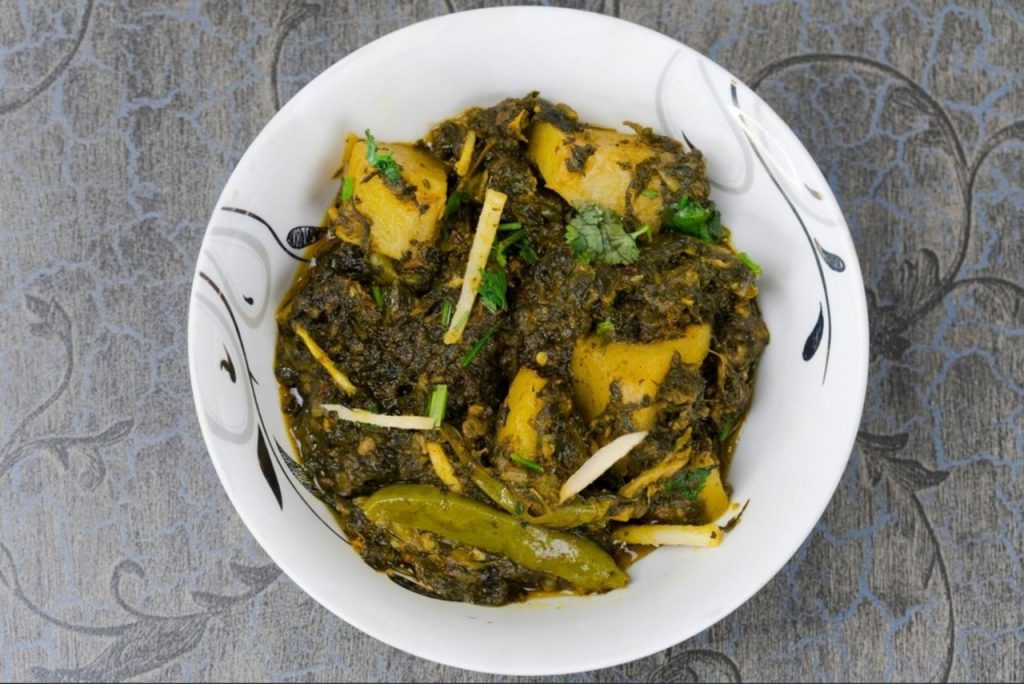
Family history:
There is strong evidence that having a family history of glaucoma increases your risk. If a first-degree biological relative, such as a parent, sibling or child, has glaucoma, you have a very high risk to develop glaucoma as well. Additionally, several conditions that cause secondary glaucoma are genetic in nature.

Diabetes:
Recent research suggests that people with diabetes have a higher risk of developing glaucoma. The longer a person has diabetes, the greater the risk may become. Researchers believe this increased risk could be due to damage to the blood vessels in the eyes, stress to eye cells, or degeneration of nerves associated with diabetes.

Furthermore, diabetic retinopathy, a common complication of diabetes that damages the blood vessels of the retina, can lead to a specific and particularly harmful type of glaucoma called neovascular glaucoma. This form of glaucoma often results in vision loss.

Cardiovascular disease and high blood pressure:
The exact reason for the link between cardiovascular disease and glaucoma is not fully understood. However, some researchers believe it may be related to changes in the blood vessels of the eye, since both conditions involve blood vessel changes. Certain medications used to treat cardiovascular disease and high blood pressure, such as beta-blockers, may influence blood flow to the eye and could increase the risk of glaucoma in some individuals.

In patients who already have glaucoma, research published in the journal Ophthalmology has found that cardiovascular disease is a significant risk factor for disease progression.

  1.   If I can see reasonably well, could I still have glaucoma?

Yes, it is absolutely possible to have glaucoma even if you feel that you can see reasonably well.

In open-angle glaucoma, there are no warning signs or obvious symptoms in the early stages. The condition develops slowly and silently. As it progresses, blind spots begin to form in the peripheral, or side vision.

Most people with open-angle glaucoma do not notice any change in their eyesight until the damage has become quite severe. By the time central vision is affected, significant and often irreversible damage may already have occurred.

This is precisely why glaucoma is often referred to as the “silent thief of sight.”

  1.   Can glaucoma be cured or only controlled over time?

Glaucoma cannot be cured, and any damage that has already occurred is permanent and cannot be reversed.

However, the condition can be controlled. With the help of medications or surgery, we can reduce further damage and protect the remaining vision. The main goal of treatment is to lower eye pressure and prevent the disease from progressing.

Glaucoma medications play an important role in helping patients preserve their eyesight over time. Early diagnosis and consistent treatment are key to maintaining vision and slowing down further loss.

  1.   Will glaucoma always lead to serious vision loss or blindness?

No, glaucoma does not always lead to serious vision loss or blindness.

For many people who carefully follow their prescribed treatment plan and attend regular follow-up appointments, the risk of becoming legally blind is very low. The key lies in consistency and timely care.

Glaucoma is often referred to as the “silent thief of sight” because damage to the eye can begin without any noticeable symptoms. However, when the condition is detected early and managed properly, most individuals are able to avoid severe or disabling vision loss.

  1.   Can vision already lost due to glaucoma be restored?

No, vision that has already been lost due to glaucoma cannot be restored. The damage caused by glaucoma is permanent and cannot be reversed.

However, this does not mean that nothing can be done. With timely treatment, we can help prevent further damage. Medications and, in some cases, surgery are used to control the condition and reduce the risk of additional vision loss.

Glaucoma medications, when taken regularly as prescribed, play a crucial role in helping patients preserve the vision they still have and maintain their quality of life.

  1.   Are eye drops sufficient for most seniors, and what happens if doses are missed?

In most cases, glaucoma is controlled with medicated eye drops. When used every day as prescribed, these drops help lower eye pressure. Some drops work by reducing the amount of aqueous fluid the eye produces, while others help the fluid drain more effectively through the eye’s drainage angle.

The main purpose of glaucoma drops is to lower eye pressure. Taking them consistently is extremely important. Regular use reduces the chances of pressure fluctuations throughout the day, also known as diurnal variation. Inconsistent use can cause the intraocular pressure (IOP) to vary, and this has been scientifically proven to be harmful in glaucoma.

If you are prescribed a drop that is taken twice daily, each dose typically works for about twelve hours. A once-daily drop usually works for approximately 24 hours. If you miss your medication, the eye pressure is not controlled during that period. As a result, glaucoma may continue to slowly progress.

Just like medications for high blood pressure, glaucoma treatment is essential even if you do not feel any symptoms. Preserving vision depends on maintaining a regular medication routine exactly as advised by your doctor.

  1.   Are long-term glaucoma medicines safe for elderly patients with other health                 conditions?

Glaucoma medications are most commonly given in the form of eye drops and need to be taken daily to keep eye pressure at a safe level. In most cases, these medications can safely control eye pressure for many years.

It is also normal for prescriptions to change over time. A change in medication does not necessarily mean that the glaucoma is worsening. Sometimes, as the body develops tolerance to a particular drug, it may gradually become less effective. In such situations, it may be replaced with a stronger version of the same medication or a different one. Doctors can even return to a previously used medication after the body has had time to “forget” it.

Like all medicines, glaucoma medications can have side effects. These may affect vision, eye comfort, and occasionally other parts of the body. Older patients, in particular, should be attentive to any changes in behavior or mobility that could be related to medication use. If side effects are uncomfortable or persist, your doctor may adjust the treatment and prescribe an alternative.

It is very important to inform all your doctors, including your family physician, about the glaucoma medications you are using, as well as any other medicines you take, such as aspirin, vitamins or natural remedies. This helps prevent possible drug interactions. You should also inform your doctors about any side affects you experience or any known allergies.


  1.   When is laser treatment or surgery advised, and how safe are these options for seniors?

Laser treatment is advised in certain cases of glaucoma to help improve the drainage of fluid from the eye and lower eye pressure. There are two main types of laser procedures used in glaucoma management, and these are typically performed in the ophthalmologist’s office or at an outpatient surgery center.

The first type is trabeculoplasty. This procedure is used for people with open-angle glaucoma. It may be recommended either instead of medications or in addition to them. In this treatment, the eye surgeon uses a laser to improve the function of the eye’s drainage angle, allowing fluid to flow out more effectively and thereby reducing eye pressure.

The second type is iridotomy, which is used for people with angle-closure glaucoma. In this procedure, the ophthalmologist uses a laser to create a very small hole in the iris. This tiny opening helps the fluid inside the eye flow more freely to the drainage angle, which helps lower the pressure.

These procedures are commonly performed and are done in a controlled medical setting, such as a clinic or outpatient center.


  1.   Does cataract surgery help, worsen or have no effect on glaucoma?

Cataracts and glaucoma often occur together in older adults, which can make treatment planning more complex. Cataract surgery is generally safe, even in patients who have high eye pressure. Many patients ask whether cataract surgery can be done if they have high eye pressure, and the answer is yes, but it requires careful evaluation and proper planning.

Cataract surgery has been shown to reduce intraocular pressure (IOP) in many patients. By removing the cloudy natural lens, the surgery can improve the flow of aqueous humour, the fluid inside the eye and this can help lower eye pressure. This pressure-lowering effect is more noticeable in patients with narrow-angle glaucoma.

In patients with open-angle glaucoma, the reduction in eye pressure may not be as significant, but it can still contribute to stabilising the condition.

However, it is important to understand that cataract surgery alone is not a cure for glaucoma. Even after surgery, additional glaucoma treatment may still be required to properly manage the condition.


  1.   Are there daily habits, exercises or lifestyle changes that help slow glaucoma progression?

Yes, certain daily habits and lifestyle changes can play a supportive role in managing glaucoma and slowing its progression. The most important step is understanding the condition itself. Regular eye examinations are essential for early detection and timely treatment, which significantly helps in preserving vision and slowing the disease.

Role of diet:
A healthy and balanced diet can support eye health. Foods rich in antioxidants, such as leafy green vegetables, berries and nuts — may help protect the optic nerve from damage. Omega-3 fatty acids, found in fish like salmon and mackerel, are also beneficial for overall eye health.

It is advisable to reduce caffeine intake, as high levels of caffeine can increase eye pressure. Staying well hydrated is important, but instead of drinking large amounts of water at once, it is better to sip small quantities throughout the day, since consuming a large volume at once can temporarily raise eye pressure.

Regular exercise:
Physical activity can help lower intraocular pressure (IOP) and improve blood flow to the optic nerve and retina, both of which are important for maintaining eye health. Activities such as walking, swimming and yoga are particularly helpful. However, exercises that involve heavy lifting or positions where the head is placed lower than the body should be avoided, as they may increase eye pressure.

Managing stress:
Chronic stress can negatively affect overall health, including eye health. High stress levels may increase IOP and potentially worsen glaucoma. Stress management techniques such as meditation, deep breathing exercises and mindfulness can help reduce stress and its impact on eye pressure. Making time for regular relaxation and adequate downtime is equally important.

Healthy sleep habits:
Good quality sleep is essential for overall well-being and can positively influence glaucoma management. Poor sleep patterns or sleep disorders may increase IOP and worsen symptoms. Maintaining a consistent sleep schedule, creating a comfortable sleeping environment and avoiding screens before bedtime can improve sleep quality. Ensuring adequate and restful sleep each night can support better glaucoma control.


  1.   Can seniors continue reading, watching television, using mobile phones and driving with glaucoma?

In many cases, seniors with glaucoma can continue activities such as reading, watching television and using mobile phones, especially if the condition is detected early and properly managed. Regular eye examinations and a balanced diet are important to help prevent progression and manage the condition effectively.

However, driving may become more challenging, particularly as glaucoma advances. People with glaucoma may face difficulty while driving at night due to loss of peripheral (side) vision and reduced contrast sensitivity. Studies have shown that drivers with glaucoma tend to commit more driving errors compared to those without the condition and may be considered less safe on the road.

If you have been diagnosed with glaucoma, certain precautions can help reduce risk while driving. Keeping your windshield clean, dimming dashboard lights, and driving with a companion whenever possible can help manage some of the visual challenges associated with the condition. Regular monitoring and timely care remain essential to maintaining visual function for as long as possible. 

  1.   What should senior citizens and caregivers ask the eye doctor at every glaucoma check-up?

During each glaucoma check-up, senior citizens and caregivers should focus on consistency, monitoring and overall health. An ideal eye care routine is essential for protecting vision over the long term.

First, stay consistent with annual or biannual comprehensive eye examinations, depending on what your doctor recommends. Early detection and regular monitoring are your strongest defence against progression.

If you have been prescribed pressure-lowering eye drops, it is very important to take them exactly as directed and not skip doses. Ask your doctor if your current medications are effectively controlling your eye pressure.

Keep track of any changes in vision, particularly in side (peripheral) vision or any eye discomfort. Even subtle changes can be significant, so it is helpful to inform your doctor about anything unusual.

Maintaining overall health is equally important. Good control of blood sugar, blood pressure and cholesterol plays a role in protecting eye health. Discuss these factors during your visit if needed.

Protecting the eyes in daily life also matters. Wearing UV-blocking sunglasses outdoors, reducing screen glare and ensuring proper lighting while reading are simple but important measures. A diet rich in leafy greens, omega-3-rich fish, carrots and citrus fruits can also support long-term eye health.

If you have been diagnosed with glaucoma or are considered high risk, you may also ask about seeing a glaucoma specialist for more advanced monitoring and treatment options.

Many seniors manage both glaucoma and cataracts at the same time. If that applies to you or a loved one, it is important to discuss available treatment options with your doctor and understand how glaucoma and cataract surgeries may be combined, as well as how they differ.