
The Feeling is Mutual

0
Mutual funds can play a vital role in investment planning, at any stage, writes Deepak Gagrani

Thanks to the efforts of market players (Asset Managers, AMFI & Advisors), there is an increase in awareness amongst investors that Mutual Funds (MFs) can play a vital role to help them plan their investments at any stage of the life cycle. The tagline of ‘Mutual Funds Sahi Hain’ has been able to bring in the right connect with investors. MFs play an even more important role for elderly investors, as they offer professional management of funds at lower costs, thereby allowing them to passively manage their investments.

However, a common investor still continues to struggle on how to effectively use MFs for their financial planning. While SEBI has been working tirelessly to simplify the nature of Mutual Funds, there is still some distance to be covered for a common investor to be able to comprehend ‘Kaunsa Mutual Fund Sahi Hai’. Presented below are some important factors which should help set the right recipe for building an appropriate Mutual Fund portfolio according to their goals and objectives.

Wealth Creation v/s Wealth Management

While both the terms are interchangeably used, there is a material difference between both the concepts. Understanding the core difference can help achieve the desired objectives in a seamless manner.

Wealth Management is essentially an activity that focuses on the preservation of capital and generating returns to exceed the relevant benchmarks in the short term.

Wealth Creation is a long-term activity, where one invests in growth assets and continues to stay put until the time the investment thesis is broken. It ignores short-term volatilities; in fact promotes increasing exposure at times of fear, assuming the original rationale of investments remains good.

An investor’s time horizon and intended end use of money will decide on the approach to be adopted. If the time horizon is long typically in excess of 5-7 years and money is not needed in the intermediate period, one can look at wealth creating strategies as against focusing on wealth managing tools.

Choose the Right Mutual Fund

Selecting a right MF is of utmost importance. Selection lapses can derail the entire financial journey. With more than 2000 MF schemes offered by 42 AMCs, selecting a mutual fund may seem like a daunting task. A typical shopping of MFs is based on the most obvious factors such as higher past returns, popular brand and higher star rating. Typically MF rankings focus on past performance for few quarters, hence keeps changing frequently.

One should remember that one cannot control returns. However, one can control the process adopted to select the right MF. Choosing an appropriate MF requires focusing on a combination of multiple parameters jointly, summarised as follows.

Management Team (including Fund Manager)

Avoid AMCs undergoing any major corporate restructuring or witnessing major staff turnover, especially for critical positions. Always prefer funds from stable management.

Avoid AMCs where only a couple of funds are performing well and are managed by a sole star fund manager. As seen often in past, performance of funds suffer with the exit of such star fund managers.

Consistent Performance

It is important to check the performance of the fund over a period of three years, five years and a since-inception basis. It will highlight the funds’ performance across different phases of the market. Consistent performance over the long term is preferred to funds generating short-term returns in spurts.

Size of the Fund / Assets Under Management (AUM)

Avoid smaller funds, especially in case of debt funds with AUM less than INR 500 crores. The exit of any big investor out of such an MF scheme may impact its overall performance.

Avoid funds with very high AUM, especially if they are not in the large-cap category.

Portfolio Composition & Diversification

Ensure that there is no material overlapping of stocks & sectoral allocation between multiple funds that forms part of an investor’s portfolio. Overlapping will not help in adequate diversification, in spite of investing in more than one fund offered by different AMCs.

Expense Ratios

Expense ratios should be closer to the median averages rather than extreme ends of the range. Similarly, expense ratios should show a declining trend as the asset size increases.

Ongoing Review of Portfolio

Just like physical fitness needs continues evaluation of the body, similarly it is extremely important to review your MF portfolio at defined intervals (ideally on a quarterly basis). This is perhaps one of the most neglected activities in the journey of wealth creation and hence does not lead to desired results. An investor should actively review the MF portfolio at defined intervals to reconfirm that the thesis basis in which the original investment was made holds good. If there is a material change to the thesis and it remains consistent over a period of time (say 3-4 quarters), one should evaluate to exit the MF scheme. If the thesis remains intact and yet the fund underperforms over a couple of quarters, one should stay put.

Role of Advisor

One of the most common reasons for inadequate due-diligence of funds at the time of MF selection or review of the portfolio is lack of time/activity being a non-core activity for the investor’s routine. In such a case, it is recommended to connect with a good advisor who clearly understands the true meaning of wealth creation. In one of the analyses conducted by Vanguard, the world’s largest asset managers, it was found that an advisor managed portfolio can add about 3% annual returns to the client’s overall portfolio. An advisor, who follows an uncomplicated and transparent approach of investing along the lines narrated above, can immensely contribute in your story of riches and fortune.

Happy Investing!

Posture Practice Makes Perfect

2

Standing, walking, sitting and sleeping – good posture is the key to a comfortable life, says Dr. Darius Soonawalla

Posture is the position in which someone holds their body. Essentially, it is the position of the different body parts in relation to each other. Posture is usually considered while standing, but we should not forget that it is also relevant during other activities such as sitting, working and even lying down.

So why is good posture so important? It is a sign of good body language, conveying confidence, but there is much more to it than that. It allows you to stand, work and function in the most efficient way, minimizing the stresses and strains on the body. Poor posture while standing, sitting, working or even lying down causes fatigue of muscles and injury to the ligaments and joints. This manifests as back, neck and shoulder pain or various other aches and pains. Occasionally it can lead to more serious injuries and over a period of time it may even cause wearing of the joints.

Very few people have perfect posture, but the human body is wonderfully forgiving and one can go through life without ever knowing about it or suffering the consequences. As one age, with wear and tear on the joints and weakening of the muscles and bones, one’s posture tends to get worse. Thus, the consequences of poor posture are seen most commonly in the elderly.

What is the posture?

What exactly is good posture? Standing to attention with one’s chest out and shoulders back are in fact poor posture. Try keeping it up, and you are bound to develop aches and pains. The aim of the correct posture is to centralize the head over the pelvis so that gravity passes through the center of the body. The spine which connects the two is shaped like a gentle “S”. In this position minimum muscle force is required to maintain the erect position, leading to the least stress on the muscles, ligaments, and joints. While sitting, one’s lower and middle back should be well supported by the backrest. One’s thighs should be resting on the seat and feet should be resting on the floor. Avoid crossing the legs. Lying down can be on one’s side or back, but avoid sleeping on the stomach. Any twist on the back and neck should be avoided.

Abnormal posture could be due to a mechanical problem such as flat feet, unequal leg lengths or spinal curvatures. More commonly though, it is caused by assuming an incorrect position in one’s growing years or over time.

Correcting postural defects is difficult, and takes time. It involves education about how to stand, sit and sleep correctly. The right furniture – chairs, tables, etc – go a long way in reducing the strain on the body. Exercises remain the mainstay of posture correction. These exercises are aimed at strengthening one’s core and correcting the weak muscles. Improving flexibility also helps. These should be done in conjunction with a physiotherapist or doctor to guide you. Lastly, you should always be aware of what is wrong and constantly keep correcting it, so over time you naturally maintain the correct posture.

How to Eat Wisely This Diwali

0
With festival Goodies Tempting you at every step, some tips on enjoying them with care from dietitian Indrayani Pawar

Diwali is just a couple of days away. The countdown has begun, and we cannot contain our excitement. While we are all loving the festive vibe and the feasting that is to follow in these couple of days, one cannot also deny the impact that it can have on our health soon after. Wise choices, portion control and moderation can help ensure that you eat healthy this festive season.

Here is some yummy advice that will make your life a little bit easier if you’re on a diet, without making you miss out on any festivities.

The basics of geriatric nutrition need to be followed, as with age one’s digestive system slows down, lifestyle becomes sedentary, and there are also issues with regards to chewing. So basically a lot of physiologic and psychological parameters influences the diet in seniors. The basic geriatric diet (unless there is no underlying comorbidity), should be a well-balanced diet. It should be well-balanced with the inclusion of complex carbohydrates, proteins, essential fats and good amount of fiber.
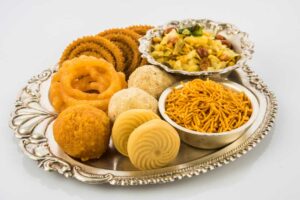
In India, seniors tend to abide strictly by their religious beliefs, and this is also an important aspect which influences their dietary habits and health. For example, during festive seasons, they fast or stick to only certain groups of foods. This could make them deficient in certain nutrients and also certain vitamins and minerals, which has an adverse effect on health. For instance, during fasting, they include a lot of “fasting snacks” made with sabudana, potatoes, peanuts, etc. which could affect their blood sugar levels in a wrong manner, or sometimes they stick to having only one meal, which could lead to further weakness.

Useful hints

During festive seasons, the following are some general tips that seniors need to follow to avoid any health issues:

  • Maintain meal timings.
  • Include whole fruits (thin slice or grated if chewing is an issue)
  • Limit the portion of mithai and sweets
  • See to it that water intake is enough, at least 8 to 10 glasses.
  • In case of fasting, include dishes made from grains like rajgira/kuttu and avoid fried dishes.
  • Opt for buttermilk/unsweetened lassi instead of sugary drinks or fruit juices.
  • Limit intake of fried and spicy foods.
  • The foods to avoid strictly: Unless and until there is any comorbidity disease condition like diabetes, renal disease or cardiac disorder, everything in moderation is ok. However, if one suffers from diabetes or cardiac issues, it’s better to avoid sweets and fried foods completely.

A simple change in the preparation of the recipes can help to keep up with any dietary restrictions, and also the mood of the elderly in the family. For example, traditional sweets like kheer etc can be made by adding a sweetener like stevia instead of sugar for elderly diabetics. And baked foods can be preferred instead of fried foods.

Foods to be strictly avoided:

Packaged foods, as they are high in preservatives, palm oil (which can have adverse effect on the lipid profile), simple sugars in the form of glucose syrup.

Bakery products which contain refined flour and hydrogenated vegetable oil (vanaspati)

Foods which claim to be “diet”, which are actually fried or contain artificial sweeteners like aspartame.

Fried foods or snacks can be consumed during the day. Late evening snacking should be avoided, as this can hamper digestion.

Kinds of snacks and sweets to avoid for some special health conditions:

Diabetic: Deep fried foods, mithai containing sugar, jaggery, honey, foods high in refined wheat flour (maida)

Hypertension: Packaged or preserved foods

Arthritis: Preserved foods

As it’s festive time, more than be too stressed with the ‘No’s in the diet, concentrate on more healthy things that one can eat. And be stress-free, that is the key to happiness!

The Revolutionary Seven

Well known as the Big B’s first step into filmdom, Saat Hindustani also chronicles the struggles of an era, writes Deepa Gahlot

A small film with new actors might have been forgotten, but for the fact that one of them went on to become India’s biggest superstars.
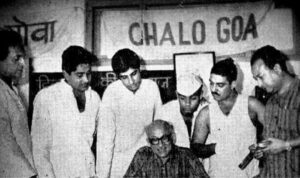
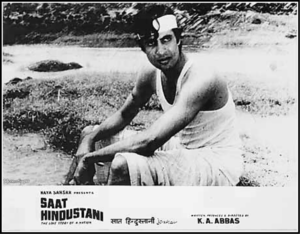
Saat Hindustani, directed by KA Abbas was released on November 7, 1969, making it 50  years since Amitabh Bachchan made his debut.

The tall, lanky actor was deemed unsuitable for mainstream Bollywood and got his first break from Abbas, an acquaintance of the family, who also cast in the film a pick of theatre actors and some kids of industry folk.

When the film came out, his angry young man days were still a few years away—Zanjeer was released in 1973—but that intensity was very much on view in his role as a poet, and India’s most famous hairstyle was in place.

The film also remains one of the few that captures the Goa Liberation Struggle, a major event in contemporary history.

Saat Hindustani starts in a Goan hospital, where Maria (Shahnaaz—daughter of Jalal Agha and wife of Tinnu Anand) awaits life-saving surgery, but wants doctor (AK Hangal) to hold off till her buddies arrive. This being the era before the telecom revolution, a nurse is dispatched to send off a bunch of telegrams to six men whose photographs are displayed on her bedside table.

As she tells the nurse their addresses, the viewer is introduced to each of them—Subodh Sanyal (Malayalee actor Madhu) is a football referee in Calcutta, and witnesses a riot after a game. Joginder (Utpal Dutt) is a farmer in Punjab, with Dina Pathak as his wife, who is aghast that his beloved state has been divided again and Haryana carved out of it.

In Madras is a Dalit called Mahadevan (Irshad Ali), who is caught up in the anti-Hindi campaign, while in Banaras, Ram Bhagat Sharma (Anwar Ali—Mehmood’s brother) is agitating against English, and in Ranchi, the Urdu poet Anwar Ali (Bachchan) faces violent anti-Urdu protestors. Lastly, is a Maharashtrian Sakharam Shinde (Jalal Agha—actor Agha’s son), who acts and sings in a local theatre group, while the state deals with border disputes with Karnataka. (Interestingly, Abbas did not make the actors play characters from their own states.

There is strife and unrest everywhere, as Maria flashes back to Goa, which was still under Portuguese rule and a struggle was on to liberate it (which happened in December 1961).  The Portuguese are carrying on propaganda to convince Goans that Indians do not care about them, so it is decided to send a group of volunteers into Goa and help the locals in their fight for independence.

Six men are picked, trained in warfare, and sent to infiltrate Goa. After throwing a spy off the train—which disturbs Anwar and convinces the others that he is not tough enough—the warriors reach Goa and are joined by a young woman, Maria.

The mission assigned to the Saat Hindustani is to attack seven Portuguese police posts in Goa and hoist the Indian flag (that they are all carrying) over them to prove the might of India. The film is about how the seven to overcome obstacles in their way (including torture by the Portuguese cops), as well as differences amidst themselves.

The film, obviously inspired by the Japanese classic, Seven Samurai (Akira Kurosawa – 1954) and Hollywood’s cowboy remake The Magnificent Seven (John Sturges – 1960), added large doses of patriotism, and songs to retell the classic story of outsiders coming in to help the local populace. Abbas, always a writer and filmmaker who wanted his films to convey a social message, made his point about patriotism and national unity, even though the film, seen now, seems shockingly amateurish.  It is worth seeing, however, to see how little has changed in India in the interim half-century, and, to a much lesser extent, spot the beginning of several successful careers – the biggest, of course, being that of Amitabh Bachchan.

The Indian Mad Men

In an era when numbers matter more than figures of speech, Prabhakar Mundkur doffs his hat to some of the people who made our Advertising Memorable

‘Advertising is the most fun you can have with your clothes on.’ – Jerry Della Femina

My story starts 42 years ago. Rejected as a bum by many corporates because they couldn’t fathom why any student would give up college for 3 years to become a professional musician, I reluctantly decided to apply to an ad from daCunha Associates in The Times of India recruitment columns, that asked for an Account Executive with 5 years experience. That may sound odd to the ad-man of today. An Account Executive with 5 years experience? Were they looking for people who hadn’t made it? Were they slow those days? After all, in today’s advertising world, if you were still an Account Executive with 5 years’ experience you were most certainly a confirmed failure. When everyone else is making it to Senior VP in 5 years.

Sylvester daCunha
Sylvester daCunha

My heart beats expectantly. I dream of being freed from the Rs 120 pocket money that my parents gift me every month while doing my MA in Econometrics and Mathematical Economics. How was I to know that 38 years later Sir Martin would be looking for math men? Was I over-qualified for the job at that time? Of course, I was. The last advertising agency I applied to, had asked me to become a statistician in a bank instead. As if I wasn’t intelligent enough to have considered that possibility already. My clever application letter to daCunha’s read that we were both looking for the same thing. 5 years. Except that I was looking for the 5 years ahead. And daCunha Associates was looking for it behind. Somehow that seemed to attract Sylvester daCunha. Miracle. I got the job. But a clever letter was a big mistake. He put me on a 5-year iron-clad contract.

The Age of Supermen

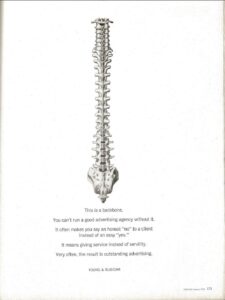
Sylvester daCunha or Sylvie as everyone who knew him was one of the original mad men of the Indian advertising industry. Talented like hell. Born copywriter. Theatre Man. Disciplinarian. Exacting. Tore through my artwork because I missed a colon for a semi-colon. (in the days of hot metal typesetting) Never again God would I make a proofreading error. Respected. By clients and ad people. Once a client from a reputed MNC flung my layouts to the floor because he didn’t like the creative. When I returned to the agency to tell Sylvie my tale of woe, he turned red like a tomato. Next, he was on the phone to the Chairman of this big multi-national to tell him he was resigning the account. People with courage. People with a spine. Not the namby-pamby advertising leaders of today.

Pimms and the Politician

Bal Mundkur
Bal Mundkur

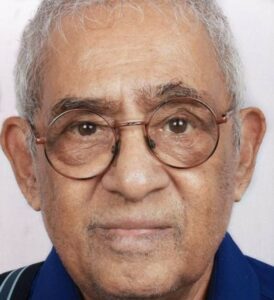
Bal Mundkur. Founder of FCB Ulka. Namesake. Our forefathers came from the same little hamlet 40 km north of Mangalore. Fierce. Friendly. Adventurer. Gutsy like hell. Bad mouthed when required. Could punch a sock if someone challenged him. Ruffian. One of the 6 cadets from India to be recruited into the Royal Navy. Saw action in Scotland in the World War in 1942. Art collector. Chess antique collector. Art restorer. Man of the world. World traveler. A romantic. Was capable of flying from Paris to Zurich just for a date. When he spoke of having a drink with Zulfy he was speaking about Zulfikar Ali Bhutto. Revelation! Was equally comfortable with politicians and kings. Gambler. My bonuses used to come from the Rs 100 I won for every chess game I beat him at. His reason for losing. That I would first weaken him with some Saraswat food before I invited him to a chess game. Favorite dish: A soup made of horse gram, a Konkani specialty. Favorite morning drink: Bloody Mary. (Don’t forget the celery stick.) Or Pimms. ‘ I am one of the two people in the country that imports crates of Pimms’.

If he was made to wait for more than 10 minutes in the client’s reception he would gather everyone and say ‘ Boys lets leave. We are not waiting for any client’. Man with a spine. Courageous. Brave. Made the ad men of today feel like puny spineless little weaklings.

Confidence Unmatched

Mohammed Khan
Mohammed Khan

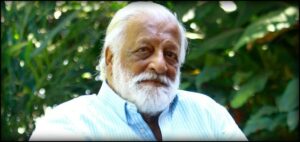
Mohammed Khan. Threw my Vadilal layouts out of the window from the 3rd floor of our Shivsagar Estate office at Worli, because the client had no budget and I had asked Elsie to make the layouts in Black & White. Who the f…does ice-cream layouts in B & W? The truth slowly dawned. Before the client walked into the office, a few thousand people in Worli had trampled on my layouts. C’mon Prabs. Courage. Tell the client to forgive you. Ask and you shall receive. Forgiven. Best friends forever.

No credentials presentation for Mohammed, he didn’t believe in them like the large agencies. Our creds were 12 little chits put into a top hat (bought from Crawford Market). The chits had the names of our clients. Pick any one of these and I will show you the work he would say. Confident that every client’s work was as good as the next one. Guts! Not like the ad men of today. Who hide their worst work behind their awards.

From Madness to Sanity

Perhaps to be too practical is Madness?’ – Miguel De Cervantes in Man of la Mancha

Mike Khanna
Mike Khanna

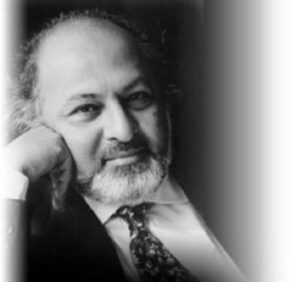
Mike Khanna. Sane. Calm. Controlled. Shy. Introspective. Introvert. Quiet Rage. Learnt everything there was to learn about advertising and about managing an agency. Gutsy like hell again. What was it about these guys? Where did all that courage come from? Once a client threatened to speak to Mike Khanna because I had refused to do a job with an impossible deadline. He just calmly told the client “If Prabhakar Mundkur says it can’t be done, it can’t be done.” Faith in your people. Courage to call a spade a spade with the client. Confidence.

From Mad Men to Math Men

“We are not in the advertising business anymore,” proclaimed Sir Martin Sorrell some time ago, like some Nostradamus predicting the death of advertising as we know it. “Don Draper wouldn’t recognize Adland,” he said, pitting Don Draper’s Mad Men against today’s Math Men. (Thank God for Don that he escaped this ).

So it’s hello Data. Hello Content. Goodbye, good writing. Goodbye language. Goodbye flair and personality. Goodbye Courage. Goodbye Intuition. Goodbye entrepreneurship. Goodbye Creativity as we know it. Bye-bye pink gins.

Maybe the advertising business should move smoothly into calculus. I guess it was coming with the number of times we used the word ‘integrated’, I knew we were unconsciously nudging ‘integral’. It had to come to this.

Goodbye Advertising. God Bless. It was lovely knowing you while it was the best fun you could have with your clothes on. I still love you.

Woodstock at 50

0
The name itself evokes an entire era of free-thinking and immortal music. Y R Anand looks (and listens) back at the iconic festival

I came upon a child of God

He was walking along the road

And I asked him, where are you going

And this he told me

I’m going on down to Yasgur’s farm

I’m going to join in a rock ‘n’ roll band

I’m going to camp out on the land

I’m going to try an’ get my soul free

We are stardust

We are golden

And we’ve got to get ourselves

Back to the garden

These were written by Joni Mitchell just after the incredible Woodstock festival in upstate New York from August 15 to 18 in 1969. It is hard to imagine 50 years have flown by since the seminal rock festival, which started as an Aquarian exposition for three days of peace and music in Bethel, New York.

The renewed interest and good news for die-hard rock fans is the news of the release of a 38-disc, 432-song, 36-hour limited-edition Woodstock 50 – Back to the Garden – The Definitive 50th Anniversary Archive set. This promises the first definitive collection featuring every artist who played the original concert. This is a complete reproduction of all the songs, announcements and other festival related sounds.

While the original plan was for three days, it got extended to a fourth day with Jimi Hendrix playing the last set. The crowd that had swelled to over 400,000 had been reduced to less than 30,000 people by the time Hendrix came on stage. He and his band played close to two hours.

Woodstock became a symbol of peace and protest against the establishment and Vietnam War.

And it all began with Michael Lang, Artie Kornfeld, Joel Rosenman, and John P. Roberts getting together and planning a music festival for profit. The ticket was priced at US$ 18 for advance booking and US$ 24 for buying at the gates, for the weekend. In the end, around 186,000 tickets were sold, and the rest attended the festival free. The organizers ended up with a mountain of debt but the world was gifted a historic moment in music, with images that remain fresh to this day.

However, the organizers held the copyrights for the concert and were rewarded handsomely with the release of the film, the recordings, and subsequent royalties.

The venue went through many changes, as some of the towns selected did not allow hippies to invade their peace. Eventually, Max Yasgur agreed to lend his 600-acre milk farm for the festival. The farmland formed a natural bowl sloping down to Filippini Pond on the land’s north side. The stage would be set up at the bottom of the hill, with Filippini Pond forming a backdrop. The pond would become a popular skinny dipping destination.

The organizers had expected 50,000 people at the most. Almost half a million turned up. Rain turned the ground muddy and slushy and most of the roads around were clogged with traffic. Artistes had to be flown in.

First-hand experience

Prakash Ullal had gone to USA for his Master’s degree, having graduated from IIT Bombay in 1966. Here is what he remembers about his experience of Woodstock.

“Sometime in July 1969, we learned about a Folk-Rock festival in upstate New York, the Woodstock festival to be held sometime in August in a farm in Bethel, a small town. Sly And The Family Stone (one of my favorites then) would be performing at Woodstock, along with a big list of rock bands. It was rumored that Bob Dylan would be performing also since he lived nearby. So, I promptly decided to go along with my IIT buddies. Looking back, the biggest mistake that we made, was to buy Tickets for Woodstock and that too, at $20 a ticket. Expensive at that time.

“So, on Friday I took off along with 3 other friends started our epic and what a memorable journey to Woodstock in a green Mustang! A few hours later, driving towards Bethel, we encountered one of the biggest traffic jams that I had seen at that time. It felt like millions of people and cars were on the narrow road to Bethel. Cars were parked on both sides of the road and people were walking, trudging, laughing and waving the peace sign. It was an unbelievable sight. And the local village people were offering food and water along the way. And in the distance, we could hear music. We parked and walked. Two or three hours and 11 miles later, we entered into chaos and beauty, the Woodstock Music Festival.

“We reached Woodstock at around 7 in the evening. The first impression that we got was, no counters for tickets and no gates for entry. On the loudspeakers, the announcement was being made that the festival was free. What a bummer! We had actually bought tickets. As we entered the venue, we saw thousands and thousands of people (mainly Hippies and some normal folks) spread over acres of Yasgur’s farm and still coming. All facing the biggest concert stage that I had seen at that time, with huge tower speakers (probably 10,000 watts of music power). We could hear these speakers during our walk to Woodstock. And then it was the beginning of music euphoria for the next 3 days and nights.”

Most of the normal facilities for such crowds could not be organized, which was made worse by the weather. The food ran out on the first day and the US army had to drop off snacks packages via helicopter. Drugs of every description was free-floating and consumed every day. The festival was remarkably peaceful given the size of the crowd, the bad weather, and logistical glitches. Amazingly only one person died of an overdose, while one girl was run over by a tractor, while she was in a sleeping bag at night.

Porridge kept us going

Here are some more impressions from Prakash Ullal:

– No food counters were operational. We ate porridge for 3 days, which was supplied free by the organizers.

– Sanitation facilities were minimal. We held our breath for 3 days!

– Food and water by shared by everyone. There was great atmosphere of love and peace. There was no violence at all.

– Getting enveloped in a euphoric haze with the smell of pot in the air

– Nonstop music by some of the greatest bands of all time for 3 days and nights. Lost track of time and space

– And finally, my best friend’s comment, telling me ” why the f— did you bring us here, it’s changed me” in his prim and proper Delhi American accent.

– Finally, the 10-mile walk back on Monday morning trying to locate the green Mustang, and voila we found it!!!!

– And then it was back to reality.

The first glimpses for folks in India was the release of the iconic film Woodstock and a set of 3 long-playing records. Alas, these could highlight only a very limited version of the vast amount of music that was played out during the festival. Listening to the music and seeing the film was like magic transportation to another musical land.

Unfortunately, the movie or the 3 LP set could not include many of the well-known famous artists of that time. Creedence Clearwater Revival (CCR) and Blood Sweat and Tears are two well-established bands of that time, who are not to be seen in the movie or the 3 LP set.

CCR was the first mainstream rock band who signed up and led to some of the other major performers to sign up also. In fact, they played a set of 11 songs. But they were not published in any of the early releases. One reason was that John Fogerty felt their performance was subpar. He felt that the previous set by Grateful Dead had put the audience to sleep, by the time CCR came on the stage.

‘Bodies from hell’

To quote John Fogerty: We were ready to rock out and we waited and waited and finally, it was our turn … there were a half million people asleep. These people were out. It was sort of like a painting of a Dante scene, just bodies from hell, all intertwined and asleep, covered with mud. And this is the moment I will never forget as long as I live: A quarter-mile away in the darkness, on the other edge of this bowl, there was some guy flicking his Bic, and in the night I hear, “Don’t worry about it, John. We’re with you.” I played the rest of the show for that guy.
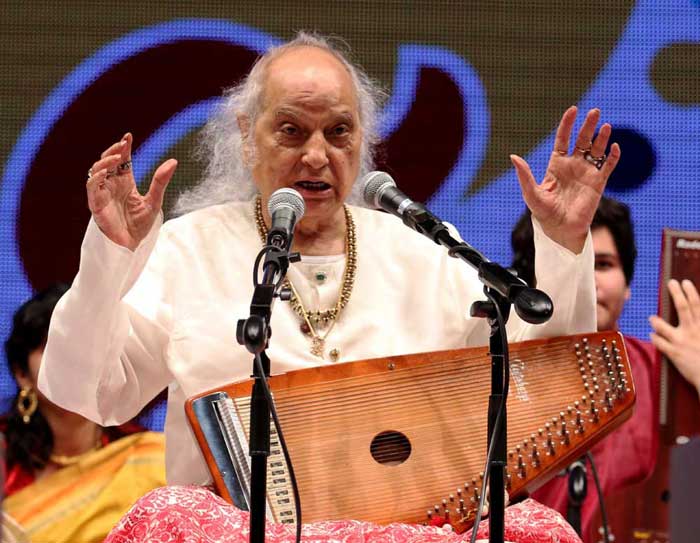
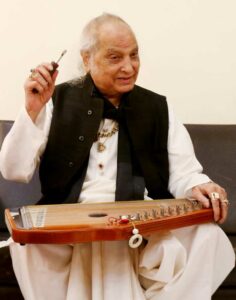
After the opening act by the toothless Richie Havens with his rasping voice improvising Freedom, the then well-known yoga guru in the west, Swami Satchidananda was called in to give a short speech. Pandit Ravi Shankar also performed on the opening day itself.

Woodstock gave a career boost to several fledglings and struggling musicians, Santana and Crosby, Stills, Nash, and Young being young artistes who rose to fame after the festival. CSNY was a nervous group when they came on stage, as can be heard by Stephen Still saying “This is only the second time we’ve performed in front of people. We’re scared shitless.” Wooden Ships, one of the songs played in the festival and showcased in the record is wonderful song and many melodies followed from this group subsequently. In their post-Woodstock album So Far, they performed the Joni Mitchell song Woodstock to great acclaim.

Mesmerized audience

Pandit Ravi Shankar’s music accompanied by the table of Alla Rakha also mesmerized a young audience. For many of them, it was their first exposure to Indian classical music, which was the only foreign music featured during the festival.

Here are more impressions of the performances first-hand from Prakash Ullal:

– “Freedom” by Richie Havens

– Janis Joplin with her husky voice singing “Ball and Chain” early in the morning

– Sly and The Family Stone singing “Take Me Higher” late at night. (We were already stoned by that time)

– Gracie Slick and The Jefferson Airplane singing ” Don’t You Need Somebody to Love” at 4 in the morning (me, almost near the stage sitting on the wooden fence barrier. I could almost feel the early morning wrinkles under her eyes)

– Santana arriving in a helicopter and then playing “Soul Sacrifice

– Crosby Stills Nash And Young playing “Find the cost of freedom” and a superb guitar number “Southern Man

– And the finale – Jimi Hendrix at 7 on Monday morning playing “Purple Haze” and “The Star-Spangled Banner

For all the great music, the musicians had not charged a lot for their appearance. Only 5 of the 32 artistes charged in 5 figures. Santana was paid a lowly US$ 750!!

The festival was closed by Jimi Hendrix, as his contract stated that he must close the festival. Unfortunately, with the additional day added, most people were pretty much burnt out by then and missed it (around 10 AM on Monday morning). Hendrix was also the highest-paid performer.

In the end, what remains is a legacy of great music and great memories. It has left a profound impact on everyone involved with rock music, musicians, music lovers, and the music industry. The memories will live on in the minds of rock fans forever.

A Planet for a Pandit Jasraj

2
While Pandit Jasraj is a major star of the Indian classical music firmament, it’s still thrilling that a planet has been named after him, writes Narendra Kusnur

On Monday, September 30, the Arts And Artistes office of television personality and event promoter Durga Jasraj was buzzing. Just two days before, the International Astronomical Union (IAU) had announced that it had named a minor planet after her father, the legendary vocalist Pandit Jasraj.

The title is conferred on luminaries across fields, and musicians to earlier receive the honor include western classical composers Wolfgang Amadeus Mozart and Ludwig Van Beethoven, and operatic tenor singer Luciano Pavarotti. Interestingly, a week after the announcement was made, sitar player Anoushka Shankar claimed that a minor planet had been named after her in 2017.

Jasraj was in the US when the news got out and sent a statement for the media. “Blessed… in this honor, one can only experience God’s grace,” he said. The minor planet, discovered on November 2006, has been named ‘Panditjasraj (300128)’, the six digits referring to his date of birth. The maestro will turn 90 on January 28.

In March this year, the Mewati Gharana maestro’s 89th birthday had been belatedly celebrated at a concert at Mumbai’s Shanmukhananda Hall, where he sang Raag Jog, his famous ‘Mata Kalika’ in Raag Adana and the bhajan ‘Om Namo Bhagavate Vasudevaya’. Despite his age, he didn’t look tired or let his voice waver even once.

Having attended that concert, and interviewing him a few days prior to that, a river of memories flowed through my mind. I first met Jasraj in 1971, when I was barely eight. My mother learned vocal music from his senior disciple Chandrashekhar Swami, and visits to the Jasraj residence at Rajkamal building in Mumbai’s Shivaji Park were regular. His students and their disciples would practice, and I would play with Durga and her elder brother Shaarang.

A smile and a half-jacket

In his early 40s then, Jasraj had thick curly hair, a ready smile and a friendly demeanor. At concerts, he would wear a half-jacket over his spotless kurta and carry the swarmandal. The first concert I attended was in a hall in Thane. At that age, I knew nothing about raags though I had heard their names from my mother and her guru. When Jasraj announced he would sing Malkauns, I got up and started dancing, little knowing what it meant.

Jasraj was quite well-established at that time, though the world of male vocalists was led by Ustad Amir Khan. Pandit Bhimsen Joshi and Mallikarjun Mansur were seniors. Among women, Hirabai Badodekar, Gangubai Hangal, and Kishori Amonkar made waves, and the young Parveen Sultana had just arrived.

Music in the air

After we shifted to New Delhi, visits to Rajkamal stopped. But I would accompany my parents to his concerts in the capital. One memorable show was a dance ballet interpretation of Jayadeva’s Geet Govind, in which Jasraj composed the music. Cassettes of his recordings formed a large part of the collection at home, and Raags Bhairav, Bihag, Maru Bihag, Jog, and Hansadhwani were played often, besides the Meera bhajan ‘Mai Saawari Rang Raachi’.

Like most teenagers, I listened to western and Hindi film music too, but classical was always around. I still didn’t really understand the nuances, but there was something magnetic about those melodies. Often, ‘Lai Ja Re Bhadra’ in Hansadhwani or ‘Ja Ja Re Apni Mandirwa’ in Bhimpalasi would stick on as earworms.

I never imagined I would meet Jasraj at close quarters, but the opportunity came in the mid-1990s after I became a music journalist. Though I met him briefly at many events or after concerts, it was during the course of three interviews that I could talk to him at length. Before the first one, in 1998, I was obviously nervous. It’s always difficult to ask questions to someone one has known and admired, but Jasraj quickly put me at ease.

The other interviews were followed by a family meal at his Andheri residence. In the first one, he finished his dinner and just began singing a few lines of Raag Darbari, using his fingers to play an imaginary tabla on the dining table. In the second, he watched the ongoing India-Australia cricket match and commented after almost every ball.

The conversations revolved around a variety of subjects, like how he would stop by at a restaurant at Hyderabad to hear Begum Akhtar sing ‘Deewana Banana Hai Toh’ on the radio, his early training under his eldest brother Pandit Maniram, how he played classical melodies on the guitar, and his tabla guidance from his other brother Pandit Pratap Narayan.

A galaxy of pupils

Besides Maniram, Jasraj learned from Jaywant Singh Waghela and Swami Vallabhdas Damulji. “For me, they are like Brahma, Vishnu, and Mahesh. Besides honing my skills, they helped me carry forward the legacy of our Gharana,” he said.

Though the vocalist initially taught Maniram’s students in Kolkata, his first disciple was Chandrashekhar Swami in Mumbai. Soon, Girish Wazalwar and Paresh Naik joined him. Today, he is the guru of numerous musicians including vocalists Sanjeev Abhayankar, Tripti Mukherjee, Ankita Joshi, and his nephew Rattan Mohan Sharma, besides violinist Kala Ramnath and flutist Shashank Subramanyam. He also actively teaches at his institute in New Jersey, New York, and Pennsylvania.

“I don’t go about looking for disciples. But if I find someone genuinely interested, I happily accept them. By teaching, I am practicing too. If you don’t use a car for a long time, it won’t work properly. The same is the case with your voice or musical instrument,” the doyen said.

Jasraj loves to compare his concerts with a hockey match. He elaborated, “I am usually accompanied by my disciples. It’s like I am passing the ball to them and they send it back before I score the goal.”

At 89, Jasraj not only takes care of his voice but makes sure he leads a disciplined lifestyle. He speaks very clearly and displays a sharp sense of humor. The magic is evident both on stage and off it. Those who’ve known him over the years will agree.

Don’t let Aches and Pains limit you!

Back pain is a very common condition as one ages, but the reasons could be many apart from degeneration.

As we age, it is common to start getting aches and pains in different parts of our body. It is a natural process of degeneration which starts off. If one has lived an active life all along it would be easier to continue doing some physical activity…. Otherwise stiffness of joints and disability set in faster.

If possible, seniors should include some regular physical exercise in their daily routine.  With more time on hand it’s only a matter of incorporating some interesting physical activity. All one needs to do, is fix a sometime in the daily routine, morning or evening as is suitable.  Walking of course is probably the best with advancing age but if one is up to it then swimming, cycling and some light sports can also be taken up.

Yoga is good too.  It helps in stretching body parts as well as facilitates good breathing without too much of exertion and fatigue. However, the correct technique should be learnt from a proper teacher and preferably practised under supervision. If that seems difficult, then simple asanas and pranayam can be done at home by yourself however practice under supervision can ensure you do it correctly to get optimum benefits. Don’t overdo the stretching extra. Nowadays, there are many centres for these. Find one near you, enroll with a friend and it can become a fun activity. If you have limited mobility there is an option of chair Yoga too.

Whatever you do, start by doing very gentle exercises and slowly get onto the tougher ones. Simple things like raising your hands above the head, rotating arms clockwise and anti-clockwise. Extending and bending forward, backwards and sideways all are very helpful and do only as much as can be done comfortably. Slowly you can push yourself to do a bit more every day.    If possible, touching your toes will help relieve stiffness in your back. Little bit of twisting also is good. The best is, most of these can be done while sitting down on a chair in the comfort of your home.

Back pain is a very common condition as one ages, but the reasons could be many apart from degeneration. It could range from bad posture while sitting or sleeping or some kind of a muscle pull or even osteoarthritis in the spine. It could also be due to an injury caused while lifting for pushing some heavy objects we end up doing such things as often there is no one to help us.

Aching joints are common as muscles become stiffer and less flexible. Consult a qualified doctor and check if anti-inflammatory medicines can be had by you as they can help soreness. There are also injections for topical problems. Alternative medication therapies and light exercise all help to remove stiffness and give mobility easing the pain at least to carry out ones daily chores.

Some doctors even recommend warm and cold packs alternatively along with light massage with some oil or ointments. A balanced diet goes a long way in keeping one healthy and fit. Fibres in your diet become a must for a healthy bowel movement after a certain age. Many people don’t realise that even headache they get could be due to constipation.

Prolonged Sitting is bad for health?

0
Sitting for several hours at a stretch is harmful for your overall health

We live in the world where everything gets done on our finger tips. Undoubtedly modern technology has made life easy. It has provided us with the luxury to stay relaxed at all times. Although human body is designed to be active and being seated for several hours has its consequences. Prolonged sitting not only limits the number of calories you burn but also negates the number of calories you burnt exercising. When the big muscles of your lower body are inactive your body goes through certain physiological changes. These changes have an effect your metabolism and cause an increase in your blood sugar levels.

Another type of movement known as NEAT (non-exercise activity thermogenesis), that is any form of light activity such as standing, walking, running errands or doing chores. The rapid change in the lifestyle over the years due to technology, NEAT has decreased.

Prolonged sitting can cause more health problems that you can imagine.

  • Shortens your life – When you are seated you use less energy than standing or moving around. Sitting for long has a number of health concerns which includes obesity, increased blood pressure, high blood sugar, abnormal cholesterol levels – that make up to metabolic syndrome. It also increases the risk of cardiovascular diseases, diabetes, osteoporosis, and cancer.
  • Walking disability – Being seated for several hours affects your blood circulation. It can make your lower body feel numb and that may result in walking disability in a longer run.
  • Sleep and anxiety – At night, if you are engaged with your screen for long without moving. The blue light emanating from your screen suppresses the release of melatonin in the brain leading to a lower quality of sleep or insomnia. This can make you feel anxious and your anxiety might spike.
  • Harmful to your spine – The seated position puts a lot of stress on your spine especially when you slouch. No matter how comfortable you feel, sitting for long has an effect on your spine.
  • You tend to gain more weight – Your screen time could be the reason why you are gaining so much weight. Prolonged sitting slows down your body’s metabolism which results in weight gain.
  • Your odds of Diabetes rise – Sitting for long may change the way your body reacts to insulin. It the hormone that helps burn sugar and carbohydrate for energy. It keeps your body sugar level from getting too high or too low and sitting disrupts this process.
  • You could get Varicose Veins – They are large swollen looking veins that often appear in the leg and feet. This happens when the valves in the veins do not work properly, because of which blood flow is affected. For some, varicose veins could be a cosmetic concern but for some it could cause pain, discomfort, muscle cramp, swelling in the lower legs and skin discolouration around varicose veins.
  • You could get Deep Vein Thrombosis (DVT) – A blood clot that develops within the deep vein of the body usually in the leg. It can cause swelling or leg pain. It may also occur with no symptoms. However, DVT can be very serious as the blood clots in your veins could break loose and through your bloodstream lodge in your lungs.

Here are 5 ways to avoid prolong sitting

  1. Every 30 minutes make a point to change your place or stretch. If you are home then move around. You may also set an alarm as a reminder so that you don’t end up sitting for several hours.
  2. Walk after your meals. It will help lower the post meal blood glucose levels and aid digestion.
  3. While watching TV, consider stretching, touching your toes or moving around during commercials.
  4. Walk around or stand when you are on the phone. Instead of driving, walk to the local store.
  5. Take up active hobbies such as DIY and gardening.

Any form of physical activity will help maintain your health and mental wellbeing. You will burn more calories that will lead to weight loss and increased energy. The impact of leisurely movement can be profound, especially as you age.

Are you ready for retirement?

3

What comes to mind when you think of your retirement?

In India, if you are part of a government organization or any services your retirement day is known to you from the day you join work. Hence it usually doesn’t come as a surprise. What comes to mind when you think of your retirement? Is it excitement, redundancy, loss of status, boredom, financial crisis, perhaps all of these?

1. When will you retire?

Most of us don’t have the freedom to decide when we retire because that is primarily decided at your workplace or if you are in a family business you need to decide when to hand over the baton. For a lot of seniors in India often total retirement is not an option. You continue to work because you need the money.

2. What will you do when you retire?

Retirement is meant to be more relaxed than your working life, but it isn’t meant to be sitting on the rocking chair and waiting for death. Today seniors want to follow their passion, travel, hobbies, reading, and writing.

The other aspect is that many Indian couples find it difficult to adjust with each other once the man of the house doesn’t go to work. Men are also at a lose end not knowing what to do with themselves and sitting at home day after day is a huge mental strain.

3. What is the income you will need and who will be a part of your life?

Most Indian seniors plan their finances much before their retirement. Given the fact that there is no social security in India and our children are our social security. That opens many issues that need to be negotiated in your mind before you speak about them.

Are any of your children going to help you with regular income? Would you be forced to live with them for various reasons?  Do you get along well with them and are you happy living with them? Are you a willing grandparent or a forced nanny? These are some very difficult questions that you need to work out within yourself at least two years before your retirement date.

Housing is a huge problem in India and that leads to a financial strain for the family. There is no formula that fits all and these are issues that differ from person to person.

Many couples who have a spare bedroom take in a paying guest to supplement their income and also have a little company. Today Airbnb also is an option but a paying guest is preferred because of regular income. This is a lot easier than downsizing and moving to another city.

4. Where will you live?

It will be a great help if you own the home where you live in. For couples who have lived on their own, it becomes very difficult to live with their children on retirement. This is especially true to people in government or service jobs who are used to their own independency.

Here it a case of retired couple and children to compromise and make serious adjustments once the retired couple comes to live with their children.

If you have your own home and are thinking of downsizing, it’s very important to do your homework about where you want to shift how much will the shifting process cost.

5. Have you done your financial planning?

Make sure that you get professional help from a financial planner who will understand your needs and requirements to maintain a certain lifestyle. Please do not make the mistake of going to a family friend, often these transactions go wrong and sometimes all your life savings evaporate in no time.

Extreme prudence is required when put together your finances. Try and plan as much in advance as possible so as to have a comfortable life afterwards.

6.  What is your social capital?

People always need people all the time in life and particularly in retirement. Retirement is a good time to reconnect with family and friends. The social connections in retirement – ‘your social capital’ – ‘will result in feelings of wellbeing’.

Being a recluse will cause more mental and physical problems. Retirement is a good opportunity to make new contacts.

It’s also a time to get fit and take care of your health. Going for a walk, a little exercise and a little gupshup with people like you in the park is always good not just for the physical but also for the mental wellbeing.

Have a purpose in life. We have a connection with the people we know, particularly family and friends. Purpose is about living a meaningful life that comes from knowing who you are, your ideas and your passions. You create your own retirement and it’s always a good time to ponder over these questions.