






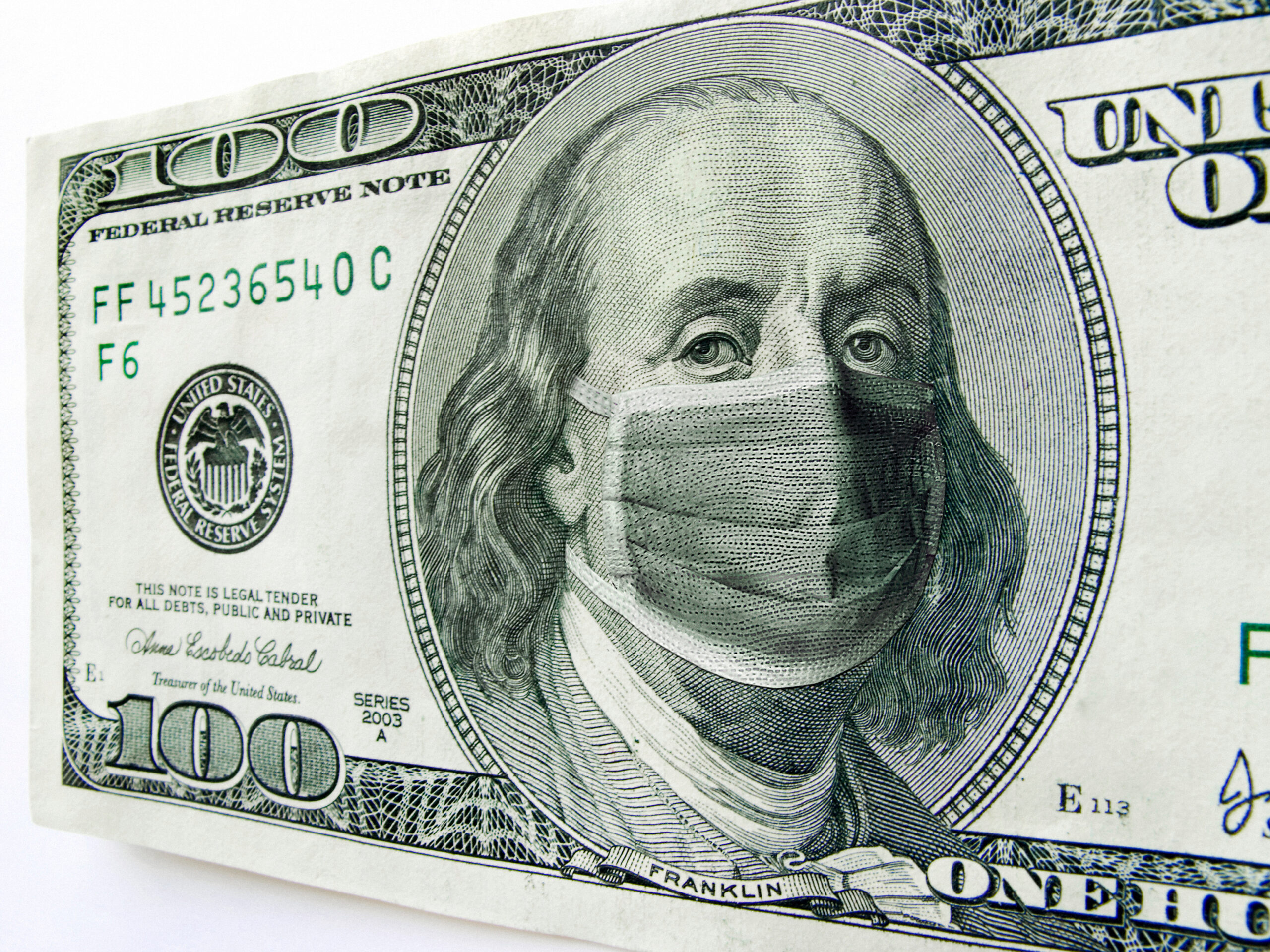
Given the ongoing Covid-19-led crisis, Aditya Vikram Singhal dwells on the expected outcome over the next few years
Given the virus and the ongoing crisis, I have had the time to summarise some of my key thoughts that I have shared with many of you over the last 7-8 years. The objective is to state the past and try and understand the expected outcome over the next few years. I am under no illusions that I could be wrong in my thinking, but am certain some of you will see the merits around the points below.
The Cause
Since the onset of globalisation which started in late 1980’s/90, the first major setback to the world that I have traded through was the Financial Crisis of 2008/09. Leaving aside the reasons for the crisis which are well documented, the basic principle to mitigate the effects of the crisis was Quantitative Easing (QE) which was initiated by the Western Economies.
- The objective of QE was for Central Banks (FED, ECB, BOJ and others) to buy Government bonds and give money to the financial system (banks and other intermediaries) so that they could lend this money out to the broader economy
- Central Banks alongside doing the above, brought interest rates down to zero, to further encourage transmission of money to the common man of the world alongside business both large and small
This was aimed to create growth via investments which in turn would bring some inflation and help common man /companies out of debt trap by inflating the value of assets. Furthermore, the motive was to also create cash flow (wages & earnings) that would have led to consumption and hence a cycle of healthy growth.
The Dilemma for Financial Intermediaries (Who to lend to?)
Having learnt the lessons of excessive leverage during the financial crisis of 2008/09, Central Banks and Governments from 2010 onwards wanted QE to work on one hand but alongside were worried about excessive risk taking. In order keep financial intermediaries & banks in check they imposed stricter capital and regulatory rules which prevented them from lending money to the broader economy the same way as Pre-financial crisis.
This created a dilemma as banks were under pressure to generate profits and were under huge direct and indirect pressure to keep fulfilling the role as defined above to keep providing money to the economy.
So the banks and financial intermediaries chose a different path. They decided rather than lending to a weaker credit worthy people/companies they were better off lending far more (in excess) to healthier entities which could be a person/family/company or any other (hedge funds/ asset managers/private equity etc.).
Why did this cause a crisis? (First Economic and then Social/Populism)
I would like to illustrate this via an example by taking London which is where I live in the UK. London is the same to the UK (30-40% of UK GDP) as what is Berlin+Munich+Hamburg+Frankfurt to
Germany and same principles applies to every Western countries alike. Hence easiest to illustrate my thesis.
London has highest per capita income in UK and there exists most credit worthy people/ families/ companies’ / asset manager’s / hedge funds etc. UK banks encouraged all of them to borrow more than what they needed at cheaper rates to fulfill the obligations set out via QE by Central Banks and Governments and prevented the flow of capital to weaker sections of the country (outside London) due to imposition of strict capital and regulatory rules.
As the money flowed into the hands of above entities in London at marginally close to 1-2% interest rates and some cases even lower, let’s take note of how money was spent not exhaustive by any extent.
People
- Bought first and multiple properties in prime and semi prime London and started to create a real estate bubble which was totally distorted to the rest of UK housing market
- Spent more money on discretionary items and holidays thereby creating credit fuelled growth. (borrow to spend).
Companies
- Increased Debt levels by borrowing for 10+ years at low interest rates and started to buy back their own stocks to create unsustainable valuations
Asset Managers/ Hedge Funds
- Started to buy the equity/debt of companies/ countries above both good quality and bad quality to generate higher returns and expanded investments in Emerging Markets & illiquid strategies in Developed Markets
- Led to creation of Vision fund like entities as cost of capital was cheap and hence investments into firms which fundamentally should not have existed with high negative cash flows
The list goes on… These activities continued between 2010-2019 leading to the following impacts:
Economic
- Misallocation of money/capital became extreme as there was no fear of loss due to abundance of QE money via Central Banks
- Due to increased pressure to generate returns Banks/ financial intermediaries / companies/ asset managers etc. alike started to take lesser return for higher and higher risk
- Hence investments in Africa and other Emerging Markets
- Investments in Junk debt and stocks of some firms with large cash burns and so on
Social/Populism
- Wealth disparity in society went up: Top 1% wealth vs 99% wealth ratio hit all time (or above example wealth of London vs Non London).
- Rise of Populism due to increased dissatisfaction in society due to social media proliferation (Facebook/Instagram and others increased social agony between have vs have not).
Having said that, not all things were bad, the free money also led to creation of some world class companies which could not have existed but they were a handful.
There was also a growing acknowledgement by 2015/16 that we could be in early stages of revolt by the common man. Brexit in 2016 (first revelation of populism), election of Trump and a few other examples within Europe showed the first sign of discontentment. However, human greed and Trump desire to further make Central Banks a puppet created another leg of the same between 2016 and today. In 2015/16 some Central Banks, did try to raise interest rates and reverse course but only to realize that the entire financial system and world was too addicted to free money (QE) and any change of approach would lead to economic depression.
Rise of Socialism (Equalisation of wealth) and/or destruction of Fiat cash
By early to mid of 2019, there was a sense of acknowledgement by Governments that society needed measures to equalise wealth to curtail populism and give people some kind of hope. Modi’s demonetisation, if not for economic had a social impact to allow for common man to vent his anger on the rich as he saw them suffer as people look for relative wealth equality and not absolute. Human beings sense of ‘self-worth’ comes from comparing our self to our friends or family and one saying encompasses all of this: ‘misery loves misery’.
Coronavirus acts as a catalyst to expedite the above as it’s not the virus but the coming age post virus that shall trouble us all …
As society suffers due to the virus and lockdown for the next 12-18 months, coupled with already created Economic and Social conditions as stated above, I see only one expected path forward.
- Even the most Capitalistic governments will move to support 99% of population which is living on a month by month basis
- To mitigate the fear of loss due to virus coupled with rising debt on a personal level and stress that comes due to inability to earn a living – governments will tax and socialise the middle class, upper middle class and the rich and in some nations forcibly take assets and worse we could see civil unrest /war.
- We will see higher income/wealth/inheritance and other form of taxes
- We will see higher regulation and compliance costs which is another form of taxes
- We will see nationalisations even in most free market societies and so on…
To highlight the above via an example: only 0.5% of population of UK earns more than 150k GBP and increasing marginal tax rate above 150k GBP to 75% vs giving relief on basic tax bracket from 10k GBP to 15k GBP will be hugely popular and at some point enacted in some form.
Governments will also spend money and print money which is: enact fiscal policies (government spends money by issuing bonds) and ask their central banks to buy those bonds which in turns is same as printing money. However, all of these policies can’t be actioned to allow the rich to become richer, but will be done alongside above stated measures so that we see equalisation of wealth and some form of economic & social relative venting for the common man.
In this era how does one protect and enhance one’s wealth (for 1% of the population)
First of all, people need to keep their liability profiles in check (cost of living) and take less leverage as different countries will adopt different strategies and some richer nations will face huge socialist pressures vs some poorer nations could do excessive money printing and cause economic collapse. I rather not delve into country by country outcome but more in some basic principles to protect and enhance wealth for middle/upper middle class and rich which should work in most scenario’s and is based on two simple premise:
- Own some assets (% wealth) that are short of supply always which are tangible (ideally movable). If things get horrible these assets will hold value and act as tail hedge till world bounces back. Examples:
- Gold and/or Silver: in physical form as its recognised culturally as a store of wealth and tough to replicate/mine and movable
- Land: (farm land) which offers good agricultural productivity as it again has intrinsic value
- Art: Again like gold it’s movable. Only certain accomplished painters who have few works will hold value but one needs to focus only on the Top 5 names
- Safe house: Nature has given us a warning but there is relevance to having a secluded sanctity where one could survive with their family for prolonged period in case of chaos
- Finally, if one lives in an emerging market country there is value in getting a developed market country passport for yourself & children as by definition you are more protected
- Governments will act for benefit of 99% of population and most governments will try and make a nation more self-sufficient (reduce external reliance on critical import items) and hence diversify businesses along this path. Examples:
- Knowledge/information: in a world where data is on cloud, governments will like data farms on country’s own land
- Any government spending which does not drain foreign exchange reserves. So for example more defence spending inhouse
- Healthcare spending – preparing for next pandemic
- Analysing country critical imports vs critical exports and trying to work with governments around solution on imports to be produced in house and so on ……
In Summary: The upper middle class and rich will suffer for capitalism to survive as politicians will have no choice but to act in support for many. Different countries due to inherent wealth and economic advantages/ disadvantages will propose different policies but all will have similar socialist bias to appease populism and in the long run try and lift living standards for the world as a whole but reduce the wealth gap.
I am big fan of Star Trek and in one episode they showcase perfect Utopia: a world free of money but all things taken care off and people free to pursue what they like. I will stop here but will encourage all who read this to give me feedback.
Comments are closed.